


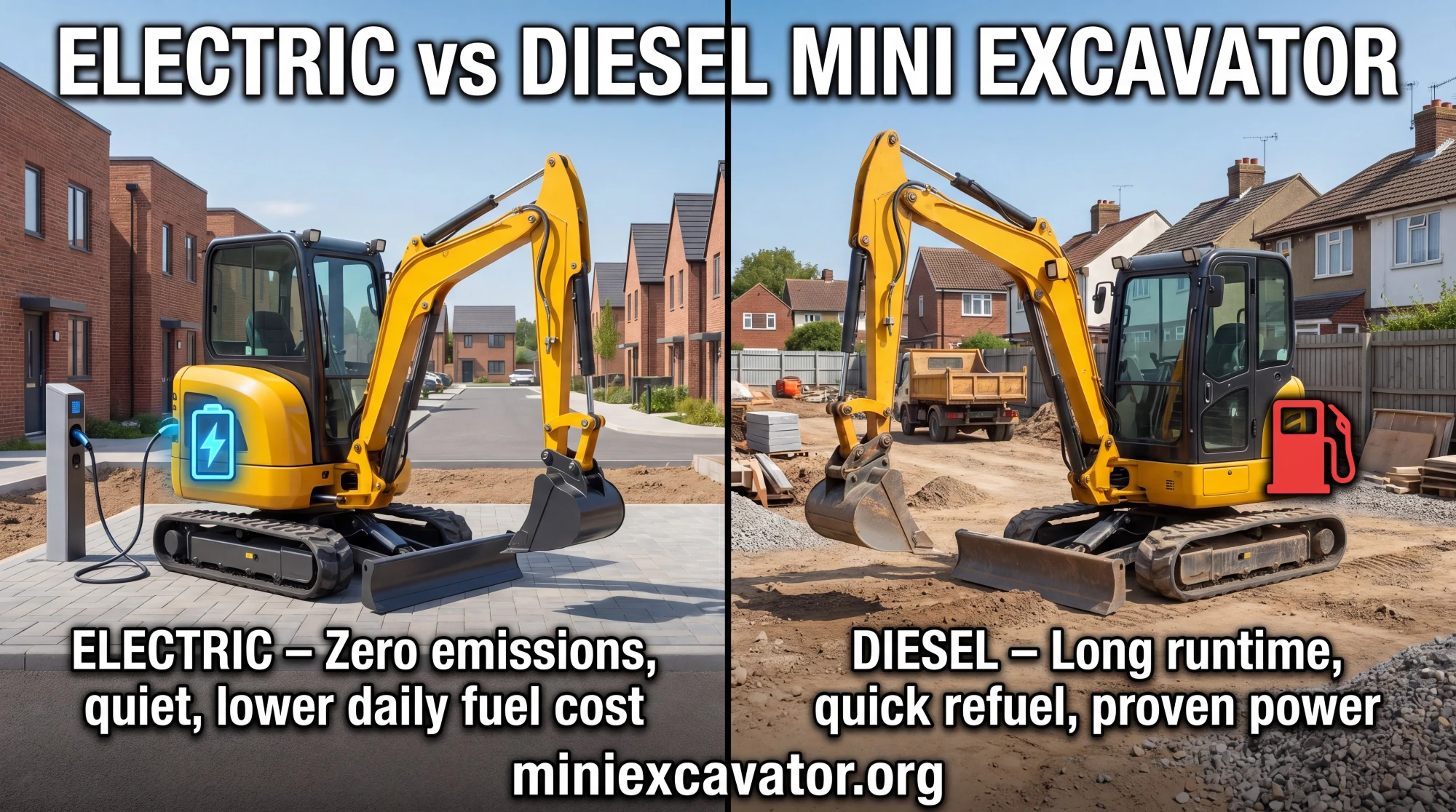
Electric Mini Excavator vs. Diesel Mini Excavator: Which One Is Better for Modern Jobsites?
Mini excavators have become one of the most important machines in today’s construction, landscaping, utility, and agriculture industries. Their compact size, excellent maneuverability, and strong digging ability make them ideal for working in narrow spaces where larger machines cannot operate efficiently. From trenching and grading to demolition, lifting, and site preparation, mini excavators are relied on for a wide range of tasks every day. As the equipment market continues to evolve, more buyers and contractors are now facing a major decision: should they choose a traditional diesel mini excavator or move toward an electric mini excavator? This question is becoming more important as fuel prices, environmental concerns, noise restrictions, and operating costs continue to shape how companies choose machinery.
For many years, diesel mini excavators were the obvious standard. They were dependable, powerful, easy to refuel, and widely available from almost every major equipment brand. Diesel machines built a reputation for long working hours, strong hydraulic power, and reliable performance in harsh conditions. Contractors trusted them because they could work all day, handle demanding jobs, and keep going in remote locations where power access was limited or unavailable. Because of this, diesel units became the default choice for most buyers.
However, the rise of electric construction equipment is changing that decision. Electric mini excavators are no longer just experimental machines or niche products. They are becoming serious equipment options for businesses that want lower emissions, quieter operation, lower fuel-related costs, and access to jobs where diesel machines may not be allowed. As battery and motor technology improve, electric models are becoming more practical for real-world use, especially in urban projects, indoor work, environmentally sensitive sites, and areas with strict noise regulations.
The choice between electric and diesel is not simply a trend-based decision. It depends on how you work, where you work, what kind of jobs you take on, and what your long-term priorities are. Some operations will benefit more from the strength and flexibility of diesel. Others will gain major advantages from the cleaner and quieter performance of electric. To make the right decision, it is important to understand how both machine types differ in power source, performance, operating cost, maintenance, jobsite suitability, and long-term value.
This guide will explore electric mini excavators and diesel mini excavators in detail. It will explain what each one is, how they work, their strengths and weaknesses, where each performs best, and what kind of buyer should consider each option. By the end, you will have a clearer understanding of which type of mini excavator is the better fit for your operation.
What Is a Diesel Mini Excavator?
A diesel mini excavator is a compact excavating machine powered by a diesel internal combustion engine. The engine generates mechanical power, which drives the hydraulic system that controls the boom, arm, bucket, swing, blade, and travel motors. This setup has been the standard in the compact equipment world for decades.
Diesel mini excavators are known for being practical, durable, and well suited to heavy-duty field work. They are commonly used on construction sites, utility jobs, farmland, landscaping projects, demolition sites, and roadwork applications. Because diesel fuel is widely available and can be refilled quickly, these machines are very convenient when long hours of uninterrupted work are required.
Their performance has made them especially popular among contractors who need a machine that can work all day without worrying about battery charging. For many operators, diesel equipment also feels familiar. The service network, replacement parts, trained technicians, and maintenance procedures are already well established, which makes ownership easier for many businesses.
What Is an Electric Mini Excavator?
An electric mini excavator performs the same core functions as a diesel unit, but instead of using a diesel engine, it uses an electric motor powered by a rechargeable battery pack. The electric motor drives the hydraulic system, allowing the machine to dig, lift, swing, and travel just like a traditional excavator.
The key difference is the absence of combustion. Electric models do not burn fuel while operating, which means they produce no direct exhaust emissions at the point of use. They also operate much more quietly because electric motors generate far less noise than diesel engines. For this reason, electric mini excavators are especially attractive for indoor demolition, basement work, enclosed construction spaces, quiet neighborhoods, hospitals, schools, and city-center projects where noise and air quality are major concerns.
Electric mini excavators represent a shift in how compact equipment is viewed. Instead of focusing only on raw runtime and traditional fueling, buyers are now considering environmental responsibility, operator comfort, reduced servicing, and access to more restrictive worksites. As equipment technology develops further, electric machines are becoming more capable and more relevant across many industries.
The Main Difference Between Electric and Diesel Mini Excavators
The core difference between the two machine types is their power source. Diesel mini excavators rely on fuel combustion, while electric mini excavators rely on stored battery energy. That one difference affects almost every part of ownership and operation.
A diesel machine needs fuel, engine oil, air filters, fuel filters, regular engine servicing, and exhaust-related maintenance. It generates engine noise, heat, and emissions. It can usually be refueled in minutes and returned to work quickly.
An electric machine needs charging access, battery management, and electrical system awareness. It usually has fewer moving parts in the powertrain, produces much less noise, and eliminates exhaust emissions during operation. It may cost more up front, but it often offers savings in daily running and routine service.
Although both machines perform the same job in principle, the way they fit into a business can be very different.
Performance and Power Comparison
When people first compare electric mini excavators to diesel models, one of the biggest questions is whether electric machines are powerful enough. Diesel mini excavators have long been respected for strong digging power, dependable hydraulic performance, and the ability to work under demanding conditions for extended periods. They are still widely seen as the safer choice for tough outdoor work, deep digging, and applications that require high productivity over long shifts.
That said, electric mini excavators have improved significantly. Electric motors produce instant torque, which can make the machine feel smooth, responsive, and strong in short-cycle work. In many compact machine categories, electric models now offer performance that is very close to diesel for common excavation, trenching, grading, and lifting tasks. For light to medium-duty jobs, the difference in practical performance may be smaller than many buyers expect.
However, diesel still holds an advantage in continuous heavy-duty use. If a machine must work long hours under heavy load without much stopping, a diesel excavator remains more practical in many situations. Electric models may perform very well, but their available runtime becomes part of the performance conversation. A machine that digs well but needs charging halfway through a long shift may not be the best fit for every contractor.
So in terms of pure force and sustained operation, diesel still leads in many demanding situations. In terms of responsive control, lower noise, and practical jobsite performance in lighter or restricted environments, electric is becoming increasingly competitive.
 Runtime and Refueling Versus Charging
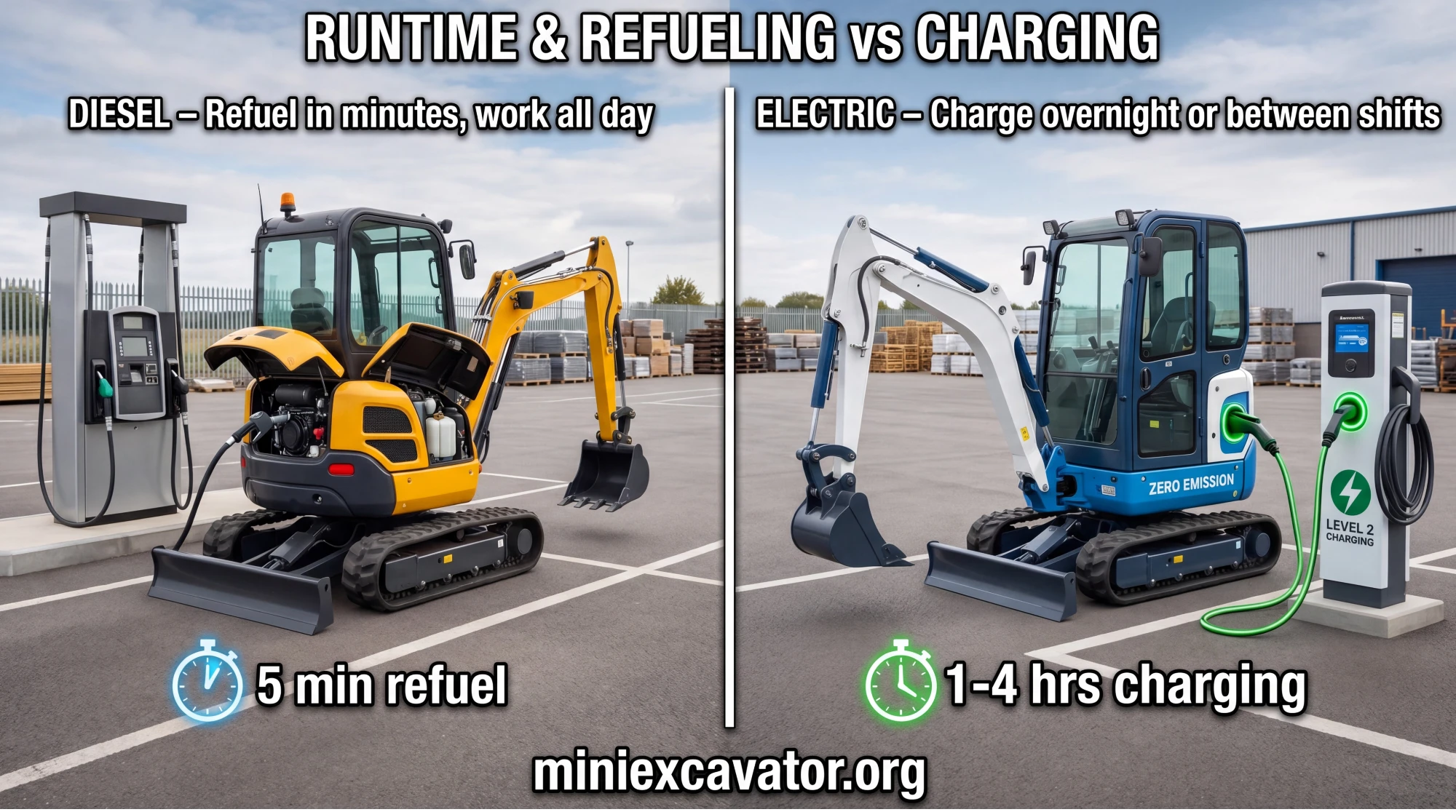
One of the biggest operational differences between electric and diesel mini excavators is how they stay powered during the workday. Diesel mini excavators are simple in this regard. They run as long as there is fuel in the tank, and when fuel runs low, refilling usually takes only a few minutes. This makes diesel ideal for long shifts, busy schedules, remote sites, and operations where downtime must be minimized.
Electric mini excavators depend on battery capacity. Depending on the model, the battery size, and how hard the machine is being used, runtime may vary. For some applications, an electric machine may last most or all of a normal work shift. For heavier use, it may require charging during breaks, between tasks, or overnight. Fast charging can improve this, but access to suitable charging equipment becomes essential.
This does not automatically make electric impractical. In many real-world jobsite conditions, especially urban or indoor work, a machine is not digging non-stop all day. There may be pauses for planning, movement, coordination, and material handling. In those kinds of workflows, electric machines can be very usable. But for contractors who need uninterrupted operation in open field conditions, diesel still offers a major convenience advantage.
Noise and Emissions
This is where electric mini excavators clearly stand out. Electric machines operate much more quietly than diesel machines. That difference may not seem critical at first, but on many projects it becomes a major advantage. Lower noise means less disruption for surrounding homes, businesses, schools, hospitals, and pedestrians. It also improves communication among workers on site and can reduce operator fatigue over time.
Zero direct exhaust emissions are another major benefit. Diesel mini excavators release fumes during operation, including carbon dioxide and other pollutants. In open spaces this may not seem like a major issue, but indoors or in enclosed work zones it becomes very important. Electric mini excavators can work in basements, warehouses, tunnels, interior demolition zones, and other confined environments where diesel exhaust would be dangerous or require expensive ventilation systems.
For contractors working on green building projects, municipal contracts, indoor renovations, or environmentally sensitive areas, electric mini excavators may provide access to jobs that diesel machines cannot handle as easily. As regulations become tighter in certain cities and industries, this advantage is likely to become more valuable.
Operating Costs
At first glance, diesel mini excavators often appear to be the more affordable option because they usually cost less to purchase than electric models. For many buyers, especially smaller businesses, that lower upfront price matters a great deal. However, purchase price is only one part of the ownership picture.
Diesel machines come with ongoing fuel costs, and fuel prices can fluctuate significantly. They also require routine engine-related maintenance, including oil changes, filter replacements, belt checks, exhaust system service, and general combustion-engine upkeep. Over time, these costs add up.
Electric mini excavators may require a larger initial investment, but they can reduce daily operating expenses. Electricity is often cheaper than diesel fuel on a per-use basis, especially when charging is done efficiently. In addition, electric powertrains have fewer moving parts than internal combustion engines, which may reduce routine maintenance needs. There is no engine oil to change, no fuel filter to replace, and no exhaust-related servicing in the traditional sense.
For buyers focused on long-term ownership, total cost of operation becomes an important factor. In the right application, electric excavators can become more cost-effective over time, even if the purchase price is higher at the beginning.
Maintenance and Service
Maintenance is another area where electric and diesel differ substantially. Diesel excavators require the kind of servicing that comes with any fuel-powered engine. That includes oil changes, air filters, fuel system checks, cooling system care, engine diagnostics, and exhaust system attention. These are familiar tasks for most mechanics and operators, but they are still regular maintenance requirements that take time and money.
Electric mini excavators generally reduce the amount of routine engine-related maintenance because there is no diesel engine at all. The electric drivetrain is simpler in some ways, which can reduce wear points and lower the frequency of certain service tasks. That said, electric machines are not maintenance-free. They still have hydraulic systems, pins, bushings, tracks, attachments, wiring, cooling components, and battery-related systems that require inspection and care.
Another point to consider is technician availability. Diesel equipment service is well established almost everywhere. Electric equipment support is growing, but depending on your area, service expertise and parts access may still be more limited compared to diesel. That gap is shrinking, but it remains a factor for some buyers.
 Best Jobs for Electric Mini Excavators
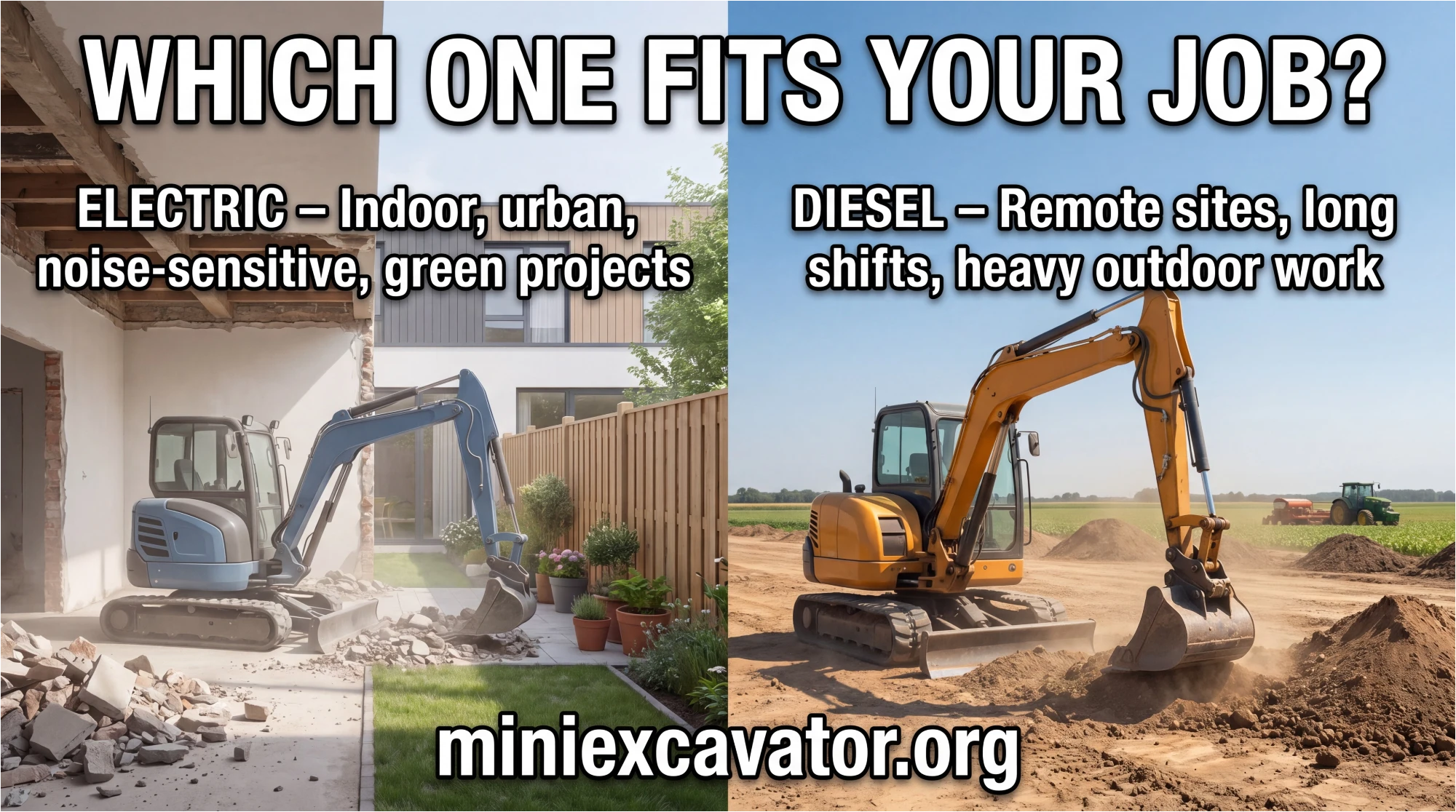
Electric mini excavators are best suited to projects where low noise and zero emissions offer major operational value. Indoor demolition and renovation work is one of the strongest use cases. In these settings, the ability to work without exhaust fumes is a huge benefit. Electric machines are also very well suited for projects in residential neighborhoods where noise complaints are a concern.
Urban construction is another strong fit. Tight city jobsites often come with environmental expectations, local restrictions, and nearby foot traffic. Electric equipment helps contractors meet those expectations more easily. Work near schools, medical facilities, shopping zones, parks, and public buildings can also benefit from quieter, cleaner operation.
Electric machines are also a strong option for businesses that want to strengthen their sustainability image. Contractors bidding on environmentally focused projects or government contracts may find that electric equipment improves their competitive position.
Best Jobs for Diesel Mini Excavators
Diesel mini excavators continue to be the best fit for long-duration outdoor work, remote site operations, and high-demand excavation tasks. If the jobsite is far from charging access, diesel remains the practical choice. If the machine needs to run from early morning to late afternoon with limited breaks, diesel offers less downtime risk.
Heavy landscaping, site prep, farm drainage, roadwork, utility trenching, and rural construction are all areas where diesel machines still perform extremely well. Contractors who already have fuel logistics, diesel mechanics, and conventional fleet systems in place may also find it easier and more efficient to continue using diesel equipment, especially if environmental restrictions are not a major issue in their operating area.
Which One Should You Choose?
Choosing between electric and diesel depends on your real operating conditions, not just general trends. If your work involves indoor jobs, urban projects, noise-sensitive sites, sustainability goals, and manageable runtime needs, an electric mini excavator may be a smart long-term investment. It offers clean operation, quieter performance, and the potential for lower ongoing cost.
If your work depends on extended runtime, remote access, fast refueling, high workload flexibility, and established service support, a diesel mini excavator may still be the better choice. It remains the most practical and proven solution for many contractors.
For some businesses, the ideal answer may not be choosing one over the other completely. A mixed fleet strategy can make sense. Electric machines can handle specialized quiet or indoor work, while diesel machines continue to cover demanding outdoor jobs and long shifts.
Frequently Asked Questions About Electric Mini Excavator vs. Diesel Mini Excavator
1. Which is better: an electric mini excavator or a diesel mini excavator?
Neither one is automatically better for every situation. The better choice depends on how and where the machine will be used. An electric mini excavator is usually better for indoor projects, urban jobsites, quiet neighborhoods, and locations where emissions and noise matter. A diesel mini excavator is usually better for remote sites, long working hours, and jobs that require easy refueling and strong all-day performance. The right machine depends on your work environment, project length, access to charging or fuel, and your long-term operating costs.
2. Are electric mini excavators powerful enough for real construction work?
Yes, many electric mini excavators are powerful enough for real jobsite use, especially for light to medium-duty excavation, trenching, grading, landscaping, and demolition tasks. Modern electric motors provide quick torque and smooth hydraulic response, which makes them practical for many common compact excavator applications. However, for extremely long shifts or very heavy-duty work without downtime, diesel mini excavators may still offer more practical performance because they can run longer and refuel faster.
3. How long can an electric mini excavator run on one charge?
Runtime depends on the battery size, machine model, workload, terrain, attachment use, and operating style. In many cases, an electric mini excavator can work for several hours on a single charge, and some models are designed to cover a large portion of a normal workday. Light-duty work usually allows longer runtime, while heavy digging or hydraulic attachment use will drain the battery faster. Contractors considering electric should always compare real operating hours, charging speed, and daily job demands before buying.
4. How long does it take to charge an electric mini excavator?
Charging time varies depending on the battery capacity and charging system. Standard charging can take several hours, while fast charging systems can reduce downtime significantly. Some operators charge the machine overnight, while others use break times or shift changes to top up the battery. The important thing is to understand your job schedule and whether charging can fit naturally into your operation. If your projects allow downtime between tasks, electric charging may be easy to manage. If your machine needs to run almost nonstop, diesel may still be more practical.
5. Are diesel mini excavators still worth buying?
Yes, diesel mini excavators are still absolutely worth buying for many businesses. They remain a strong choice because they are reliable, easy to refuel, widely supported by dealers and mechanics, and well suited for tough outdoor work. Diesel machines are especially useful for contractors who work in rural areas, on infrastructure projects, or in locations without convenient charging access. They also make sense for buyers who want a lower upfront purchase cost and already operate a diesel-powered fleet.
6. What are the biggest advantages of an electric mini excavator?
The biggest advantages of an electric mini excavator are low noise, zero direct exhaust emissions, and potentially lower day-to-day operating costs. These machines are ideal for indoor work, enclosed spaces, and urban locations where diesel fumes and engine noise create problems. They can also help contractors meet environmental goals, win more eco-focused projects, and improve operator comfort. For companies that want to reduce fuel dependence and modernize their fleet, electric mini excavators offer a very attractive option.
7. What are the biggest disadvantages of an electric mini excavator?
The main disadvantages are higher upfront cost, charging requirements, and limited runtime compared to diesel in some situations. Electric machines depend on battery capacity and charging access, which means they may not be ideal for every job. On long workdays or remote sites, the need to recharge can be less convenient than simply refueling a diesel tank. Buyers should also consider whether local dealer support and service knowledge for electric equipment is strong enough in their area.
Conclusion
The comparison between electric mini excavators and diesel mini excavators is no longer just about old versus new. It is about choosing the right machine for the right environment. Diesel mini excavators remain powerful, dependable, and highly practical for many demanding tasks. They offer long runtime, quick refueling, and proven durability, which makes them hard to replace in many field conditions.
At the same time, electric mini excavators are becoming increasingly practical and valuable. Their low noise, zero direct emissions, and potentially lower running costs make them an excellent choice for many modern projects. As battery systems, charging speed, and equipment design continue to improve, electric mini excavators will likely become a much bigger part of the compact equipment industry.
The best decision comes from understanding your own projects, budget, location, and long-term goals. If your business needs flexibility and all-day field performance, diesel remains strong. If your priority is cleaner operation, lower noise, and access to sensitive jobsites, electric may be the better move. Both have a place in the market, and both can be the right choice when matched to the correct workload.