


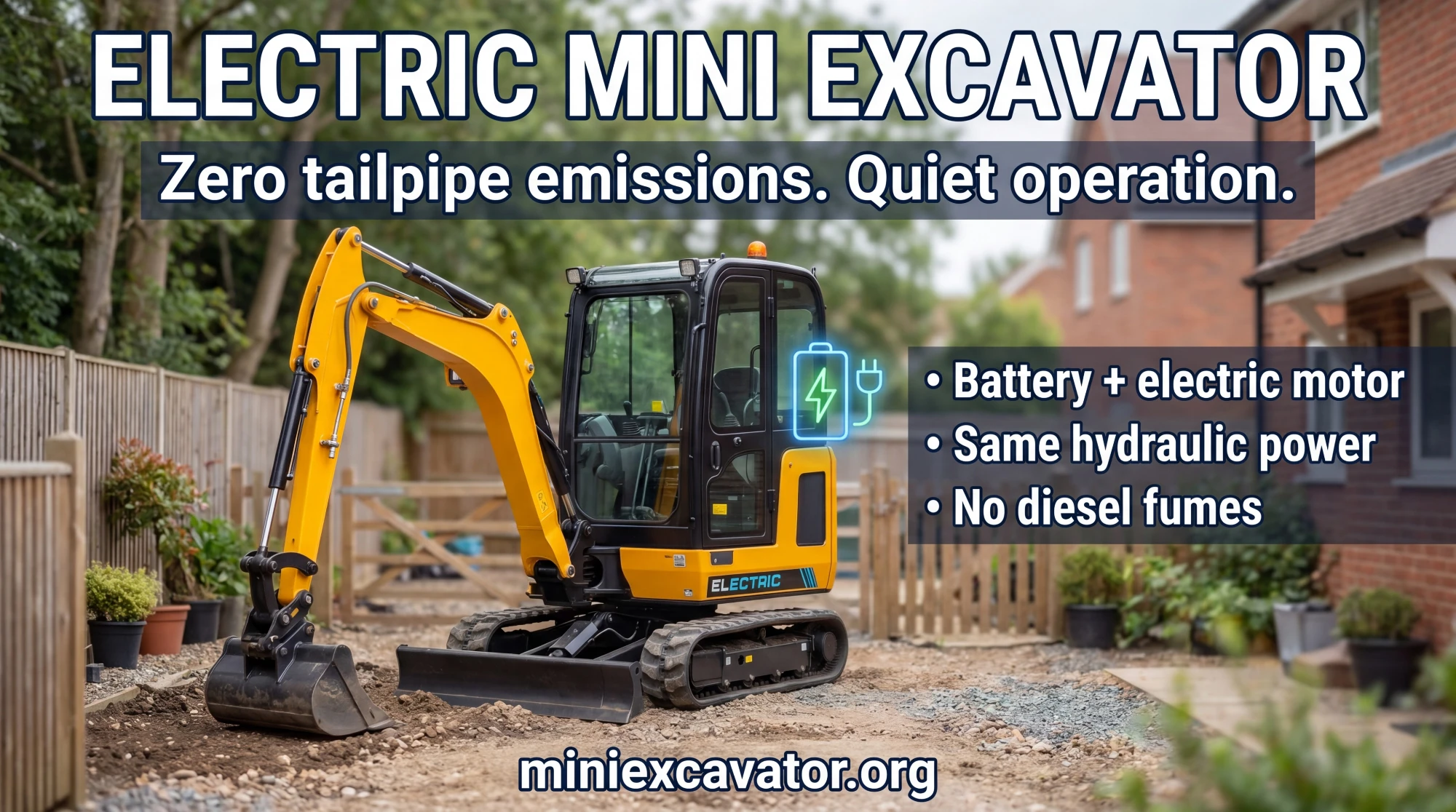
 Electric Mini Excavator Guide: Is Battery Power Ready for Real Job sites?
Electric mini excavators are no longer just a futuristic idea. They are already showing up on real jobsites, and more contractors, landscapers, rental companies, and project owners are starting to ask the same question: is battery power truly ready for serious work?
For years, diesel mini excavators have been the standard for trenching, landscaping, utility work, demolition, and residential construction. They are proven, widely available, and trusted across the industry. But jobsite expectations are changing. Noise limits are getting stricter. Emission rules are becoming tougher. Indoor and urban projects demand cleaner and quieter equipment. At the same time, battery technology is improving fast.
That is where the electric mini excavator comes in.
These machines promise zero tailpipe emissions, lower noise, reduced fuel costs, and less maintenance. But many buyers still wonder whether they can match diesel machines in power, runtime, and real-world jobsite value. The answer depends on the kind of work being done, how the machine is charged, and what the user truly needs from it.
In this guide, we will break down what an electric mini excavator is, how it works, what benefits it offers, and whether it is actually ready for real jobsites today.
What Is an Electric Mini Excavator?
An electric mini excavator is a compact excavator that uses an electric motor and rechargeable battery pack instead of a diesel engine. Like traditional mini excavators, it is built for digging, trenching, grading, backfilling, lifting, and light demolition. The difference is the power source.
Instead of burning diesel fuel, the machine stores electrical energy in a battery, usually a lithium-ion battery pack. That stored energy powers an electric motor, which then drives the hydraulic system. The boom, arm, bucket, blade, and travel functions still work through hydraulics, just like on a standard excavator.
In simple terms, the excavator still performs the same tasks, but it does so with battery power rather than fuel combustion.
Electric mini excavators are generally available in the same compact categories as diesel models, and they are especially attractive for:
- Urban construction
- Indoor demolition
- Landscaping in residential areas
- School and hospital projects
- Utility work in noise-sensitive zones
- Jobsites with environmental restrictions
How an Electric Mini Excavator Works
The basic working principle is straightforward.
The battery stores energy.
The electric motor uses that energy.
The motor powers the hydraulic pump.
The hydraulic system controls the excavator’s movement and digging functions.
This means the operator still uses joysticks, pedals, and controls in a familiar way. From the seat, the machine behaves much like a standard mini excavator. The biggest differences are in the sound, emissions, charging routine, and maintenance needs.
Because electric motors deliver instant torque, many operators notice that electric excavators feel smooth and responsive. They often provide strong hydraulic performance right away, without the vibration, exhaust, and engine noise associated with diesel machines.
Why Electric Mini Excavators Are Getting More Attention
The construction industry is under growing pressure to reduce emissions and noise while still maintaining productivity. That makes compact electric equipment more attractive than ever.
In the past, battery-powered construction equipment often felt limited or experimental. But electric mini excavators are becoming more practical because battery technology, charging systems, and machine design have all improved.
More project owners are also looking for cleaner equipment solutions, especially in places where diesel fumes or noise are a problem. This makes electric mini excavators more than just an environmental talking point. In the right situations, they are becoming a real operational advantage.
Key Benefits of Electric Mini Excavators
1. Zero Tailpipe Emissions
One of the biggest benefits is that electric mini excavators produce zero direct emissions during operation. That makes them ideal for indoor work, enclosed spaces, and projects where air quality matters.
For example, on interior demolition or basement excavation work, eliminating diesel exhaust can make the worksite safer, cleaner, and easier to manage.
2. Much Lower Noise
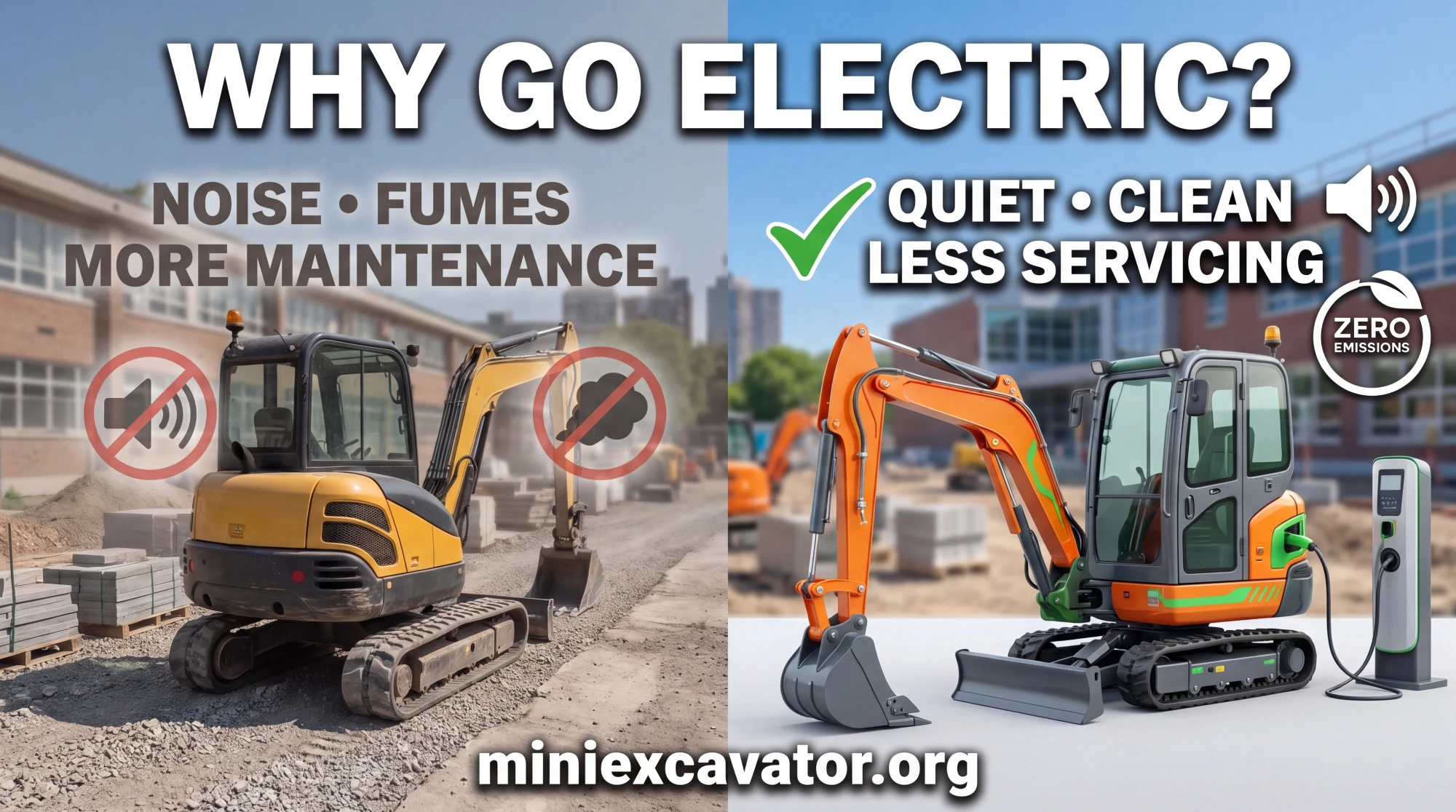
Electric mini excavators are significantly quieter than diesel models. Instead of engine rumble and exhaust noise, operators and nearby workers hear mostly the hydraulic system and track movement.
This is a major advantage in:
- Residential neighborhoods
- Night work
- Schools
- Hospitals
- Commercial renovation sites
- Noise-restricted urban areas
Lower noise also improves communication on the jobsite and reduces operator fatigue over long shifts.
3. Lower Fuel and Maintenance Costs
Electricity often costs less than diesel over time, and the machine itself usually has fewer components that require routine engine-related service.
There are no engine oil changes, no fuel filters, no exhaust after-treatment systems, and fewer moving parts in the powertrain. That can reduce maintenance downtime and simplify ownership over the long run.
4. Better for Indoor and Enclosed Jobs
Electric mini excavators open up work opportunities where diesel machines are difficult or unsafe to use. Since they do not produce exhaust fumes, they are far more practical for indoor demolition, warehouse work, tunnel projects, and other enclosed applications.
5. Strong Brand and Sustainability Value
For businesses that want to show environmental responsibility, using electric equipment can strengthen brand image. It can also help companies qualify for projects where lower-emission equipment is preferred or required.
Are Electric Mini Excavators Powerful Enough?
This is one of the most common concerns, and it is a fair one.
Many people assume electric means weaker. In reality, electric mini excavators can deliver very competitive performance for their size class. Electric motors provide instant torque, and that helps create smooth and responsive hydraulic power.
For many normal mini excavator tasks, such as:
- trenching
- light foundation digging
- grading
- landscaping
- utility work
- interior demolition
an electric machine can absolutely perform at a serious level.
The bigger question is not whether they can work. It is whether the battery runtime and charging setup match the demands of the jobsite.
Battery Runtime: The Real Jobsite Question
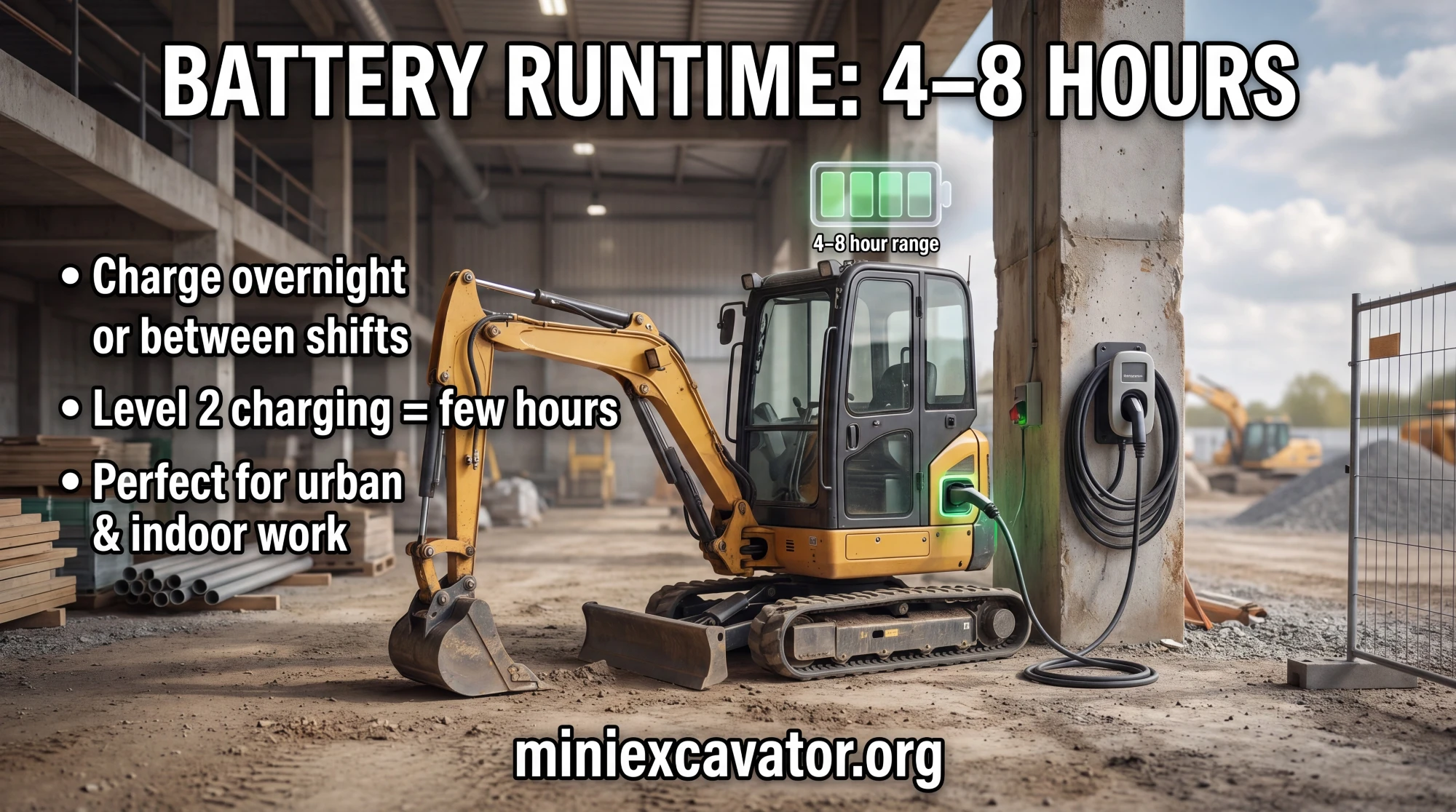
 Electric mini excavators can often run for around 4 to 8 hours on a charge, depending on the model, battery size, job intensity, temperature, and operating style.
That means runtime may be enough for many jobs, but not all jobs.
If the machine is being used for lighter or intermittent tasks, it may comfortably support a workday. If it is doing nonstop aggressive digging in demanding soil, the battery may drain faster.
This is why buyers need to think honestly about their work pattern.
Ask these questions:
- Is the machine used continuously or in cycles?
- Is the work light, moderate, or heavy?
- Are there natural breaks during the day?
- Can charging happen during lunch or downtime?
- Is the machine being used indoors or outdoors?
Battery power is far more practical when the workflow allows for some charging flexibility.
Charging Time and Infrastructure
Charging is one of the biggest differences between electric and diesel ownership.
Instead of refueling in minutes, the machine needs access to power. Charging speed depends on the type of charging setup being used.
Common charging options include:
Standard outlet charging
This is usually the slowest option and works better for overnight top-ups than daily jobsite use.
Level 2 charging
This is the most practical setup for many businesses. It provides much faster charging and can often recharge the machine in a few hours.
DC fast charging
This is the fastest option and may charge a battery to around 80% in under an hour on some systems, depending on the machine and charger.
The real challenge is not whether charging exists. It is whether the jobsite or depot is ready for it.
Before adopting electric machines, businesses should think about:
- power availability at the yard
- power access on jobsites
- overnight charging strategy
- mobile charging options
- charging during shift breaks
Without a practical charging plan, even a good electric machine can become difficult to manage.
Where Electric Mini Excavators Make the Most Sense
Electric mini excavators are strongest where their unique benefits matter most.
They are especially well suited for:
- indoor demolition and renovation
- urban construction
- residential landscaping
- school or hospital projects
- noise-restricted areas
- emission-restricted jobsites
- government or sustainability-focused contracts
In these environments, the quieter operation and zero emissions can make electric equipment not just a good choice, but the better choice.
Where Diesel May Still Have the Advantage
Electric machines are improving quickly, but diesel still has advantages in some situations.
Diesel mini excavators may still be the better fit for:
- remote jobsites with no reliable charging
- extremely long shifts with nonstop operation
- heavy-duty applications where charging downtime is difficult
- fleets that are not yet set up for electric infrastructure
This does not mean electricity is not ready. It means electricity is more ready for some jobs than others.
Best Practices Before Switching to Electric
If you are considering an electric mini excavator, start with planning, not just machine shopping.
1. Evaluate your job profile
Look at where and how your mini excavators are actually used. If your work is often urban, indoor, or noise-sensitive, electricity may fit very well.
2. Study charging needs first
Charging infrastructure matters as much as the excavator itself. Make sure your yard or jobsite can support the machine practically.
3. Compare runtime with your workflow
Do not focus only on published battery numbers. Think about how your crew really works throughout the day.
4. Train operators and technicians
Operators should understand charging habits, battery use, and safe handling. Service teams should also understand the electrical side of the machine.
5. Start with one machine if needed
For many businesses, it makes sense to test electric adoption with one unit before making a larger fleet shift.
Is Battery Power Ready for Real Job Sites?
Yes, but with an important condition.
Battery power is ready for the right job sites.
Electric mini excavators are absolutely ready for many real-world tasks, especially where noise, emissions, indoor access, and sustainability matter. They are no longer just experimental equipment. They are working machines with real value.
However, they are not yet the perfect answer for every job site. The battery, charging setup, and work cycle have to match the application. When they do, electric can be a very smart move. When they do not, diesel may still remain the more practical choice for now.
So the better question is not whether electric mini excavators are ready at all. The better question is whether your specific jobsites are ready for them.
Final Thoughts
Electric mini excavators are becoming a serious part of the future of compact construction equipment. They offer zero emissions, lower noise, reduced engine-related maintenance, and strong performance for many common excavation tasks. They are especially valuable in indoor work, urban construction, and jobsites where diesel machines create limitations.
That said, successful adoption depends on jobsite fit, charging access, and realistic expectations about runtime. Electric mini excavators are not just about being cleaner. They are about being practical in the right environment.
For many contractors and fleet owners, the shift to electric will not happen all at once. But it is clear that battery-powered compact equipment is no longer a niche concept. It is already proving that it can handle real work, and its role will only grow stronger from here.
Frequently Asked Questions
1. What is an electric mini excavator?
An electric mini excavator is a compact excavator powered by a rechargeable battery and electric motor instead of a diesel engine. It performs the same basic digging and hydraulic tasks as a traditional mini excavator.
2. Are electric mini excavators strong enough for real work?
Yes. For many common excavation, landscaping, trenching, and indoor demolition tasks, electric mini excavators offer strong and responsive performance that is very suitable for real jobsites.
3. How long does an electric mini excavator run on one charge?
Runtime depends on the model and workload, but many electric mini excavators operate for about 4 to 8 hours on a single charge.
4. How long does it take to charge one?
Charging time depends on the charger type. Standard charging is slower, while Level 2 and DC fast charging can recharge the machine much faster, sometimes within a few hours or less.
5. What are the biggest benefits of an electric mini excavator?
The biggest benefits include zero tailpipe emissions, quieter operation, lower fuel costs, less engine-related maintenance, and better suitability for indoor or noise-sensitive jobs.
6. Are electric mini excavators better than diesel?
Not in every situation. Electric models are better in some environments, especially indoor and urban work. Diesel may still be more practical for remote sites, nonstop long shifts, or places without charging access.
7. What should I check before buying one?
Before buying, check battery runtime, charging needs, power availability, service support, operator training needs, and whether the machine fits the type of work you do most often.