

Mini Excavators vs. Other Heavy Equipment
Choosing the right machinery dictates the success of your construction or landscaping business. When you invest in heavy equipment, you expect reliability, durability, and a strong return on your investment. You need a machine that gets the job done efficiently without driving up operational costs.
Contractors often face a tough choice when expanding their fleets. Should you buy a mini excavator, a skid steer, or a backhoe loader? Each machine offers distinct advantages, but making the wrong choice can lead to project delays and wasted capital.
This guide compares mini excavators against other standard construction equipment. We will break down the specific strengths, limitations, and ideal use cases for each machine type. By the end of this post, you will know exactly which equipment aligns with your daily operations and delivers the highest long-term value.
What Defines a Mini Excavator?
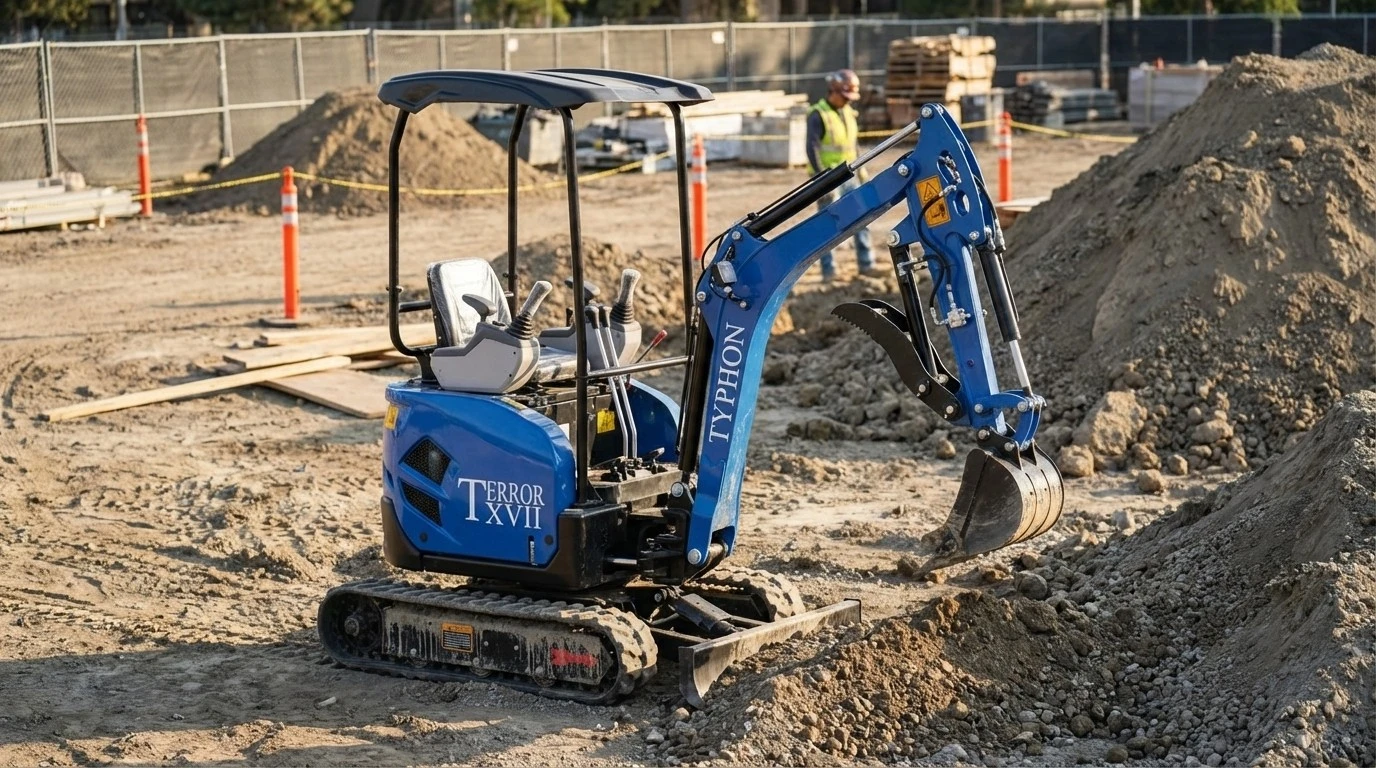
A mini excavator is a tracked or wheeled machine featuring an articulating boom, a dipper stick, and a bucket. These machines typically weigh between one and ten tons. They excel at digging, trenching, and precise material handling in confined spaces.
Compact Size and Maneuverability
The primary draw of a mini excavator is its compact footprint. Operators can navigate through narrow backyard gates, tight property lines, and crowded urban job sites. Many models feature a zero tail-swing design. This means the rear of the machine rotates entirely within the width of the tracks.
Zero tail-swing allows you to dig right up against walls and fences without worrying about damaging property. You get the raw digging power of an excavator in a package that fits almost anywhere.
Rubber Tracks and Ground Protection
Most mini excavators come equipped with continuous rubber tracks. These tracks distribute the machine's weight over a large surface area. This low ground pressure prevents the machine from sinking into soft mud or wet clay.
More importantly, rubber tracks protect finished surfaces. You can drive a mini excavator across an established lawn or a paved driveway without tearing up the ground. This saves your crew hours of costly site repair work after the main project wraps up.
Mini Excavator vs. Skid Steer Loader
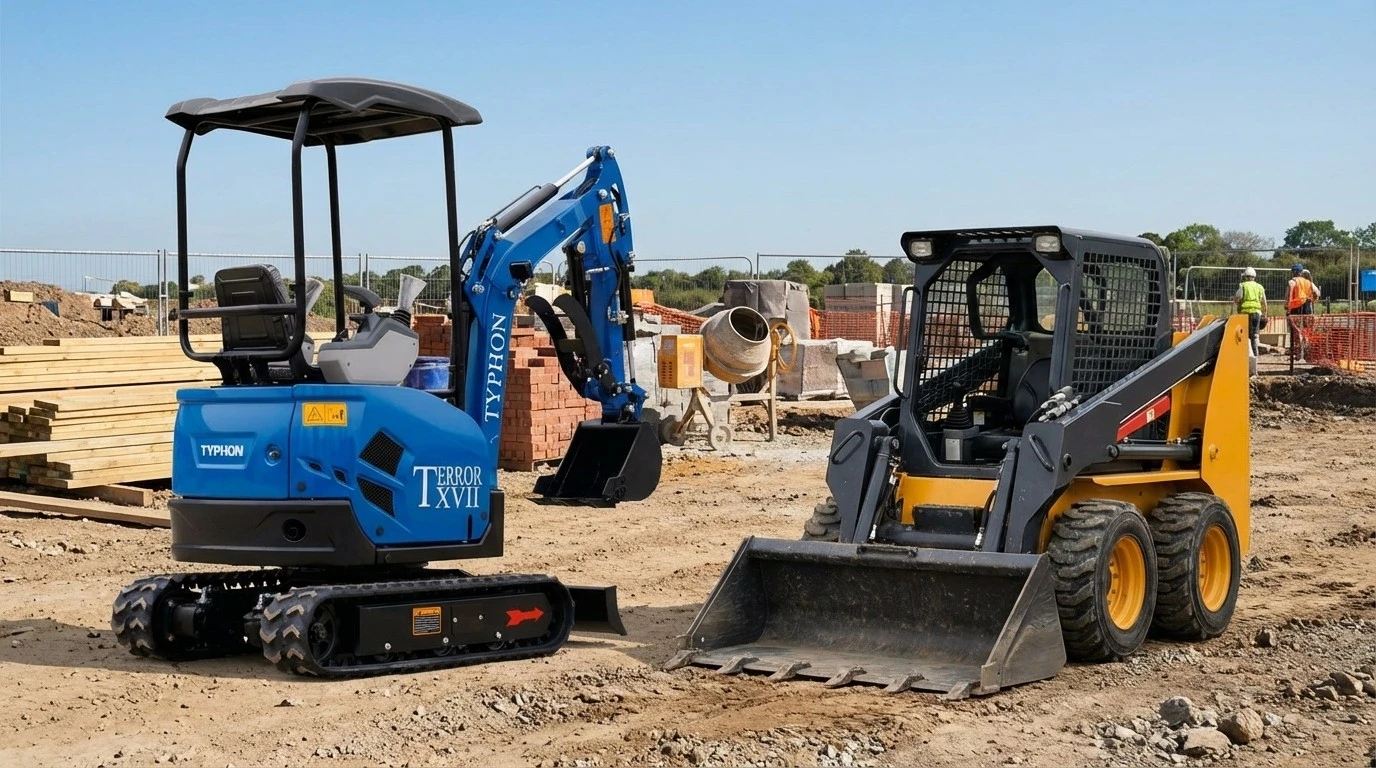
Skid steer loaders represent the most common alternative to mini excavators. Both machines fit into tight spaces and accept a wide variety of hydraulic attachments. However, they approach job site tasks from completely different angles.
Digging Deep vs. Pushing Hard
A mini excavator functions primarily as a digging tool. It reaches down into the earth to pull dirt out. It excels at digging deep utility trenches, excavating foundations, and removing tree stumps. You remain stationary while the boom does the heavy lifting.
A skid steer operates as a pushing and loading tool. It excels at scraping ground level, pushing heavy piles of gravel, and loading dump trucks. To dig with a skid steer, you must drive the entire machine forward into the pile. If your primary goal involves moving massive amounts of loose material quickly, the skid steer holds the advantage. If you need to dig a precise hole or trench, the mini excavator wins easily.
Mobility and Terrain Handling
Skid steers utilize four wheels that operate independently on the left and right sides. This allows the machine to turn within its own footprint. However, wheeled skid steers struggle in deep mud and easily tear up delicate turf.
Tracked mini excavators handle uneven terrain and steep slopes much better. The tracks provide a stable platform for heavy lifting, even on a steep incline. You can also dig over obstacles like retaining walls or small fences with a mini excavator boom, a task a skid steer simply cannot perform.
Ideal Use Cases for Each
Choose a mini excavator for utility installations, plumbing trenches, detailed landscaping, and interior demolition. Choose a skid steer for aggressive grading, heavy material transport, site cleanup, and loading tall trucks. Many successful contractors eventually own both, as the two machines complement each other perfectly on a busy job site.
Mini Excavator vs. Backhoe Loader
Backhoe loaders serve as the traditional workhorses of the construction industry. They combine a front loading bucket with a rear excavator boom. For decades, the backhoe was the default choice for utility work and municipal road crews.
The All-in-One vs. The Specialist
A backhoe loader gives you two machines on one chassis. You can load gravel with the front bucket, spin the seat around, and dig a trench with the rear boom. This versatility makes the backhoe an excellent machine for general contractors who tackle a bit of everything.
However, a mini excavator specializes purely in digging. Because the entire upper carriage rotates 360 degrees, a mini excavator works much faster when trenching. You can dig, swing, and dump dirt anywhere around the machine. A backhoe's rear boom only swings 180 degrees, severely limiting where you can place your spoil pile.
Space Constraints and Swing Radius
Backhoes are large, heavy machines. They require wide operating lanes and plenty of overhead clearance. When digging with a backhoe, you must deploy wide stabilizer legs to keep the machine upright. This setup takes up significant space on the job site.
Mini excavators do not require stabilizer legs. The heavy undercarriage provides all the necessary stability. This allows you to set up and dig in tight alleys or narrow residential side yards where a backhoe could never fit.
Transporting Your Equipment
Backhoe loaders feature heavy-duty tires and road-capable transmissions. You can drive a backhoe directly from the equipment yard to the job site at speeds up to 25 miles per hour. This saves you the hassle of loading the machine onto a trailer for short trips.
Mini excavators travel very slowly. You must load them onto a trailer to move them between sites. However, their lighter weight means you can tow a mini excavator behind a standard heavy-duty pickup truck. Hauling a heavy backhoe requires a specialized commercial transport truck.
Mini Excavator vs. Standard Excavator
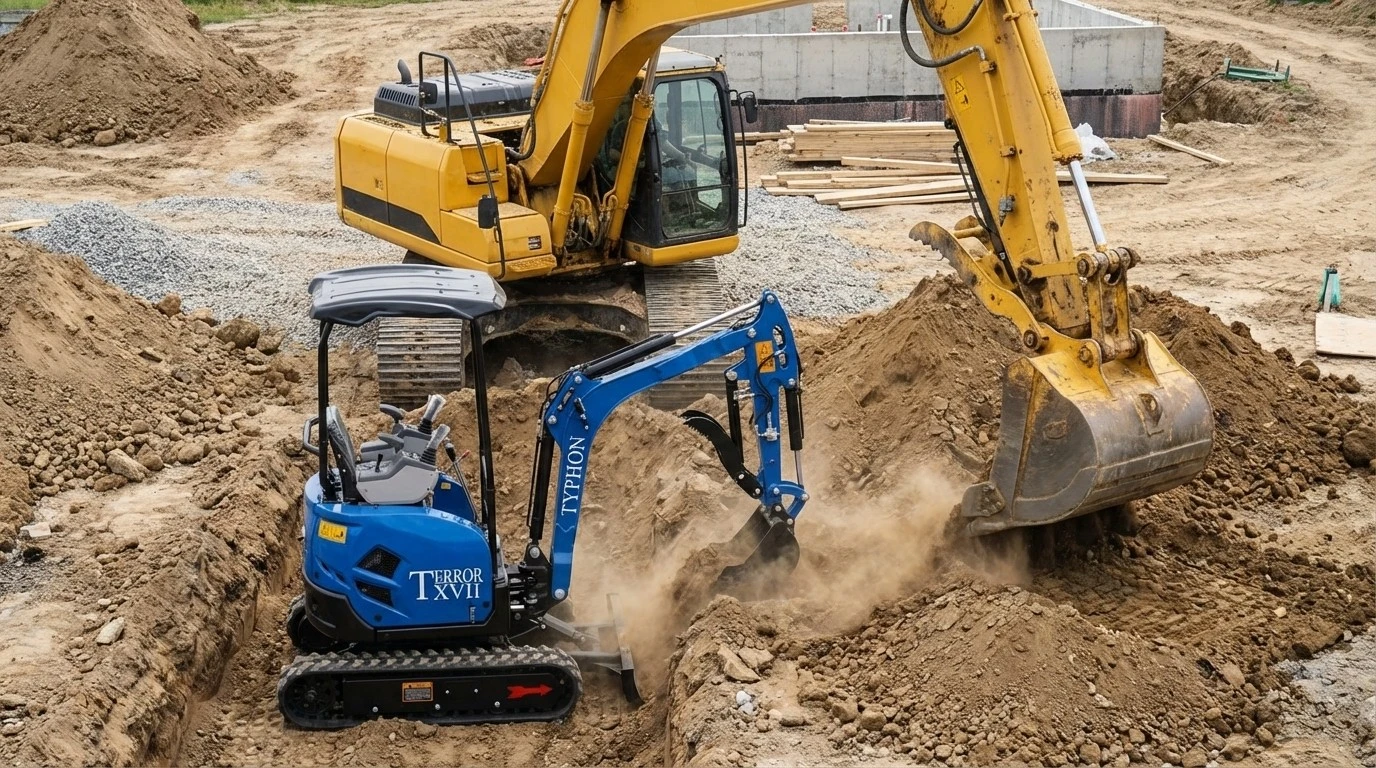
Sometimes a project requires serious earthmoving capabilities. Standard excavators weigh between 15 and 50 tons. They dominate large commercial construction sites, deep sewer installations, and massive road projects.
Scale, Power, and Precision
A standard excavator delivers immense breakout force and incredible lifting capacity. If you need to load a continuous fleet of articulated dump trucks or dig a 20-foot basement, you need a standard excavator. A mini excavator simply lacks the raw power and reach for massive industrial earthmoving.
However, standard excavators lack precision in confined spaces. They are overkill for small residential projects. A mini excavator offers delicate, precise controls. An experienced operator can use a mini excavator to dig carefully around existing utility lines or sculpt a backyard retaining wall without disturbing the surrounding property.
Transportation and Logistics
Moving a standard excavator requires massive logistical planning. You need a specialized heavy-haul trailer, a commercial semi-truck, and often special wide-load road permits. You must route your transport carefully to avoid low bridges and weight-restricted roads.
Transporting a mini excavator is entirely stress-free. You load it onto a standard utility trailer, secure the chains, and drive away. This logistical freedom allows your crew to complete two or three small jobs in different locations on the exact same day.
Cost of Ownership and ROI
Heavy machinery demands a serious financial commitment. Standard excavators cost hundreds of thousands of dollars. They also consume massive amounts of diesel fuel and require expensive, specialized maintenance.
Mini excavators offer a highly affordable entry point into the excavation business. They boast excellent fuel efficiency, running all day on a few gallons of diesel. The lower initial purchase price and reduced maintenance costs mean a mini excavator pays for itself very quickly. You secure a strong, reliable return on investment without overextending your business credit.
Mini Excavator vs. Trencher
For pure utility installations, contractors often consider dedicated trenching machines. Trenchers use a heavy-duty chain with metal teeth to cut a narrow, perfectly straight line through the earth.
Versatility vs. Speed
If your only job is laying 500 feet of straight irrigation pipe across an open field, a ride-on trencher does the job faster than any excavator. Trenchers cut clean, narrow lines that require very little backfilling.
The problem with trenchers lies in their singular focus. A trencher only cuts trenches. Once the pipe is in the ground, the machine sits idle. A mini excavator digs the trench, lowers the heavy pipe into place, backfills the dirt, and grades the surface smooth. The mini excavator keeps working from the start of the project to the final cleanup.
Handling Rocky Soil and Obstacles
Trenching chains struggle terribly in rocky soil. Large boulders bind the chain, break the cutting teeth, and stall the machine. Trenchers also cannot dig around buried obstacles. If you hit an old concrete foundation or a massive tree root, the trencher stops completely.
A mini excavator handles unpredictable soil with ease. If you encounter a large boulder, you simply use the bucket to pry it out of the ground. If you find a dense tree stump, you use a ripper attachment to tear it out. The excavator adapts to the terrain, ensuring your project moves forward regardless of what hides beneath the dirt.
Advantages of Choosing a Mini Excavator
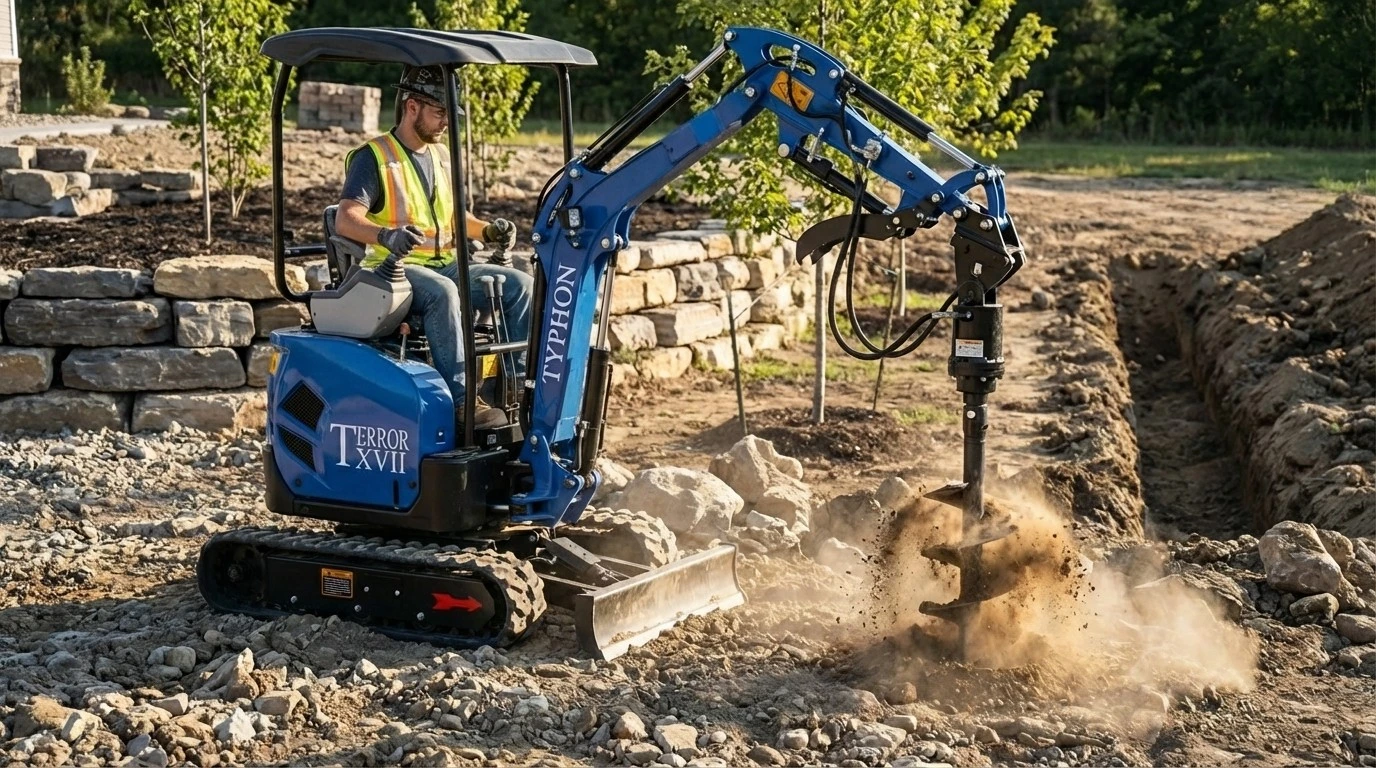
When you look at the facts, the mini excavator proves itself as one of the most reliable and versatile machines on the market. Manufacturers build these compact machines to withstand the grueling demands of daily contracting work.
Lower Operational Costs
Fuel economy remains a massive advantage for compact equipment. Modern mini excavators feature smart, load-sensing hydraulic systems. The engine only throttles up when the machine senses heavy resistance against the bucket. This intelligent design minimizes fuel consumption and reduces wear on internal engine components.
Attachment Versatility
You maximize your investment by turning your excavator into a multi-tool carrier. The universal quick-coupler system allows operators to change attachments in minutes. You can swap a standard digging bucket for a hydraulic breaker to shatter concrete driveways.
You can attach an earth auger to drill perfectly plumb fence post holes. Adding a hydraulic thumb allows you to grab and move awkward debris like twisted scrap metal or fallen trees. This versatility means you never have to decline a job due to lacking the right equipment.
Operator Comfort and Safety
A comfortable operator works safely and efficiently. High-quality mini excavators feature enclosed, climate-controlled cabs. These cabs protect your crew from extreme heat, freezing rain, and hazardous job site dust.
Excellent visibility from the operator's seat ensures safe movements in crowded areas. Intuitive joystick controls reduce physical fatigue, allowing operators to maintain high precision during long, demanding shifts. When you prioritize equipment quality, you directly improve job site safety.
Limitations to Keep in Mind
No machine solves every single problem. You must understand the factual limitations of your equipment to bid jobs accurately and operate safely.
Lifting Capacity Ceilings
Mini excavators have strict lifting limits. You cannot use a three-ton machine to lift a massive concrete trench box or unload heavy pallets of paving stones. Exceeding the rated lifting capacity causes the machine to tip forward, creating a severe safety hazard. Always consult the manufacturer's load chart before attempting a heavy lift. If the job requires lifting massive weight, you must bring in a skid steer or a larger excavator.
Travel Speed on Job Sites
Tracked compact excavators move slowly. Their top travel speed rarely exceeds three miles per hour. If you need to move dirt from the backyard to a dump truck parked a block away, a mini excavator will waste hours just driving back and forth. For rapid material transport across long distances, you need a wheeled machine like a skid steer or a compact wheel loader.
Making the Right Equipment Choice
Building a profitable contracting business requires smart, calculated equipment purchases. You need durable machinery backed by comprehensive support to guarantee your success.
Assessing Your Daily Operations
Look closely at the jobs your crew performs every single week. Do you spend your time trenching, grading, breaking concrete, or lifting pallets? Measure the narrowest access gates you frequently pass through. Calculate the maximum weight your current truck and trailer can legally tow.
Match these factual requirements to the specifications of the equipment. If you spend 80 percent of your time digging in tight residential yards, the mini excavator is your absolute best choice. It provides the exact combination of power, precision, and mobility you need to satisfy your clients.
The Value of Dealer Support
The quality of the machine only matters if you have the support network to keep it running. Partner with an equipment provider that emphasizes customer satisfaction and long-term reliability.
Choose a brand that maintains a massive inventory of genuine replacement parts. Demand access to certified service technicians who can troubleshoot issues rapidly. A dealership that offers preventative maintenance contracts takes the burden of servicing off your shoulders. This total support package provides absolute peace of mind, allowing you to focus entirely on executing your projects and growing your business.
Elevate Your Fleet Today
Integrating a high-quality mini excavator into your fleet solves your most frustrating job site bottlenecks. These durable machines deliver aggressive digging power in spaces where other equipment simply cannot fit. By utilizing versatile attachments and enforcing strict maintenance protocols, you guarantee a phenomenal return on your investment.
Evaluate your upcoming projects and identify where limited equipment holds your crew back. Reach out to an authorized dealer to discuss precise equipment specifications. Schedule a machine demonstration and explore the comprehensive service packages designed to support your business for years to come. Reliable equipment builds a reliable business.