


 Complete Guide to Mini Excavators: Types, Uses, Pricing & Buying Tips (2026)
Construction workers and contractors are always looking for machinery that can deliver maximum power without compromising maneuverability. Mini excavators offer the ideal balance of robustness, effectiveness, and compact size. Knowing how to make the most of this equipment directly impacts your bottom line, whether you oversee large-scale commercial sites or residential landscaping projects.
Everything you need to know to make wise fleet decisions is covered in this heavy equipment guide. We will examine various types of equipment, review the latest industry trends, and dissect key applications. Additionally, you will learn useful techniques for smart purchasing, preventative maintenance, and safe operation.
Our guide to mini excavators is an all-inclusive tool for achieving maximum productivity and return on investment in 2026. In this study, we will continue to explore the basic aspects of small construction equipment.
Introduction to the Mini Excavator Industry in 2026
As the construction industry continues to advance, the need for high-performance, flexible, and efficient machines has become increasingly apparent. The need for small-scale construction machines has increased due to limited space on construction sites and general congestion in urban areas. The need for machines capable of high breakout forces while operating in confined spaces has become pronounced.
Mini excavators perfectly meet the construction industry’s requirements. Today, manufacturers produce high-quality, fuel-efficient, hydraulically driven machines that withstand the harsh conditions of use.
The widespread use of mini excavators in the construction industry is driven by several factors, including their inherent benefits. These machines are highly durable, able to withstand the rigors of daily operations in harsh environments for prolonged periods. This durability enables construction teams to complete tasks efficiently. Additionally, mini excavators are more affordable than large-scale machines, making them an attractive investment for expanding businesses.
Basics and Types of Mini Excavators
However, selecting a suitable machine requires an initial understanding of the various classifications, such as standard and reduced tail-swing designs, where tail-swing refers to how far the rear of the machine extends beyond its tracks during rotation. Mini-excavator machines are generally classified by size, ranging from small machines with operating weights of less than one ton to more compact machines with operating weights of up to six tons.
One of the most important structural considerations for mini-excavator machines is the standard tail-swing and zero-tail-swing (ZTS) configurations. In a standard tail-swing machine, the rear part of the upper structure extends beyond the width of the tracks when the upper body rotates. This extension provides greater lifting stability and allows for a more spacious cab for the operator.
On the other hand, Zero Tail Swing models have the housing fully contained within the track width. There is no worry about hitting something with the back of the machine because it is not possible. For more information regarding size classifications and structural differences, refer to this detailed explanation: A Mini Excavator: What Is It? This article covers all aspects regarding characteristics, sizes, and types.
Maximizing Versatility: Attachments and Common Uses
The mini excavator is a versatile tool carrier, capable of performing a range of tasks beyond simple earthwork when equipped with different attachments. Digging and trenching buckets are useful for foundation work, utility installations, and drainage jobs.
The mini excavator, equipped with various attachments such as hydraulic breakers, is used to break up concrete pads and asphalt driveways, as well as for brush cutting, debris loading, and moving heavy hardscaping stones—especially with additional tools like thumbs and grapples.
When choosing equipment, it is important to consider the machine’s hydraulic flow capacity and weight allowance. This is to avoid incompatibility, which may increase stress on the hydraulic system and reduce its overall efficiency. For more information on maximizing machine use in different industries, please refer to the article “Mini Excavator Attachments & Uses: Complete Guide for All Applications.”
 Safe and Efficient Operation
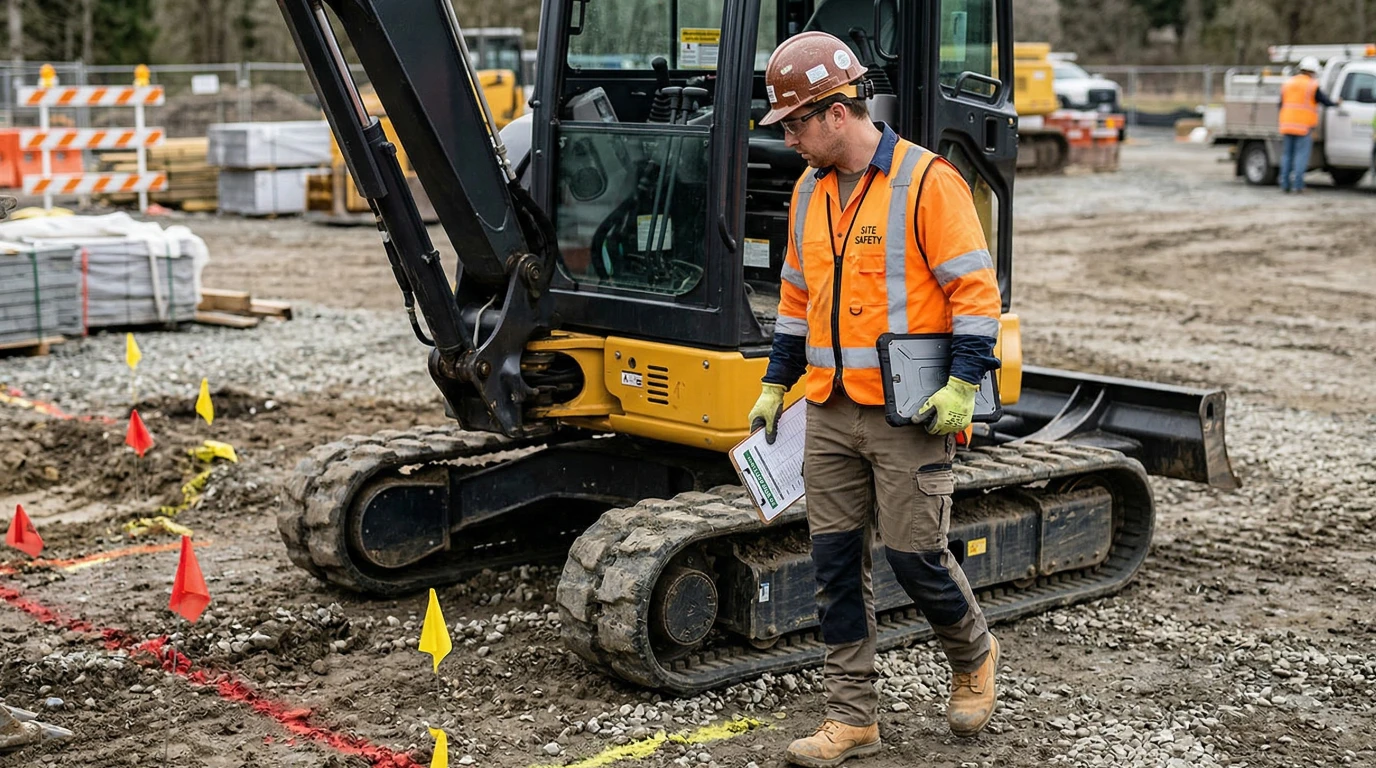
For the safe operation of the equipment, it is essential that tools be handled by competent persons, regardless of their quality. It is very important to be able to operate the site controls, boom, and drive of the compact excavator. Before the engine is started, the operators must inspect the worksite to ensure there are no hazards, such as uneven surfaces or underground services.
Standard ISO joystick controls, which are industry-standard hand-operated levers that allow smooth, simultaneous movement of the boom (the long arm), stick (the hinged section attached to the boom), and bucket (the digging attachment), are used in the majority of contemporary machines. You must learn to smoothly combine these movements to dig and grade accurately. To maintain the machine’s stability while excavating deeply, operators must also know how to position the backfill blade (a movable metal plate at the rear of the machine used for support and filling trenches).
Follow operational protocols, including proper mounting, seatbelt use, and careful load management, as required by safety regulations. Comprehensive training reduces accidents and equipment failures. Review A step-by-step beginner’s guide on operating a mini excavator for skill development.Reliability: Maintenance Best Practices
Equipment dependability is based on regular maintenance. Your excavator’s lifespan is increased, its resale value is maintained, and catastrophic failures on the job site are avoided with a proactive service approach. Regular maintenance is necessary for high-quality equipment to operate at its best.
Daily inspection checklists are your first line of defense. Before each shift, operators should check the coolant, hydraulic fluid, and engine oil levels. To prevent premature wear and tear on the machine’s high-friction areas, grease the pivot points, pins, and bushings daily. Additionally, removing mud and debris from the undercarriage ensures proper track tension and protects components from damage.
Following the manufacturer’s service intervals for fluid and filter changes keeps internal systems clean and lubricated. Address minor issues—such as worn hoses or loose tracks—early to avoid expensive repairs. For detailed maintenance, see our Mini Excavator Maintenance Guide: Schedule, Tips & Common Problems. Smart Investment: Buying Tips and Pricing
Expanding your fleet is a financial decision that demands careful thought and analysis. As you prepare to purchase mini excavator models for 2026, it is important to consider the cost-benefit analysis. The major dilemma is choosing between new and used machines. Mini excavators are categorized by weight: micro excavators are the smallest and most affordable, while machines in the six-ton category are larger and require a bigger investment. Brand and additional features also influence cost.
The cost, however, is just one side of the equation. The other side is the Total Cost of Ownership (TCO), which includes expenses such as fuel consumption (the amount of fuel the mini excavator uses during operation), insurance (coverage against loss or damage), logistics (transporting the machine to and from job sites), and maintenance costs (routine servicing and repairs). Working with a reputable brand means replacement parts are readily available and you can rely on dealer expertise to guide you through the process. To make an informed decision, read “How to Choose the Best Mini Excavator: Pricing, Brands & Buying Tips.”
Conclusion and Next Steps
Mini excavMini excavators represent unparalleled efficiency, reliability, and capability. Understanding various sizes and safe operation maximizes your return on investment. Their compact design enables work in tight spaces while delivering top results to clients. Success in construction relies on quality equipment and strong vendor relationships. Trusted suppliers provide reliable advice and machines suited to your needs. Seek partners committed to satisfaction and long-term support. Consider the time and demands of the project you are undertaking, as well as the capabilities of the machinery you currently use. Use the various resources provided in this guide to improve your knowledge and refine your strategies. This ensures you are making the most strategic and informed decision, guaranteeing success and profitability in 2026 and beyond.