


 What Is a Mini Excavator? Types, Sizes & Key Features Explained
Any construction project needs precise, reliable, and efficient equipment. In situations where space is a constraint but the need to lift heavy objects is high, the best solution is compact equipment, which is most suitable for contractors or fleet managers. Among all the equipment, the mini excavator functions as a necessary tool for residential, commercial, and utility construction operations.
The first step in creating a highly efficient and effective fleet is to understand the mini excavator, the focus of the following article, which will define the mini excavator and explain its components. In addition, the article will cover the different types of mini excavators, including their sizes, as well as the structural differences between standard and zero-tail-swing models.
The reader will understand the features of mini excavators, enabling them to select the most effective equipment that delivers the required durability, simplicity, and efficiency in construction operations.
What Defines a Mini Excavator?
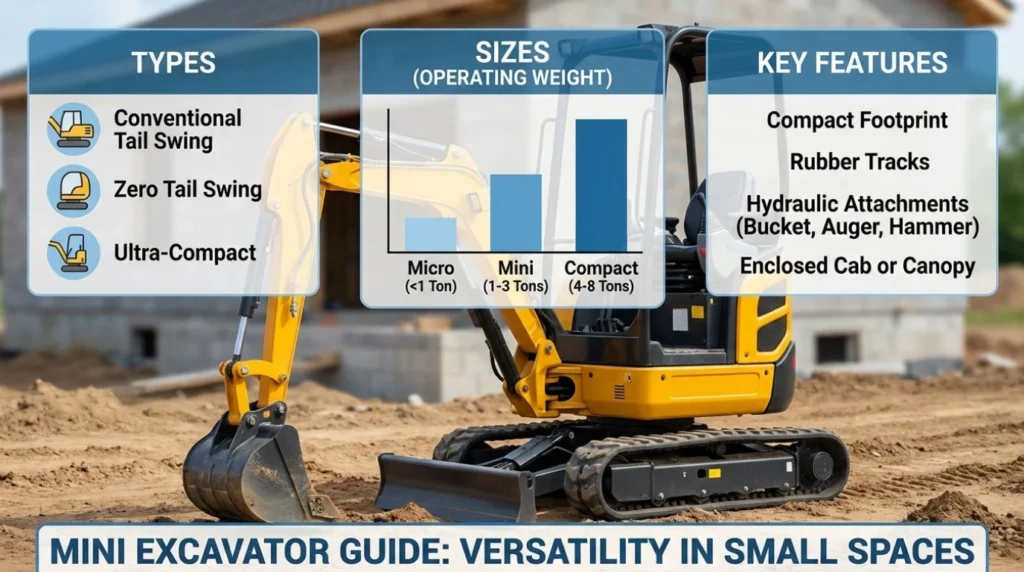
A mini excavator is also known as a compact excavator. It is defined as a tracked or wheeled machine with an approximate operating weight of less than six tons. The machine also features a standard backhoe package. Moreover, the machine features a rotating house that provides full 360-degree rotation. Compact excavators are designed to offer heavy digging, lifting, and grading capabilities in areas where larger excavators cannot fit.
Compact heavy equipment was developed to meet the growing need for multifunctionality in urban construction and residential areas. The early versions of the equipment were characterized by massive designs that were difficult to transport. Moreover, they were likely to cause damage to the construction site. Today, the equipment is designed to deliver excellent breakout force without incurring elevated operational costs.
Essentially, all mini excavators use four major components. The cab, or operator station, contains all the controls and safety features. The boom and stick together comprise the articulating arm, which actually does all the digging and lifting. The undercarriage supports the entire weight of the mini excavator, contains all the drive motors, and enables travel over tough terrain. If you’d like a wider overview of how mini excavators might be part of your overall fleet strategy, check out our Complete Guide to Mini Excavators: Types, Uses, Pricing & Buying Tips (2026).
Classifying Mini Excavators by Size
It is impossible to understand the various sizes of mini excavators before selecting an appropriate machine. The equipment sector divides mini excavators into three different weight categories. Each category has its own advantages in terms of digging depth, lifting capacity, and ease of transport.
Micro Excavators (Under 1 Ton)
The smallest and most flexible form of digging equipment is that of the micro excavator. It is equipped with a retractable undercarriage, enabling the machine to traverse through regular doorways or even a garden gate. Such machines are best for demolition inside a building, digging for plumbing in a backyard, or even landscaping. Even though these machines lack a lifting device, their high level of accessibility is extremely important.
Mid-Range Compacts (1 to 3 Tons)
The 1 to 3 ton category is also the most popular and versatile for use by general contractors. The excavators in this category have a considerable increase in boost in hydraulic power and breakout force compared to micro excavators. The machines can handle utility line trenching, small foundation excavations, and material loading. The cost of moving these excavators is also very low, as they can be towed behind a typical heavy-duty pickup truck utilizing a regular utility trailer.
Heavy-Duty Mini Excavators (3 to 6 Tons)
The 3 to 6-ton machines are best suited to bridge the gap between compact and heavy-duty machines. They are equipped with the maximum digging depths and lifting capacities, and are therefore best for commercial construction and large-scale earthwork preparation. The 3 to 6-ton machines are best for fleet managers who need serious earthmoving capabilities, but still require a machine that does not present logistical issues when transporting a full-sized excavator.
Standard vs. Zero Tail Swing (ZTS)
The structural configuration of the machine’s rotating house is also an important factor that determines its functional capabilities. The buyers must choose between a standard tail-swing and a zero-tail-swing excavator. Both configurations have different advantages.
Advantages of Standard Tail Swing
Standard tail-swing excavators have a counterweight at the rear that extends beyond the tracks’ width as the house rotates. This counterweight offers excellent lifting stability, especially for heavy loads to be lifted over the side of the tracks. The machines are also designed to provide a roomier, more comfortable operator cab and easy engine servicing. The operators’ preferred machines are the standard excavators, especially for use on open sites where space is not a major issue.
When to Use Zero Tail Swing Models
A zero tail swing excavator maintains its entire upper structure within the footprint of the tracks as they rotate. The advantage of this type of design is that the risk of the machine’s back end colliding with walls, fences, and other obstacles is eliminated. The zero tail swing type is often used by construction companies, especially when working in single-lane roadways, heavily crowded urban areas, and alongside residential foundations. The disadvantages of the extreme maneuverability are a wider track stance and a smaller operator station.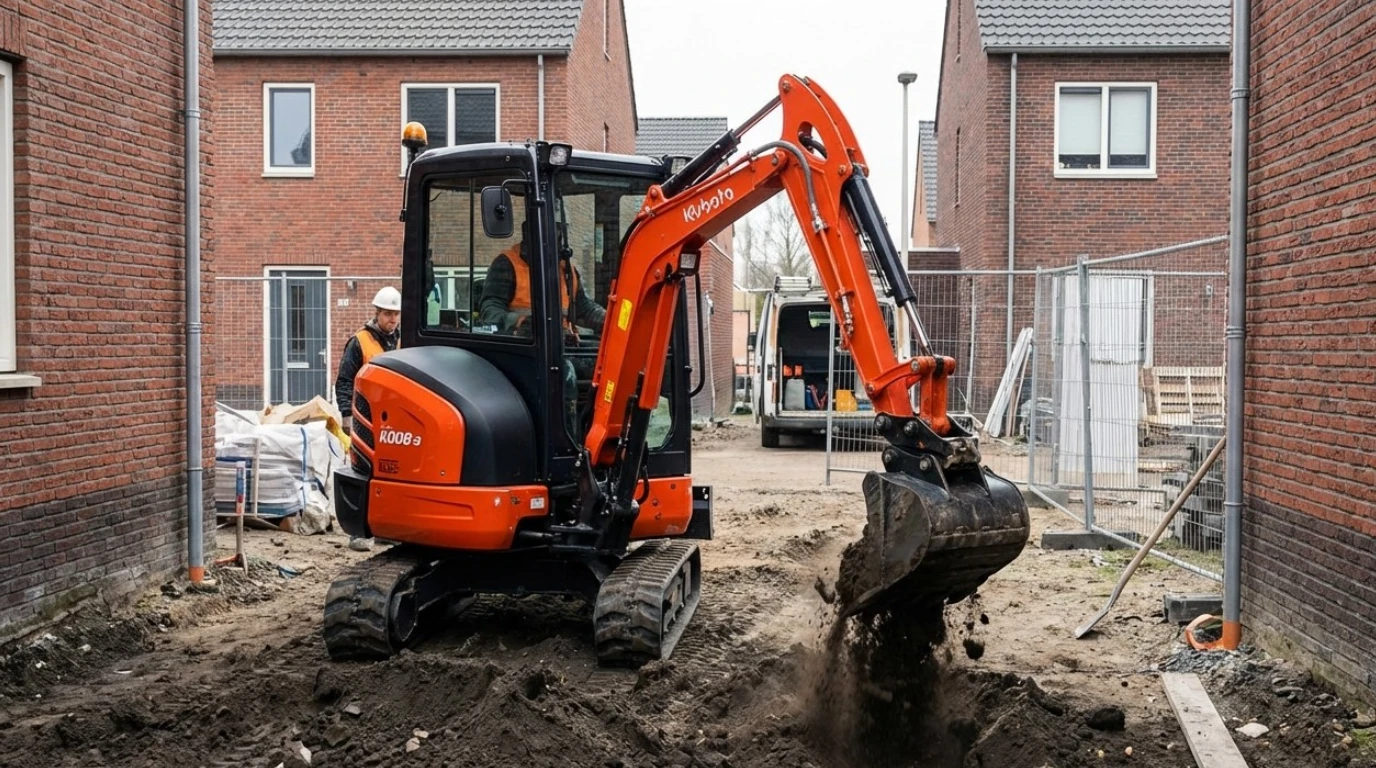
Key Features that Drive Performance
Modern mini excavators incorporate the latest engineering to improve job-site efficiency. Build quality and mechanical strength distinguish reliable machines from those prone to breakdown. Understanding the features of compact excavators helps you choose a machine with lasting value.
Engine Power and Hydraulic Systems
The diesel engine and the hydraulic system are directly correlated, defining the machine’s real potential. Reliable manufacturers use fuel-efficient engines that satisfy stringent emissions standards without jeopardizing performance. The hydraulic system converts engine power into pressurized fluid that drives boom, stick, and attachment movement. High-flow auxiliary hydraulics are a luxury option that enables the machine to operate heavy tools, such as mulchers and concrete breakers, efficiently.
Track Types and Undercarriage Durability
The type of tracks one selects has a direct bearing on how well the machine will gain traction while guaranteeing the surface remains unharmed. The standard track type on most compact excavators is rubber, as it can navigate paved roads, concrete driveways, and well-manicured landscaping without causing damage. Steel tracks, meanwhile, offer unparalleled strength and are suitable for extreme working conditions, such as rocky terrain or demolition sites. It is therefore important to understand how to properly maintain and operate tracks to ensure components stay in good working order. To find out more about how one should operate tracks, be sure to check out our guide: How to Operate a Mini Excavator: Step-by-Step Beginner Guide.
Choosing the Right Foundation for Your Project
The equipment you choose will be the basis of your success. In purchasing a mini excavator, it is essential to match your needs with its specifications (size, weight, lifting capacity, and digging depth). If you purchase an excavator that is too small for your needs, it will be unable to carry heavier loads, bringing about increased wear on its hydraulics (the system that provides power for movement). If you purchase an excavator that is too large for your needs, it will be wasteful, consume more fuel, and be difficult to maneuver in tight spaces.
You can start narrowing down your choices by considering your needs at your construction site. It is important to determine how deep you dig at your construction site and how much your construction materials weigh. It is also vital to consider the cost of moving your equipment between sites. If you have heavier equipment, you will need a CDL and a heavier trailer.
Budgetary issues are also an important factor in the decision-making process. Quality machinery is an expensive investment, but as mentioned, it is well worth the cost, especially in the long run. However, as you prepare to purchase the equipment, you should consider maintenance costs. For an in-depth look at the purchase process, read How to Choose the Best Mini Excavator: Pricing, Brands & Buying Tips.
Conclusion
Mini excavators provide unmatched utility for today’s construction and landscape projects. These machines address the most common problems that contractors face on small job sites. Understanding what constitutes a mini excavator will help you identify the exact mechanical requirements to improve your workflow.
Your choice of size, tail swing, and particular features of the mini excavator will greatly affect efficiency. Close examination of standard and zero-tail-swing mini excavators will enable operators to work safely in most environments. Finally, understanding the relationship between horsepower and hydraulic power will ensure you purchase an excavator that meets specific requirements.
Quality and durability will ensure a high return on your investment in equipment. Good equipment means less downtime for repairs and holds its value longer. Use the information in this guide to determine your existing fleet needs and make an easy, fact-based purchasing decision for your business.