


Everything You Need to Know About Mini Excavators
Mini excavators have become one of the most useful machines in construction, landscaping, farming, utility work, and property maintenance. They are compact enough to work in tight areas, strong enough to handle serious digging and lifting, and versatile enough to perform many different jobs with the right attachments. For both professionals and homeowners, a mini excavator can turn difficult manual work into a faster, cleaner, and far more efficient process.
That is one of the main reasons mini excavators have become so popular. They sit in a very practical middle ground. They are much smaller and easier to manage than full-size excavators, but they still provide the power needed for trenching, grading, backfilling, digging footings, clearing land, and handling materials. For many jobs, they are simply the smarter choice.
If you are considering renting, buying, or using a mini excavator for the first time, it helps to understand how these machines work, what they are best used for, and what to look for before putting one to work. This guide covers everything you need to know, from basic design and benefits to safety, operation, maintenance, and common questions.
What Is a Mini Excavator?
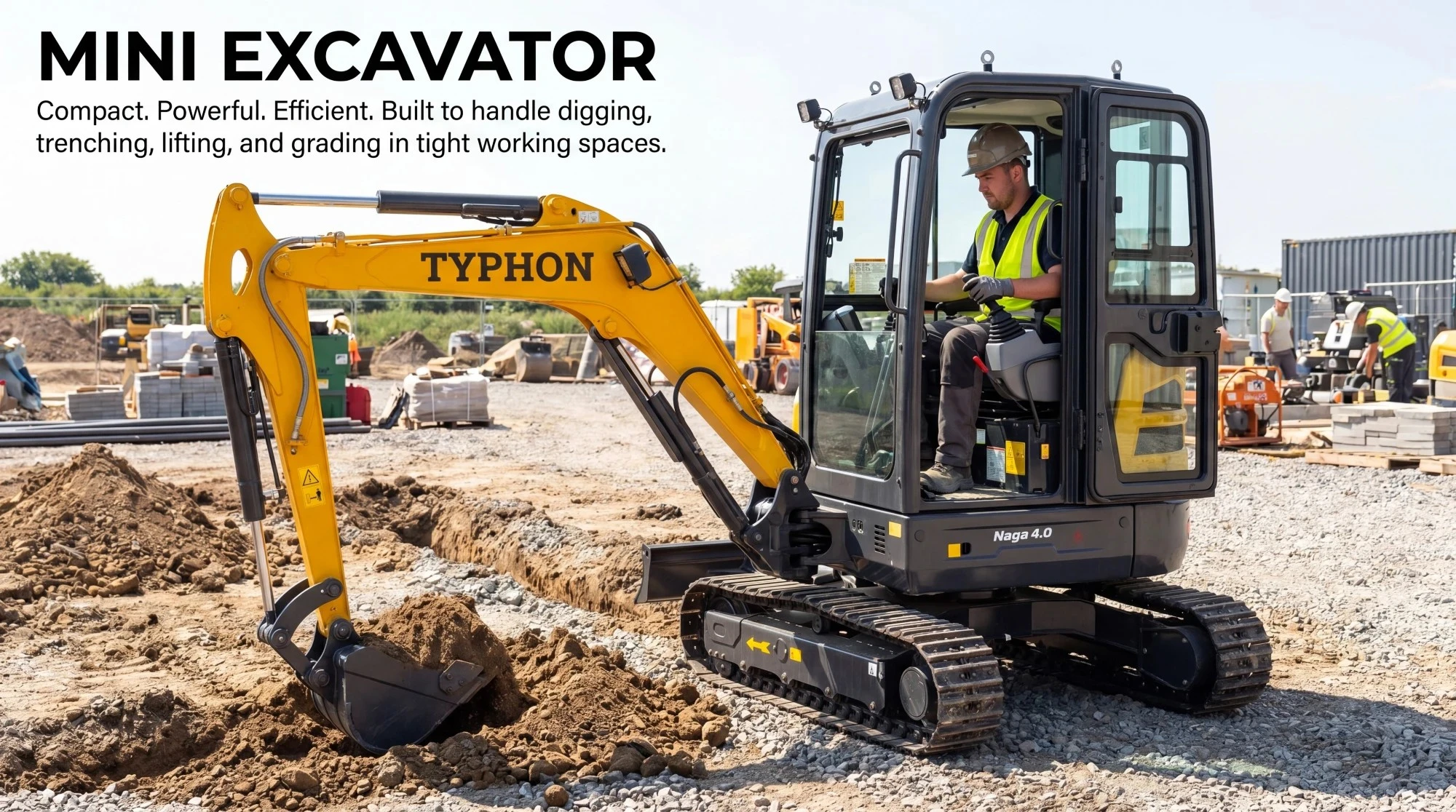
A mini excavator, also called a compact excavator, is a small earthmoving machine designed for digging, trenching, lifting, grading, backfilling, and light demolition. Most mini excavators weigh between about 0.7 and 10 metric tons. That size range makes them far easier to transport and maneuver than standard full-size excavators while still giving them the hydraulic power needed for demanding work.
Even though they are smaller, mini excavators have the same core parts as larger excavators. They usually include an undercarriage with rubber tracks, a cab or canopy for the operator, a boom and arm, a bucket, a hydraulic system, an engine, a dozer blade, and often auxiliary hydraulic lines for extra attachments.
The tracks help spread the machine’s weight, which reduces ground pressure and makes mini excavators better for lawns, soft soil, and more delicate surfaces. The boom, arm, and bucket work together to dig, lift, and place material. The hydraulic system powers these movements and gives the machine much of its strength. The blade is useful for stabilizing the machine, backfilling, and light grading work.
In simple terms, a mini excavator is built to do the work of a larger excavator in smaller, more sensitive, or harder-to-reach spaces.
Why Are Mini Excavators So Popular?
The biggest reason mini excavators are so widely used is that they solve a lot of practical jobsite problems at once. They are powerful enough to save huge amounts of labor, but compact enough to work where larger machines cannot. They are easier to transport, often simpler to rent, and more affordable to run than larger excavation equipment.
For small contractors, mini excavators help reduce crew fatigue and improve productivity. For landscapers, they make excavation, drainage work, and material handling much easier. For farmers and rural property owners, they can be used for trenching, clearing, ditch maintenance, post hole drilling, and light demolition. Even homeowners working on major outdoor projects often rent mini excavators for drainage, retaining walls, utility work, or site preparation.
That flexibility is what gives the machine so much value.
 Main Benefits of Mini Excavators
1. Versatility
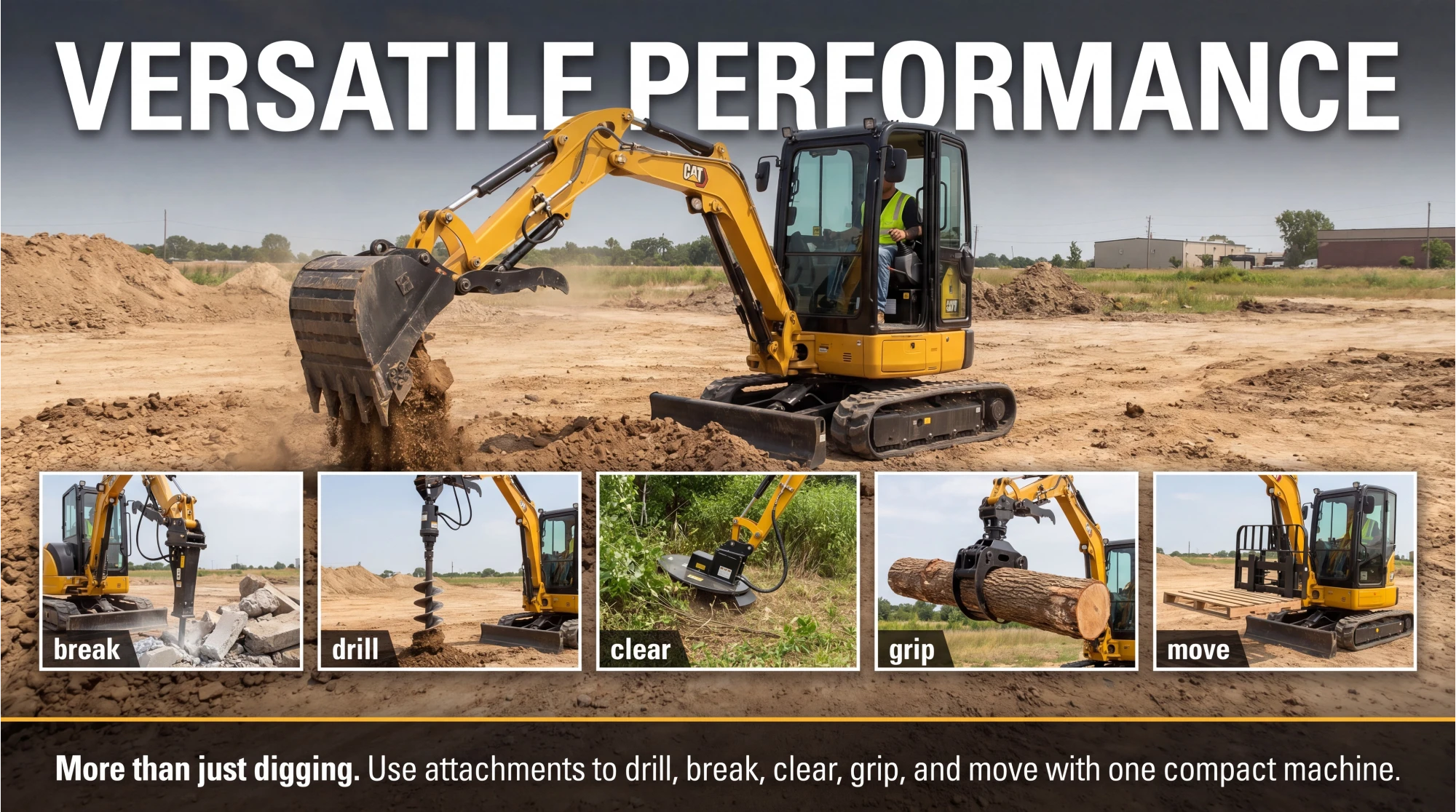
A mini excavator can do much more than basic digging. With the right attachment, it can become a drilling machine, a breaker, a grapple unit, or a clearing tool. This means one machine can take on a wide range of tasks without requiring several different pieces of equipment.
Common mini excavator attachments include augers for drilling, hydraulic breakers for concrete and rock, grapples for logs and debris, trenching buckets for utility lines, thumbs for gripping materials, forks for pallets, and brush cutters for clearing overgrowth.
Because of this, mini excavators are widely used in landscaping, utility trenching, site preparation, farming, drainage installation, demolition, and land clearing.
2. Access to Tight Spaces
This is one of the most important advantages of a mini excavator. These machines are designed to work in places where larger machines simply do not fit. They are useful in residential backyards, narrow side paths, urban lots, interior renovation work, and around existing structures or landscaping.
Many models also use zero-tail-swing or reduced-tail-swing designs. That means they can rotate with less rear overhang, which makes them safer and easier to use near walls, fences, buildings, and parked vehicles.
3. Lower Operating Costs
Compared with large excavators, mini excavators are often cheaper to rent, cheaper to buy, easier to transport, and more fuel-efficient. Because they can replace a lot of manual digging and lifting, they also reduce labor costs and shorten project timelines.
For small businesses and property owners, this makes them one of the most cost-effective pieces of compact heavy equipment available.
4. Reduced Surface Damage
Because mini excavators are lighter and usually run on rubber tracks, they tend to cause less ground damage than heavier equipment. This matters when working on lawns, finished driveways, garden areas, or other sensitive surfaces.
5. Better Precision
Mini excavators are not only compact, they are also very precise. Skilled operators can dig close to structures, utilities, and landscaping features with much more control than many other machines. That precision helps reduce mistakes and cleanup time.
Common Jobs a Mini Excavator Can Handle
Mini excavators are used for an impressive variety of tasks. Some of the most common include trenching for water or electrical lines, digging footings or small foundations, installing drainage, grading land, clearing brush, removing stumps, digging ponds, breaking concrete, planting large trees, and moving rocks or debris.
On farms and rural properties, they are often used to clean ditches, repair drainage systems, set fence posts with augers, and handle general maintenance. On landscaping jobs, they are useful for retaining walls, garden shaping, irrigation trenching, and hardscape preparation.
The exact range of work depends on machine size and attachments, but the basic idea remains the same: one compact machine can take on many kinds of demanding outdoor work.
Renting vs. Buying a Mini Excavator
Before getting a mini excavator, one of the first decisions is whether renting or buying makes more sense.
Renting
Renting is usually best for short-term or occasional use. It keeps upfront costs lower and removes the responsibility for storage, routine maintenance, and long-term ownership costs. Renting also gives you a chance to test different machine sizes before committing to a purchase.
Renting is often the best option for homeowners, first-time users, one-time projects, and contractors who only need a machine for specific jobs.
Buying
Buying makes more sense when a mini excavator will be used regularly. Contractors, landscapers, utility crews, and farm owners often benefit from ownership because the machine is always available, becomes familiar over time, and can be fitted with preferred attachments.
Ownership also creates long-term value if the machine is used frequently enough to justify the investment.
The best choice depends on how often you will use the machine, how long projects typically last, and whether you are prepared for maintenance, insurance, storage, and transport.
Basic Mini Excavator Safety
Operating a mini excavator may be easier than many people expect, but it still requires care and respect. It is a powerful machine, and safe habits are essential.
Before starting, always read the operator’s manual for the specific model. Wear appropriate protective gear such as gloves, boots, eye protection, and a hard hat if the worksite requires it. Inspect the machine for leaks, worn tracks, loose components, and low fluids. Check the jobsite for overhead hazards, unstable ground, and anything that could interfere with safe movement.
One of the most important rules is to identify underground utilities before digging. Striking a gas line, water line, or buried electrical cable can be dangerous and very expensive.
Other basic safety rules include using three points of contact when getting in and out of the cab, never allowing passengers, keeping the work zone clear of bystanders, staying on stable ground whenever possible, and never pushing the machine beyond its rated lifting or digging capacity.
How a Mini Excavator Operates
Most mini excavators use two joysticks and either pedals or hand levers for track control. One joystick usually controls swing and arm movement, while the other controls the boom and bucket. The travel controls move the tracks, and a separate control usually raises or lowers the dozer blade.
For new operators, the best way to start is in an open, safe space. Practice basic motions first: moving forward and backward, swinging the upper structure, lifting and lowering the boom, curling the bucket, and coordinating smooth digging movements.
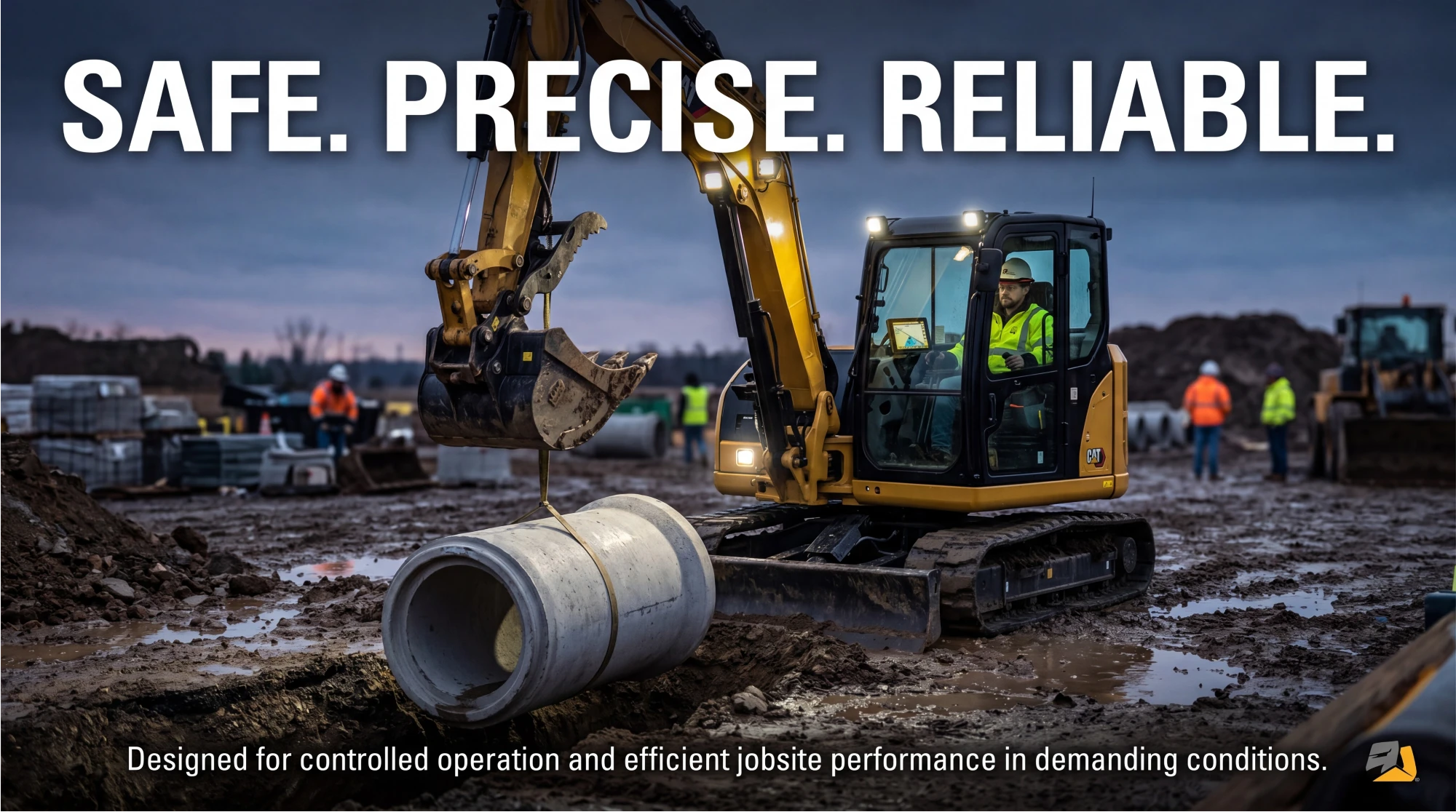 Mini excavators work best when used with slow, controlled inputs rather than sudden, aggressive movements. Good operation is about smooth control, stable positioning, and thoughtful planning.
Best Practices for Efficient Operation
Planning the job before digging can save a huge amount of time. Mark the work area, identify rocks, roots, structures, and spoil pile locations, and make sure there is enough space to move and dump material efficiently.
Position the machine on stable, level ground whenever possible. Keep the swing distance short between the digging point and the dump area. Instead of forcing the full digging depth at once, dig in layers. Use the arm to pull through the soil while curling the bucket for more efficient digging.
For trenching, keep the machine parallel to the trench line and work in a consistent pattern. Use the dozer blade for stability and backfilling when needed.
Efficiency is not just about speed. It is also about reducing stress on the machine and finishing the job with fewer corrections and less wasted motion.
Mini Excavator Maintenance
Routine maintenance is one of the most important parts of getting long-term value from a mini excavator. A well-maintained machine performs better, lasts longer, and is much less likely to suffer costly breakdowns.
Daily checks should include engine oil, hydraulic fluid, coolant, fuel, track condition, hose condition, grease points, and attachment pins. Worn parts should be replaced early before they create larger failures.
Scheduled maintenance such as filter changes, hydraulic service, and lubrication should follow the manufacturer’s recommendations. It is also smart to keep the machine clean, especially around the undercarriage and engine area, because built-up dirt and debris can hide leaks and increase wear.
If you buy a used machine, maintenance history matters a lot. A well-maintained used excavator may be a far better investment than a neglected machine with lower hours.
Choosing the Right Mini Excavator Size
Mini excavators come in several size classes, and size affects digging depth, lifting power, reach, transport requirements, and access.
Smaller machines are best for tight residential work, light landscaping, and narrow access points. Mid-sized mini excavators offer a strong balance of digging ability and portability. Larger mini excavators can handle deeper digging, stronger lifting, and more demanding work, but they require more room and transport capacity.
The right size depends on what kind of projects you handle most often. Bigger is not always better. A machine that fits the work and the site usually delivers the best overall value.
Frequently Asked Questions
What is a mini excavator mainly used for?
A mini excavator is mainly used for digging, trenching, grading, lifting, and moving material in smaller or tighter jobsites. It is common in landscaping, construction, utilities, farming, and demolition.
How does a mini excavator work?
A mini excavator uses an engine-powered hydraulic system. Hydraulic fluid moves through pumps, hoses, valves, and cylinders to control the boom, arm, bucket, swing, tracks, and other machine functions.
What are the biggest advantages over manual labor?
A mini excavator is much faster, reduces physical effort, improves productivity, and can handle jobs that would take several workers much longer by hand.
Can homeowners use a mini excavator?
Yes. Many homeowners rent mini excavators for landscaping, drainage, trenching, and property improvement projects. Basic instruction and careful safety preparation are strongly recommended.
What is the difference between a mini excavator and a skid steer?
A mini excavator is mainly for digging and trenching, while a skid steer is better for pushing, carrying, and loading material. Both are versatile, but they perform different core jobs.
How deep can a mini excavator dig?
That depends on the machine size. Smaller models may dig around 5 to 7 feet, mid-sized machines around 8 to 12 feet, and larger compact models around 15 feet or more.
Is it better to rent or buy a mini excavator?
Renting is usually better for short-term or occasional use. Buying is usually better for contractors, landscapers, farm owners, and others who will use the machine regularly enough to justify ownership.
What attachments make a mini excavator more useful?
Common useful attachments include trenching buckets, grading buckets, augers, hydraulic breakers, grapples, thumbs, forks, and brush cutters. The best choice depends on the kind of work you do most often.
Conclusion
Mini excavators have earned their place as one of the most practical and valuable machines in compact equipment. They combine digging power, precision, versatility, and access in a way that makes them useful across construction, landscaping, farming, utilities, and property maintenance. They are easier to transport and often more affordable to operate than larger excavators, yet still powerful enough to handle serious work.
Whether you rent one for a short project or buy one for regular use, understanding how mini excavators work, what they are best used for, how to operate them safely, and how to maintain them properly will help you get much more value from the machine.
For many jobs, a mini excavator is not just a helpful tool. It is one of the smartest equipment choices you can make.