


 Quick Attachment Mini Excavator 2026: Revolutionizing Your Work
Have you ever watched a skilled operator on a construction site, seamlessly switching between different tools on their excavator, making complex tasks look effortlessly simple? What if we told you that much of that efficiency isn’t just about the operator’s skill, but also the technology enabling those rapid changes? Welcome to the world of “quick attachment” systems, a game-changer that’s transforming how we approach heavy machinery, particularly mini excavators. In an industry constantly striving for greater productivity, safety, and versatility, quick attachments stand out as a pivotal innovation. They’re not just a convenience; they’re a fundamental shift in operational strategy, allowing a single machine to perform a multitude of tasks with unprecedented speed and ease.
Imagine a future where your mini excavator, a cornerstone of countless projects, can transition from digging trenches to breaking concrete, then to grading soil, all within minutes, not hours. This isn’t a distant dream; it’s the reality that quick attachment systems are already delivering, and their evolution continues at a rapid pace. As we look towards 2026 and beyond, these systems are becoming even more sophisticated, user-friendly, and integrated, promising to unlock new levels of efficiency and profitability for businesses of all sizes. Whether you’re a seasoned contractor, a landscaper, a DIY enthusiast with big projects, or simply curious about the cutting edge of equipment technology, understanding quick attachments is essential. This comprehensive guide will demystify these powerful tools, explore their profound benefits, teach you how to integrate them into your operations, and provide best practices to maximize their potential. Get ready to discover how quick attachments are not just improving work, but redefining it.
What is Quick Attachment?
At its core, a “quick attachment” system, often referred to as a quick coupler or quick hitch, is a mechanical device that allows an operator to rapidly connect and disconnect various work tools (attachments) to a piece of heavy equipment, such as a mini excavator, without the need for manual pin removal and insertion. Traditionally, changing an attachment on an excavator involved a time-consuming and often labor-intensive process: an operator would have to exit the cab, manually remove two heavy pins, detach the current tool, maneuver the machine to align with the new tool, re-insert the pins, and then secure them. This process could take anywhere from 15 minutes to an hour, depending on the attachment, the operator’s experience, and the working conditions.
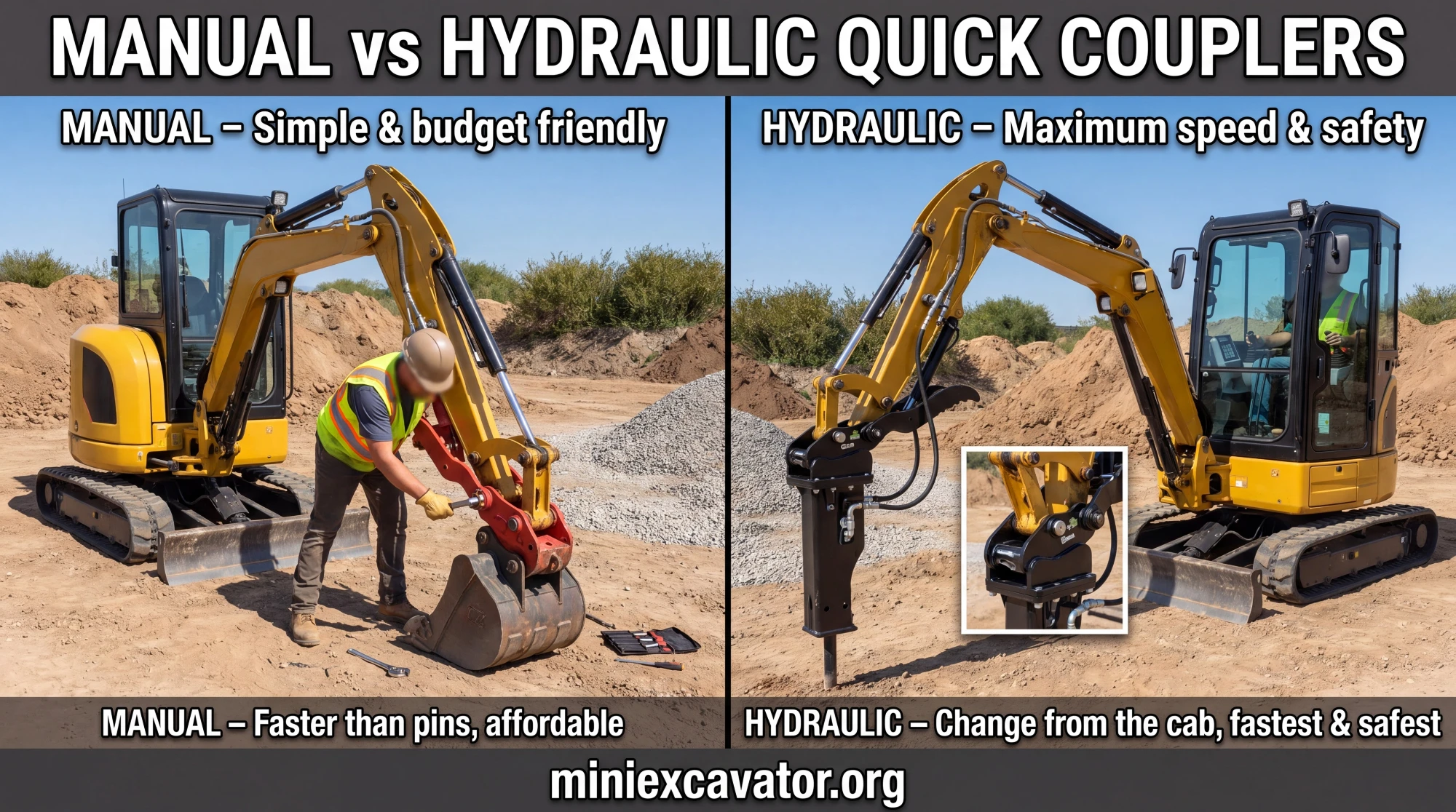
Quick attachment systems eliminate this arduous process. They essentially act as an adapter between the excavator’s boom arm and the attachment. The system typically consists of a main body that mounts to the end of the excavator’s stick, and a locking mechanism that securely grips the attachment’s pins. This mechanism can be mechanical (manual) or hydraulic (powered by the excavator’s hydraulic system).
Types of Quick Attachment Systems:
- Manual Quick Couplers: These systems still require the operator to exit the cab to manually engage or disengage a locking pin or lever. While not fully automated, they significantly reduce the time and effort compared to traditional pin-on methods. They are generally simpler, more robust, and less expensive, making them a popular choice for smaller operations or those with less frequent attachment changes. An example might be a wedge-style coupler where a wedge is hammered in to secure the attachment.
- Hydraulic Quick Couplers: These are the most advanced and widely adopted systems. With a hydraulic quick coupler, the operator can connect and disconnect attachments directly from the comfort and safety of the excavator’s cab, using a switch or joystick control. The excavator’s hydraulic pressure is used to actuate the locking mechanism, which typically involves a set of jaws or pins that securely grip the attachment. This fully automated process can take mere seconds, dramatically boosting efficiency. Many modern hydraulic couplers also feature safety interlocks, indicators, and double-locking mechanisms to prevent accidental detachment.
- Dedicated vs. Universal Couplers:
- Dedicated Couplers: Designed to work with a specific brand or type of attachment, ensuring a perfect fit and often maximizing performance.
- Universal Couplers: Engineered to accommodate a wider range of attachments from different manufacturers, offering greater flexibility, though sometimes with minor compromises in fit or specific features.
How They Work (Simplified):
Imagine a hydraulic quick coupler. The operator positions the excavator’s stick so that the quick coupler engages the top pin of the desired attachment. Then, from the cab, they activate the hydraulic system. This extends or retracts internal components within the coupler, causing jaws or pins to clamp down securely onto both the top and bottom pins of the attachment. A visual or audible indicator often confirms a secure lock. To detach, the process is reversed.
The evolution of quick attachment systems, especially for mini excavators, has been driven by the need for greater versatility in compact spaces. A mini excavator is often the only machine on a job site, requiring it to perform a wide array of tasks. Quick attachments empower these smaller machines to punch above their weight, transforming them into multi-functional powerhouses. As we look to 2026, advancements are focusing on even greater safety features, telematics integration for maintenance alerts, and potentially even AI-assisted attachment recognition for optimal performance settings. Understanding these foundational principles is key to appreciating the profound impact quick attachments have on modern construction and landscaping.
 Key Benefits
The adoption of quick attachment systems, especially for mini excavators, isn’t just about convenience; it’s about a fundamental shift in operational efficiency, safety, and cost-effectiveness. The benefits are multifaceted and directly contribute to a healthier bottom line and a safer work environment.
1. Enhanced Productivity and Efficiency
This is perhaps the most immediate and impactful benefit. Imagine a scenario where a mini excavator needs to dig a trench, then clear debris, and finally grade the area. Without a quick attachment system, each tool change could consume 15-30 minutes of valuable operational time. Over the course of a day with multiple attachment changes, this can easily add up to hours of lost productivity. With a hydraulic quick attachment, these changes can be completed in under a minute, often in mere seconds, all from the operator’s seat.
- Real-world example: A landscaping company is installing a new garden. The mini excavator first uses a digging bucket to excavate for a pond, then switches to a hydraulic breaker to remove a stubborn rock, then to a grading blade for final soil preparation, and finally to a grapple to move large logs. Each switch, taking less than a minute, allows the project to flow continuously, minimizing downtime and maximizing the machine’s active working hours. This rapid interchangeability means more tasks can be completed in a shorter timeframe, leading to faster project completion and the ability to take on more jobs.
2. Improved Safety
Traditional attachment changes pose several safety risks. Operators must exit the cab, often in muddy, uneven, or hazardous conditions, to manually handle heavy pins. There’s a risk of pinch points, back injuries from lifting, and potential for the machine to move unexpectedly.
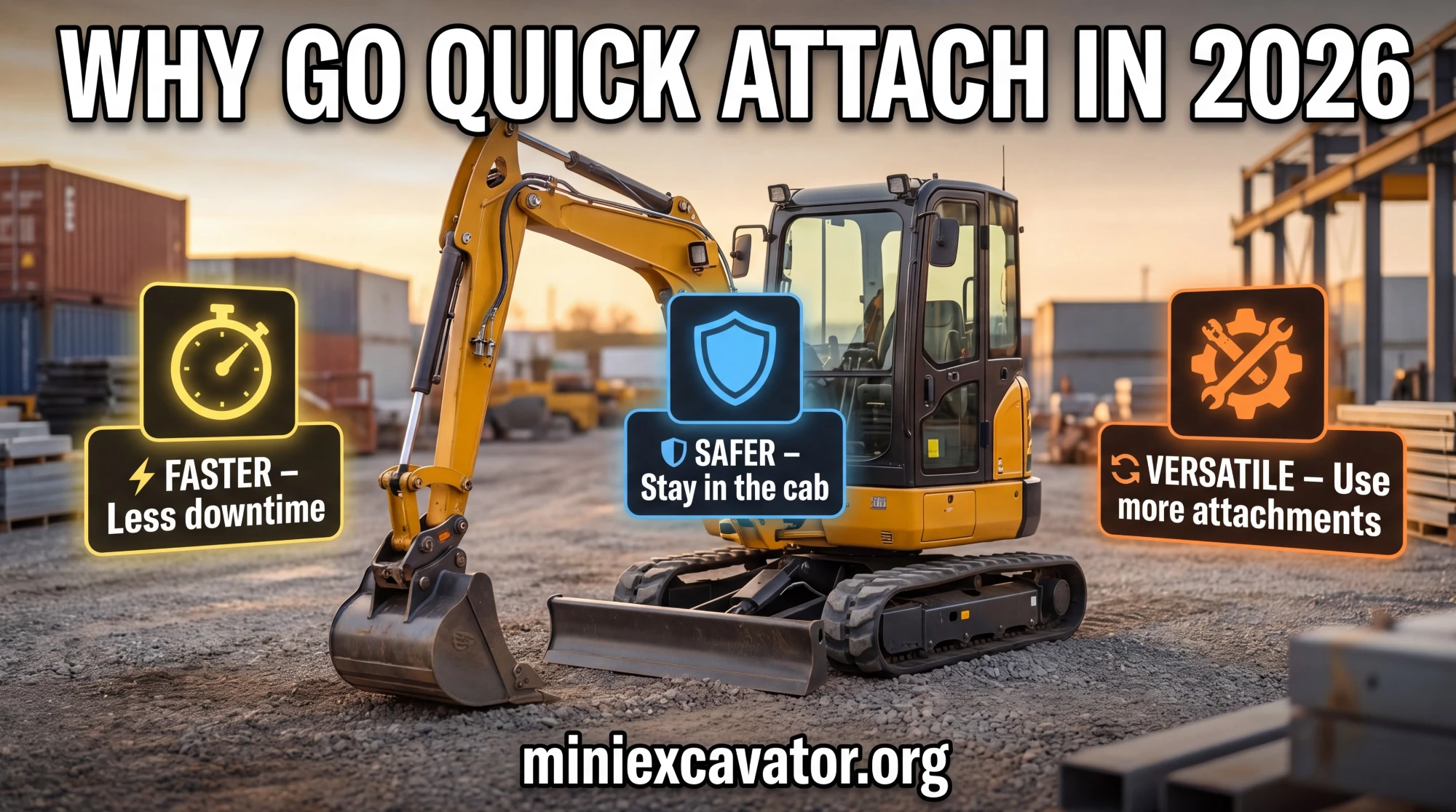
- Mitigating Risks: Hydraulic quick attachments eliminate the need for the operator to leave the cab during the changeover process. This significantly reduces exposure to moving machinery parts, slippery surfaces, and other on-site hazards. Many modern systems also incorporate advanced safety features:
- Visual and Audible Indicators: Confirm that the attachment is securely locked, preventing accidental detachment.
- Double-Locking Mechanisms: Provide redundancy, ensuring that even if one locking mechanism fails, the attachment remains secured.
- Proximity Sensors: Some advanced systems can detect if an attachment is not fully engaged and prevent the machine from operating at full capacity or even moving, acting as a crucial failsafe.
- Controlled Environment: The operator remains in the protective environment of the cab, away from potential falling objects or unstable ground.
3. Increased Versatility and Machine Utilization
A mini excavator equipped with a quick attachment system becomes a true multi-tool. Instead of needing specialized machines for different tasks, one excavator can perform a much wider array of jobs simply by swapping attachments.
- Cost Savings: This versatility means businesses can invest in fewer specialized machines, reducing capital expenditure, maintenance costs, and storage requirements. A single mini excavator can effectively replace the need for a separate trencher, a small loader, and a demolition tool.
- Broader Service Offerings: Contractors can offer a wider range of services without increasing their fleet size, making them more competitive and attractive to clients. For instance, a general contractor can easily pivot from site preparation (using a digging bucket) to demolition (with a hydraulic breaker), then to material handling (with a grapple) all with the same base machine. This maximizes the return on investment for the mini excavator.
4. Reduced Wear and Tear on Equipment
While seemingly counterintuitive, quick attachment systems can actually reduce wear and tear on the excavator itself. By ensuring a precise and secure fit for each attachment, they minimize slack and movement between the coupler and the tool. This reduces stress on the stick, pins, and bushings of the excavator, extending their lifespan. Furthermore, because attachment changes are faster, operators are less likely to rush or force connections, which can cause damage. The smooth, controlled engagement of hydraulic systems also contributes to less shock loading on the machine’s components compared to manual, often forceful, pin insertion.
5. Operator Comfort and Morale
An often-overlooked benefit is the positive impact on operator comfort and morale. Eliminating the need for frequent, strenuous, and sometimes dirty manual attachment changes significantly improves the operator’s experience. Less physical exertion means less fatigue, which in turn can lead to increased focus, better decision-making, and a lower risk of accidents. Operators appreciate the efficiency and convenience, fostering a more positive work environment and potentially reducing staff turnover. A comfortable operator is a productive operator.
By leveraging these key benefits, businesses can optimize their operations, enhance safety protocols, and ultimately achieve greater success in a competitive market. The initial investment in a quick attachment system quickly pays for itself through these tangible advantages.
How to Get Started
Implementing quick attachment systems into your operations, especially for a mini excavator, is a strategic move that requires careful planning and execution. It’s not just about buying a piece of equipment; it’s about integrating a new workflow. Here’s a step-by-step guide to help you get started effectively.
1. Assess Your Needs and Current Equipment
Before making any purchases, thoroughly evaluate your current operations and equipment.
- Identify Your Most Frequent Tasks: What are the primary jobs your mini excavator performs? Digging, trenching, grading, breaking, lifting, clearing, drilling? List all the attachments you currently use or foresee needing.
- Analyze Attachment Change Frequency: How often do you switch attachments in a typical day or week? If changes are rare, a manual quick coupler might suffice. If they are frequent, a hydraulic system will offer a better return on investment.
- Evaluate Your Mini Excavator:
- Make and Model: This is crucial for compatibility. Quick couplers are designed to fit specific machine classes and pin sizes.
- Hydraulic System: If considering a hydraulic quick coupler, does your mini excavator have auxiliary hydraulics? If not, can they be added? What is the flow rate and pressure?
- Lifting Capacity: Understand how the added weight of the quick coupler will affect your machine’s lifting capacity and stability.
- Budget: Determine your budget for the quick coupler and any new attachments you might need. Hydraulic systems are more expensive upfront but offer greater long-term efficiency.
2. Research and Select the Right Quick Attachment System
Once you understand your needs, it’s time to explore the market.
- Compatibility is Key: Ensure the quick coupler you choose is explicitly compatible with your mini excavator’s make, model, and year. Consult your excavator dealer or the quick coupler manufacturer’s specifications.
- Type of Coupler:
- Manual: Cost-effective, robust, good for infrequent changes. Requires operator to leave the cab.
- Hydraulic: Maximum efficiency, safety, and convenience. Operator stays in the cab. Higher initial cost and requires auxiliary hydraulics.
- Safety Features: Prioritize systems with robust safety features like double-locking mechanisms, visual/audible indicators, and compliance with industry safety standards (e.g., ISO 13031).
- Attachment Compatibility: Consider if you need a dedicated coupler (for specific brand attachments) or a universal coupler (for a wider range of brands). If you have existing attachments, ensure they are compatible with the chosen quick coupler. You may need to modify existing attachments or purchase new ones that are “quick coupler ready.”
- Reputation and Support: Choose a reputable manufacturer known for quality, durability, and excellent customer support. Read reviews and seek recommendations.
3. Source and Purchase
- Authorized Dealers: Purchase from authorized dealers for both your excavator and the quick coupler. They can provide expert advice, ensure compatibility, and offer installation services and warranty support.
- Consider Bundles: Sometimes, purchasing new attachments along with the quick coupler can result in better deals or ensure perfect compatibility.
- Installation: Decide whether you’ll install it yourself (if you have the expertise and tools) or have the dealer perform the installation. Professional installation ensures correct setup and calibration, especially for hydraulic systems.
4. Training and Implementation
Proper training is paramount for maximizing the benefits and ensuring safety.
- Operator Training: All operators who will use the quick attachment system must receive comprehensive training. This should cover:
- Safe Operation: How to correctly attach and detach tools, understanding locking mechanisms, and recognizing safety indicators.
- Pre-Operational Checks: What to inspect before each use (e.g., pin wear, hydraulic leaks, proper engagement).
- Emergency Procedures: What to do in case of a malfunction or unexpected detachment.
- Practical Exercises: Hands-on practice with various attachments.
- Maintenance Training: Train maintenance personnel on the specific requirements of the quick coupler, including lubrication points, inspection schedules, and troubleshooting common issues.
- Update Safety Protocols: Integrate the quick attachment system into your company’s existing safety protocols and job hazard analyses.
- Phased Implementation (Optional): If you have a large fleet, consider starting with one or two machines to gather feedback and refine your process before rolling it out across your entire fleet.
5. Acquire Compatible Attachments
Once your quick coupler is installed, you’ll need attachments that are compatible.
- New Attachments: When buying new attachments, specify that they need to be compatible with your quick coupler system (e.g., “S-style,” “pin grabber,” “wedge lock”).
- Modifying Existing Attachments: Some existing pin-on attachments can be modified to work with a quick coupler by welding on adapter plates or changing pin configurations. Consult with a qualified fabricator or your dealer for this. Ensure any modifications do not compromise the structural integrity or warranty of the attachment.
By following these steps, you can smoothly transition to using quick attachment systems, unlocking their full potential for your mini excavator operations and setting your business up for greater efficiency and success in 2026 and beyond. For more detailed guidance, consider consulting a [quick attachment guide] from a reputable manufacturer.
 Best Practices
To truly maximize the return on investment and operational advantages of your quick attachment system, especially on a mini excavator, it’s crucial to adopt a set of best practices. These go beyond basic operation and delve into maintenance, safety culture, and strategic utilization.
1. Regular Inspection and Maintenance
A quick attachment system is a critical component that experiences significant stress. Neglecting its maintenance can lead to premature wear, reduced performance, and, most critically, safety hazards.
- Daily Pre-Operational Checks: Before starting work each day, operators should visually inspect the quick coupler.
- Check for any visible damage, cracks, or deformation.
- Ensure all locking pins, jaws, or wedges are intact and moving freely.
- Look for hydraulic leaks (if applicable) around hoses and cylinders.
- Verify that safety indicators (e.g., visual markers, pressure gauges) are functioning.
- Lubrication: Follow the manufacturer’s recommendations for lubrication. Grease all designated points regularly (daily or weekly, depending on use) to ensure smooth operation and prevent corrosion and wear.
- Pin and Bushing Wear: Regularly inspect the pins and bushings on both the quick coupler and the attachments. Worn pins can lead to excessive play, reducing efficiency and potentially causing damage or detachment. Replace worn components promptly.
- Hydraulic System Checks (for hydraulic couplers): Monitor hydraulic fluid levels, check hoses for chafing or leaks, and ensure all connections are tight. Any unusual noises or sluggish operation should be investigated immediately.
- Documentation: Keep a log of all inspections, maintenance activities, and repairs. This helps track wear patterns, predict future maintenance needs, and serves as a valuable record for warranty purposes.
2. Prioritize Operator Training and Awareness
Even the most advanced quick attachment system is only as safe and efficient as the operator using it. Continuous training and fostering a safety-first mindset are paramount.
- Comprehensive Initial Training: As mentioned in “How to Get Started,” ensure all operators receive thorough training on the specific quick coupler model, covering safe operation, attachment procedures, and emergency protocols.
- Refresher Training: Conduct periodic refresher training sessions, especially if new features are introduced or if there are changes in personnel.
- Safety Briefings: Incorporate quick attachment safety into daily toolbox talks. Discuss potential hazards, review best practices, and encourage operators to report any concerns or near misses.
- Understanding Load Limits: Train operators on how the quick coupler affects the excavator’s lifting capacity and stability. Ensure they understand safe working loads for each attachment.
- Visual Confirmation: Emphasize the importance of visually confirming the secure engagement of the attachment every single time before operating the machine, even with hydraulic systems that provide in-cab indicators. A quick glance at the pins is a vital last check.
3. Strategic Attachment Management
Effective management of your attachments can significantly enhance the benefits of a quick coupler system.
- Organized Storage: Store attachments in a clean, organized manner. This makes them easy to locate, inspect, and access, further speeding up changeovers. Designate specific spots for each attachment.
- Attachment Condition: Regularly inspect all attachments for wear, damage, or structural integrity issues. A damaged attachment can compromise the quick coupler’s performance and safety. Repair or replace as needed.
- Matching Attachments to Tasks: Encourage operators to use the right attachment for the job. While a quick coupler makes changes easy, using an undersized or inappropriate attachment can lead to inefficiency, damage, and increased fuel consumption.
- Standardization (where possible): If you have multiple mini excavators or a large fleet, consider standardizing on a particular quick coupler style or brand. This simplifies attachment inventory, training, and maintenance.
4. Leverage Technology and Telematics
As we move towards 2026, quick attachment systems are becoming more integrated with machine technology.
- Telematics Integration: Some advanced quick couplers can integrate with the excavator’s telematics system. This can provide data on attachment usage, maintenance alerts, and even location tracking. Leverage this data for predictive maintenance and operational insights.
- Smart Features: Explore quick couplers with smart features like automated lubrication systems, self-diagnostic capabilities, or integration with in-cab displays for real-time status updates.
- Digital Checklists: Implement digital checklists for pre-operational inspections, which can be completed on a tablet or smartphone, ensuring consistency and providing a digital record.
5. Foster a Culture of Continuous Improvement
Encourage feedback from operators and maintenance staff. They are on the front lines and can provide invaluable insights into what’s working well and what could be improved.
- Operator Feedback Loops: Regularly solicit feedback from operators on the quick attachment system’s performance, ease of use, and any challenges they encounter.
- Stay Updated: Keep abreast of new developments in quick attachment technology. Manufacturers are continuously innovating, introducing new features, materials, and safety enhancements.
- Review and Adapt: Periodically review your quick attachment processes and adapt them based on experience, new technology, and evolving safety standards.
By embedding these best practices into your daily operations, you ensure that your quick attachment system not only performs optimally but also contributes to a safer, more productive, and cost-effective work environment for your mini excavator fleet. For further insights, explore [quick attachment resources] provided by industry associations and manufacturers.
Frequently Asked Questions
Understanding quick attachment systems can sometimes bring up a range of questions, especially for those new to the technology or considering an upgrade. Here are some of the most frequently asked questions to help clarify common concerns and deepen your understanding.
Q1: What is a quick attachment and why is it called that?
A quick attachment, also widely known as a quick coupler or quick hitch, is a mechanical device that allows operators to rapidly connect and disconnect various work tools (attachments) to heavy equipment like mini excavators. It’s called “quick” because it dramatically reduces the time and effort traditionally required to change attachments compared to manual pin-on methods. Instead of spending 15-60 minutes manually removing and inserting heavy pins, a quick attachment system can facilitate a changeover in mere seconds to a few minutes, often from the comfort and safety of the operator’s cab. This speed and efficiency are its defining characteristics.
Q2: How does a quick attachment system work on a mini excavator?
The operation of a quick attachment system depends on whether it’s a manual or hydraulic type.
- Manual Quick Couplers: The operator positions the excavator’s stick to align the coupler with the attachment’s top pin. They then engage a locking mechanism (e.g., a lever, wedge, or bolt) by hand, securing the top pin. The machine is then maneuvered to pick up the bottom pin, and a second locking mechanism is engaged manually to secure it. While requiring manual intervention, it’s still much faster than traditional pin-on methods.
- Hydraulic Quick Couplers: This is the most common and advanced type. The operator maneuvers the excavator’s stick to engage the top pin of the desired attachment. From inside the cab, they activate a switch or joystick. This sends hydraulic pressure to the quick coupler, which then extends or retracts internal jaws or pins to automatically clamp down and secure both the top and bottom pins of the attachment. A visual indicator (e.g., a green light, a fully retracted pin indicator) and sometimes an audible signal confirm that the attachment is securely locked. To detach, the process is reversed. This entire process can take less than 30 seconds.
Q3: What are the main benefits of using a quick attachment system?
The benefits of using a quick attachment system are significant and multi-faceted:
- Enhanced Productivity: Drastically reduces attachment changeover time, minimizing machine downtime and allowing more tasks to be completed in a workday.
- Improved Safety: Operators remain in the cab during attachment changes (with hydraulic systems), reducing exposure to moving machinery, slippery surfaces, and manual handling risks. Many systems also include safety interlocks and double-locking mechanisms.
- Increased Versatility: Transforms a single mini excavator into a multi-functional tool, capable of performing a wide array of tasks by simply swapping attachments. This maximizes machine utilization.
- Cost Savings: Reduces the need for multiple specialized machines, lowering capital expenditure, maintenance costs, and transportation expenses. Faster project completion also saves labor costs.
- Reduced Wear and Tear: Ensures a precise fit, minimizing slack and stress on the excavator’s pins and bushings, which can extend the lifespan of the machine’s components.
- Operator Comfort: Less physical exertion and a more streamlined workflow lead to less operator fatigue and improved morale.
Q4: Are quick attachments universal, or do I need a specific one for my mini excavator?
Quick attachments are generally not universal in the sense that one size fits all. They are designed to fit specific machine classes, pin sizes, and sometimes even specific manufacturers. You will need a quick attachment system that is explicitly compatible with your mini excavator’s make, model, and year. There are “universal” style quick couplers that can accommodate a range of attachments from different manufacturers within a certain machine class, but even these still need to be matched to your excavator’s specific stick dimensions and pin geometry. Always consult your excavator dealer or the quick coupler manufacturer’s specifications to ensure compatibility.
Q5: Can I use my existing attachments with a new quick attachment system?
It depends. If your existing attachments are traditional pin-on tools, they may or may not be directly compatible with a quick attachment system.
- Direct Compatibility: Some quick couplers are designed to pick up standard pin-on attachments directly, provided the pin dimensions match.
- Modification Required: Many existing attachments can be modified to work with a quick coupler. This typically involves welding on adapter plates or changing the pin configuration to match the quick coupler’s interface (e.g., “S-style” or “pin grabber” interface). This modification should always be performed by a qualified fabricator to ensure structural integrity and safety.
- New Attachments: When purchasing new attachments, you can specify that they need to be “quick coupler ready” or designed for your specific quick coupler system, ensuring a perfect fit from the start.
Q6: What safety features should I look for in a quick attachment system?
Safety is paramount. Look for quick attachment systems with the following features:
- Double-Locking Mechanisms: Provides redundancy, ensuring that if one locking system fails, the attachment remains securely connected.
- Visual Indicators: Clear, unambiguous indicators (e.g., a green band, a fully retracted pin) that visually confirm the attachment is securely locked.
- Audible Warnings: Some systems provide an audible alert if the attachment is not fully engaged or if there’s an issue.
- In-Cab Confirmation: For hydraulic systems, a clear indicator in the cab that shows the locking status.
- Safety Interlocks: Systems that prevent the excavator from operating or moving at full capacity if the attachment is not properly secured.
- Compliance with Standards: Ensure the quick coupler meets relevant industry safety standards (e.g., ISO 13031 for earth-moving machinery).
- Robust Construction: High-quality materials and design that can withstand the rigors of heavy use.
Q7: How does a quick attachment system impact the mini excavator’s lifting capacity?
A quick attachment system adds weight to the end of the excavator’s stick, which effectively moves the center of gravity further out from the machine. This added weight and leverage will slightly reduce the excavator’s overall lifting capacity, especially at maximum reach. The specific reduction will depend on the weight of the quick coupler itself. It’s crucial to consult your excavator’s load charts and the quick coupler manufacturer’s specifications to understand the exact impact and ensure you stay within safe operating limits. Operators should always be trained on these revised load capacities.
Conclusion
The “quick attachment” system is far more than just an accessory for your mini excavator; it’s a transformative technology that redefines efficiency, safety, and versatility in the modern construction and landscaping industries. As we look towards 2026, these systems are not just maintaining relevance but are evolving with smarter features, enhanced safety protocols, and deeper integration with machine telematics, making them an indispensable tool for any operation. From dramatically cutting down on unproductive downtime and boosting job site productivity to significantly enhancing operator safety and expanding the capabilities of a single machine, the benefits are clear and compelling.
By understanding what quick attachments are, how they function, and by implementing best practices for selection, operation, and maintenance, you can unlock the full potential of your mini excavator fleet. This investment translates directly into faster project completion, reduced operational costs, a safer working environment, and ultimately, a more competitive and profitable business. Don’t let outdated attachment methods hold your operations back. Embrace the future of heavy equipment efficiency.