


 Daily Mini Excavator Inspection: A Complete Guide to Safety, Performance, and Equipment Life
Mini excavators are among the most practical and hard-working machines used in construction, landscaping, farming, utility projects, and property development. Their compact size allows them to operate in places where larger machines cannot fit, yet they still deliver impressive digging power, lifting ability, and overall jobsite versatility. Whether the machine is being used to dig trenches, backfill foundations, break up soil, move materials, or perform light demolition, it plays a major role in keeping a project moving forward. Because of that, keeping it in proper working condition is not optional. One of the most important habits any operator or equipment owner can develop is performing a daily mini excavator inspection.
A daily inspection may seem simple, but it has a major impact on safety, reliability, productivity, and long-term maintenance costs. Many serious equipment problems begin as small warning signs that are easy to miss if no one is looking closely. A minor hydraulic leak, a loose track, a cracked hose, low engine oil, or a worn pin may not seem urgent in the beginning, but if ignored, those issues can quickly turn into breakdowns, expensive repairs, and dangerous working conditions. On busy job sites, the pressure to start work quickly can make inspection feel like a delay, but in reality it saves time by preventing costly interruptions later in the day.
A mini excavator inspection is not only about protecting the machine. It also protects the operator, nearby workers, and the overall workflow of the project. If an excavator fails while digging near utilities, foundations, roads, or workers, the consequences can be serious. That is why a proper inspection routine should never be treated as an afterthought. It should be part of the standard operating process every single day.
This guide explains what a daily mini excavator inspection involves, why it matters, how to perform one correctly, and what best practices help ensure the machine stays safe and productive. If you operate, rent, manage, or own compact equipment, understanding this process is essential.
What Is a Daily Mini Excavator Inspection?
A daily mini excavator inspection is a routine check performed before the machine begins work. Its purpose is to confirm that the excavator is safe to operate, mechanically sound, and ready for the day’s tasks. This process includes visually examining the machine, checking major components, verifying fluid levels, testing controls and safety systems, and identifying any damage, wear, or leaks that could create problems.
The inspection is usually carried out by the operator because the operator is the person who uses the machine most closely and notices changes in how it looks, sounds, and feels. While scheduled maintenance performed by technicians remains important, the daily inspection is the first and most immediate line of defense against equipment failure.
A proper daily inspection covers the machine from top to bottom. It includes the engine compartment, hydraulic system, undercarriage, boom, arm, bucket, blade, operator station, electrical system, and safety equipment. It should also include a check of the area around the machine, because the work environment itself can affect safe operation.
This process is not meant to replace professional service or long-term maintenance. Instead, it helps detect problems early, supports consistent performance, and keeps the equipment in better overall condition between scheduled service intervals.
Why Daily Inspection Matters
The biggest reason to inspect a mini excavator every day is safety. Even though mini excavators are smaller than standard excavators, they are still powerful machines capable of causing severe injury or property damage if something goes wrong. A hydraulic failure, a damaged attachment, a slipping track, or a control issue can create serious danger in just a few seconds. Catching these problems before operation begins is one of the simplest and most effective ways to reduce risk.
The second reason is reliability. Machines that are checked daily tend to perform better because small issues are corrected before they become major failures. If an operator notices a small leak in the morning and reports it immediately, the machine may only need a quick hose repair. If the same issue is ignored for days, it can lead to a pressure loss, system contamination, or a complete failure that stops work entirely.
Third, daily inspections improve efficiency. A machine in good condition works faster, smoother, and more predictably. Operators can focus on the task instead of dealing with warning lights, poor control response, weak hydraulic power, or unexpected downtime. On busy job sites, that consistency matters. Lost time often costs far more than the few minutes spent on inspection.
Daily inspections also help extend equipment life. Excavators are expensive assets, and every owner wants them to last as long as possible. Preventive care reduces wear on major components and helps avoid the chain reaction of damage that often happens when one worn part causes stress on another. In the long run, a consistent inspection routine supports better resale value, lower repair costs, and more dependable operation.
 What to Check Before Starting the Machine
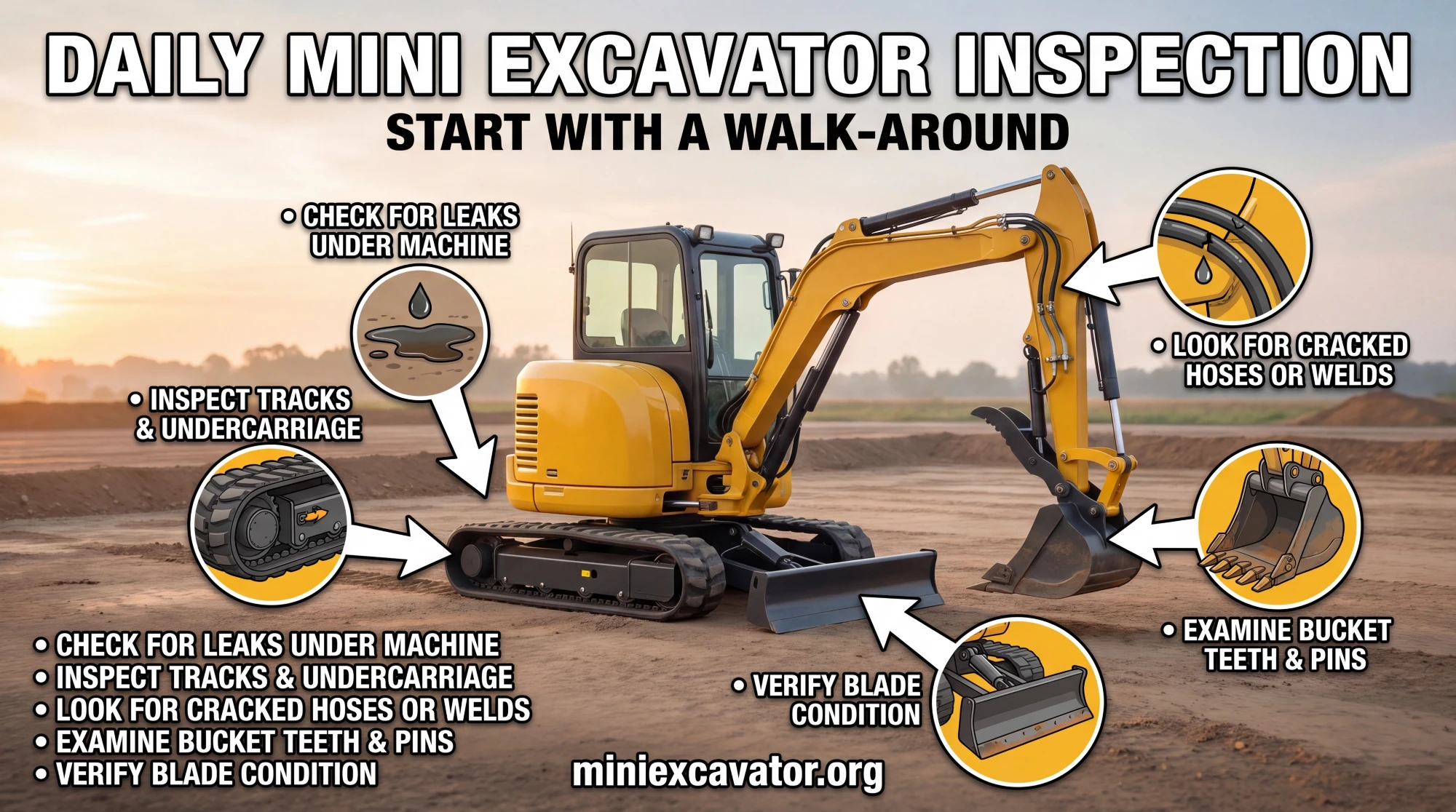
The best daily inspection begins before the engine is started. The operator should walk around the machine slowly and look for anything unusual. This first check often reveals problems immediately.
Start by looking underneath the excavator for signs of leaks. Oil, coolant, fuel, or hydraulic fluid on the ground may indicate a problem that needs attention before the machine is used. Fresh drips should never be ignored. Follow the leak source if possible and inspect nearby hoses, fittings, and components.
Check the general condition of the machine. Look for cracked welds, bent metal, missing bolts, loose covers, broken lights, damaged mirrors, or anything else that appears out of place. Pay close attention to the boom, arm, bucket, and blade, since these parts endure constant heavy work.
Inspect the bucket and teeth. Worn or damaged bucket teeth can reduce digging performance and increase strain on the machine. Also check the bucket pins and mounting points to make sure they are secure.
Look over the hydraulic cylinders and hoses. Hoses should not be cracked, cut, swollen, or rubbing against sharp surfaces. Cylinder rods should appear smooth and clean, without signs of deep scratches or leaking seals. Hydraulic problems are especially important because they affect both performance and safety.
Check the undercarriage. On tracked mini excavators, inspect the rubber or steel tracks for wear, damage, and proper tension. Loose tracks can derail, while overly tight tracks can wear faster and place extra stress on components. Also inspect rollers, sprockets, and idlers for signs of excessive wear or damage. Mud, rocks, and debris should be removed if they could affect movement.
If the excavator has a blade, inspect it for bends, cracks, worn cutting edges, and hydraulic cylinder condition. The blade is often used for stability and grading, so it should be in solid working order.
Checking Fluids and Engine Components
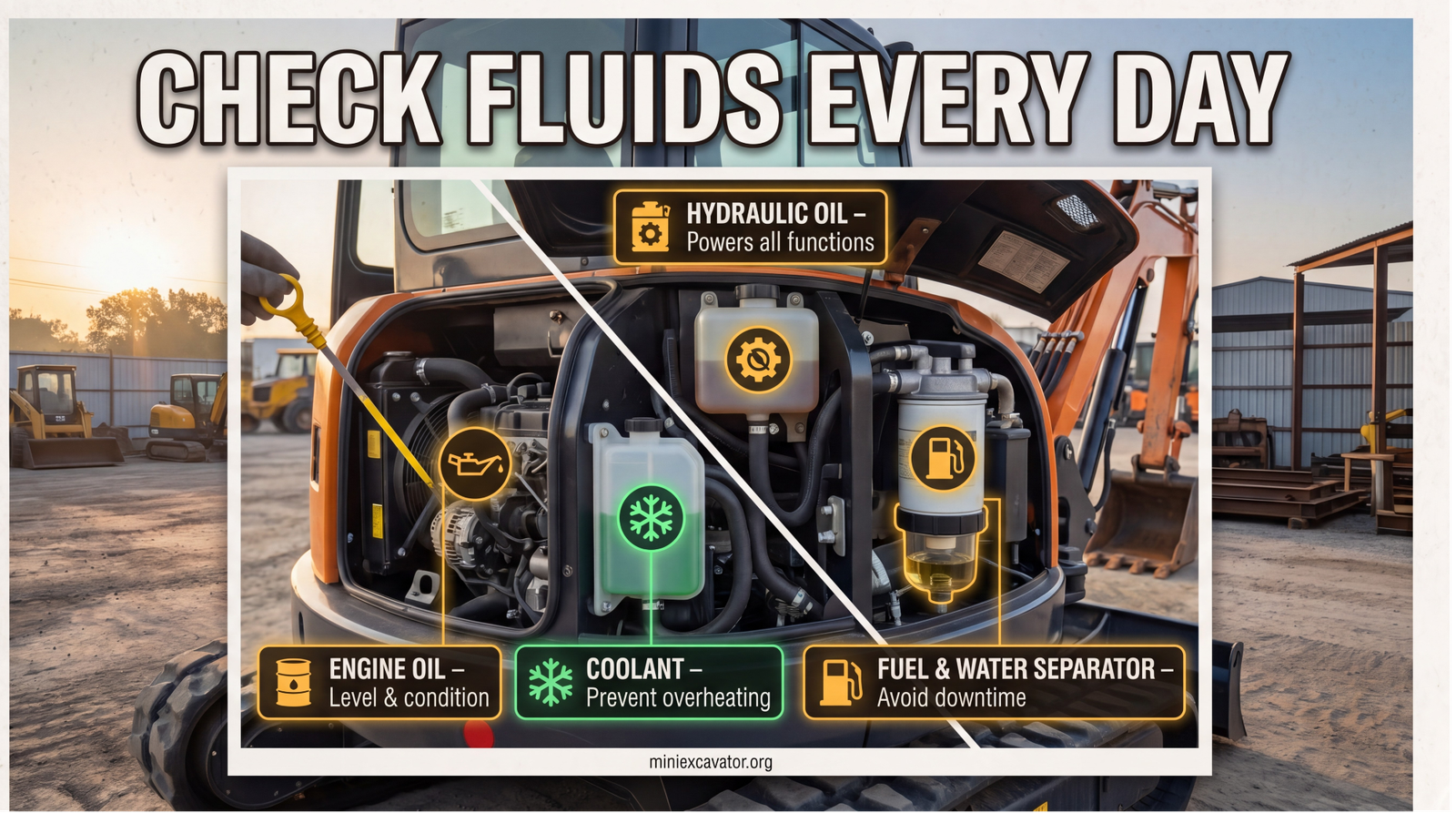
After the visual walk-around, move to the engine compartment and fluid checks. These are essential because fluid condition directly affects engine life, hydraulic performance, and cooling.
Check engine oil with the dipstick and confirm that the level is within the proper range. Oil that is too low can damage the engine very quickly. Also note the oil’s condition. Extremely dirty oil, milky oil, or unusual smell may suggest additional issues.
Check coolant level and inspect hoses for cracks or leaks. The cooling system must work properly to prevent overheating, especially during hot weather or long operating hours. Never open a hot radiator cap.
Check hydraulic fluid level according to the manufacturer’s instructions. Hydraulic systems power nearly every major movement on the excavator, so low fluid can reduce performance and damage expensive components. If fluid appears contaminated, cloudy, or unusually dirty, it should be reported.
Inspect fuel level and water separators if equipped. Starting the day with low fuel is not only inconvenient but can also create avoidable downtime during critical work periods.
Check air filters and filter indicators if the machine has them. A clogged air filter can reduce engine performance, increase fuel consumption, and lead to poor overall operation. Dusty environments often require closer attention to air filtration.
Belts, battery terminals, and wiring should also be inspected. Loose battery connections, worn belts, or damaged wires may not seem dramatic at first glance, but they can quickly result in starting issues, charging problems, or electrical failure.
 Operator Station and Control Checks
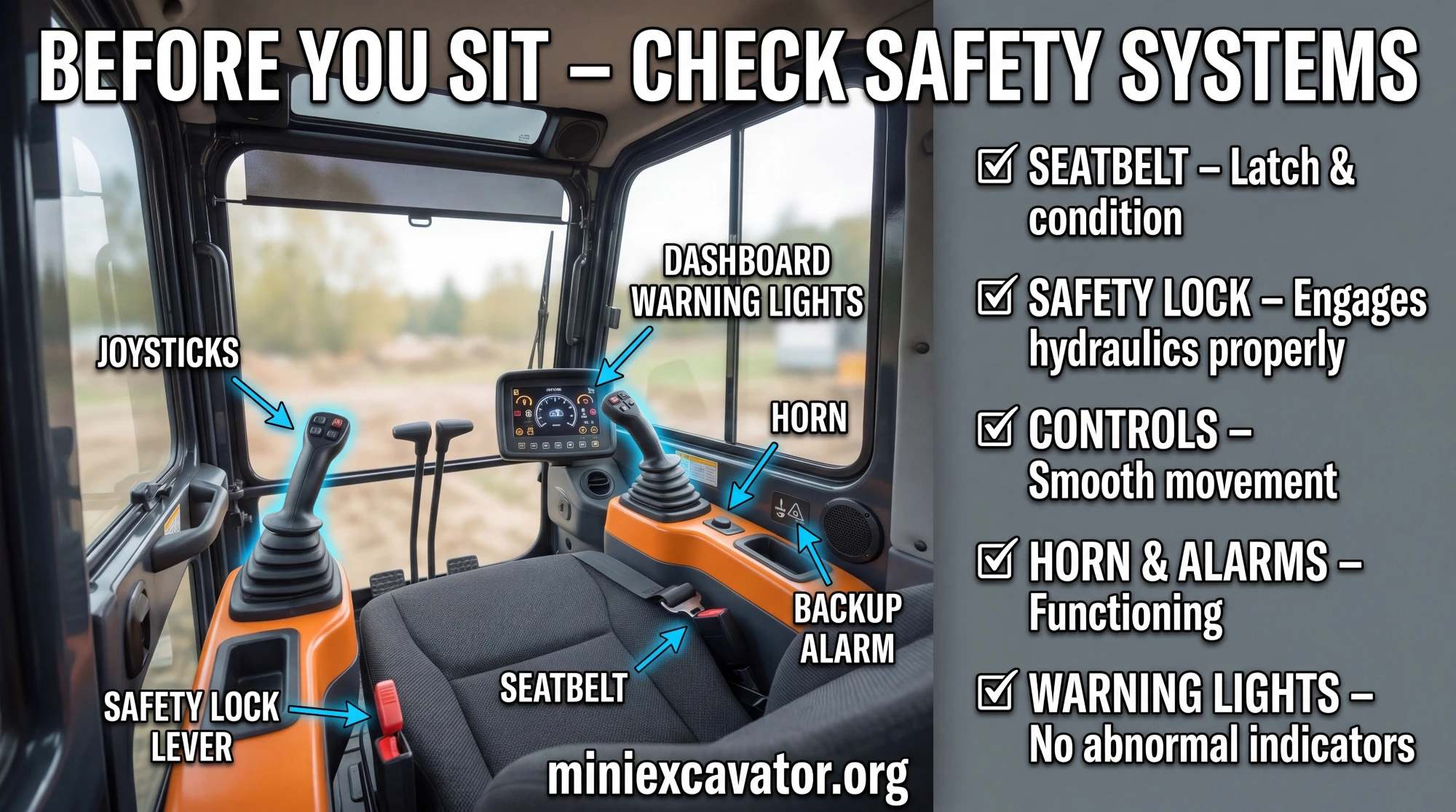
Once the outside and engine compartment have been checked, the operator station should be inspected carefully. This is where the machine’s controls, warning systems, and protective features are located.
Begin by checking the cab or operator area for cleanliness and safety. Remove loose tools, bottles, dirt, or debris that might interfere with pedal or lever movement. Make sure entry steps and handholds are secure and not slippery.
Inspect the seatbelt. It should latch correctly, retract properly, and show no major fraying or cuts. The seat itself should be secure and adjusted for safe operation.
Turn the key on and observe the dashboard. Warning lights should function correctly, and gauges should respond normally. If any unusual warning indicator stays on, it should be addressed before work begins.
Test the horn, work lights, travel alarm if equipped, and any other alert systems. These are simple items, but they play an important role in jobsite safety, especially in low visibility conditions or busy work zones.
Check the control levers and joysticks for smooth movement. Safety lock systems should engage and disengage properly. If the machine has pilot controls, they should feel responsive and normal. Any stiffness, excessive looseness, or delayed response should be noted.
Test travel controls carefully once the machine is running in a safe area. Movement should feel balanced and predictable. If one side responds differently, it may indicate an issue in the undercarriage, hydraulic system, or drive components.
Functional Check After Startup
Once the machine has passed the initial checks and the engine is started, the operator should perform a short functional test. This helps confirm that the excavator is ready to work under actual operating conditions.
Listen to the engine. It should start smoothly and idle without unusual sounds such as knocking, rattling, or excessive vibration. Watch the exhaust as well. Excess smoke or unusual color may indicate engine problems.
Test the boom, arm, bucket, swing, and blade one at a time. These functions should respond smoothly and predictably. Jerky motion, slow response, or hesitation may suggest hydraulic or control issues.
Pay attention to unusual sounds while operating the functions. Grinding, squealing, clunking, or hissing noises often signal wear, leaks, or mechanical trouble. Operators who use the same machine regularly are often the first to notice when something feels different.
If the machine uses attachments, inspect and test those as well. Hydraulic thumbs, breakers, augers, or couplers should be checked for proper connection, secure locking, and normal operation.
Best Practices for a Good Inspection Routine
A strong inspection routine depends on consistency. The best results come when operators follow the same process every day rather than rushing or checking only the most obvious items.
One of the best practices is to inspect the machine in the same order each time. For example, some operators always start at the front blade, move around the left side, check the rear engine compartment, continue around the right side, and finish in the cab. A consistent pattern helps prevent missed items.
Using a checklist is also highly recommended. Even experienced operators can overlook things when they are tired, busy, or under pressure. A checklist keeps the process organized and creates a written record that may be useful for maintenance tracking and safety management.
Documentation matters. If an issue is found, it should be recorded clearly and reported to the appropriate supervisor, technician, or fleet manager. Small issues should not be ignored simply because the machine still runs. Some of the most expensive failures begin with a problem that was noticed but never acted upon.
Good communication is another best practice. If multiple operators use the same excavator, each person should report what they notice. One operator may feel a slight control issue while another may notice a leak or noise later in the day. Shared reporting helps create a fuller picture of equipment condition.
Common Problems a Daily Inspection Can Catch
Daily inspections are especially valuable because they catch common issues before they become severe. Hydraulic leaks are one of the most frequent examples. A small hose leak may seem minor, but over time it can reduce pressure, contaminate the machine, and create a fire or slipping hazard.
Track issues are another common problem. Loose tracks, damaged rollers, or packed mud in the undercarriage can lead to poor travel performance or even a thrown track. Catching these problems early keeps the machine mobile and prevents larger repair bills.
Low fluid levels are also frequently discovered during inspections. Running an excavator with low engine oil, coolant, or hydraulic fluid can cause major mechanical damage in a very short time.
Worn pins and bushings often develop gradually, making them easy to ignore. Daily checks help identify growing play in the boom, arm, and bucket connections before the looseness becomes a structural issue or leads to broken parts.
Battery problems, dirty air filters, loose bolts, cracked lights, damaged safety decals, and non-working alarms are other examples of issues that daily inspections can reveal quickly.
Conclusion
A daily mini excavator inspection is one of the simplest and most valuable habits in equipment operation. It supports safety, protects the machine, reduces costly downtime, and helps keep projects moving without interruption. More importantly, it shifts maintenance from a reactive approach to a proactive one. Instead of waiting for something to break, the operator actively looks for signs of trouble and addresses them early.
Mini excavators may be compact, but they are major working assets that deserve careful attention. A few minutes spent checking fluids, tracks, hoses, controls, safety systems, and overall condition can prevent hours of lost work and thousands of dollars in repairs. It can also prevent injuries and create a more professional, dependable equipment culture on the job site.
For contractors, fleet owners, rental users, and individual operators alike, the message is clear: daily inspection is not wasted time. It is part of doing the job correctly. When inspection becomes a routine part of every workday, the machine performs better, lasts longer, and remains safer for everyone around it.