


Bucket Breakout Force and Excavation Performance on Challenging Ground
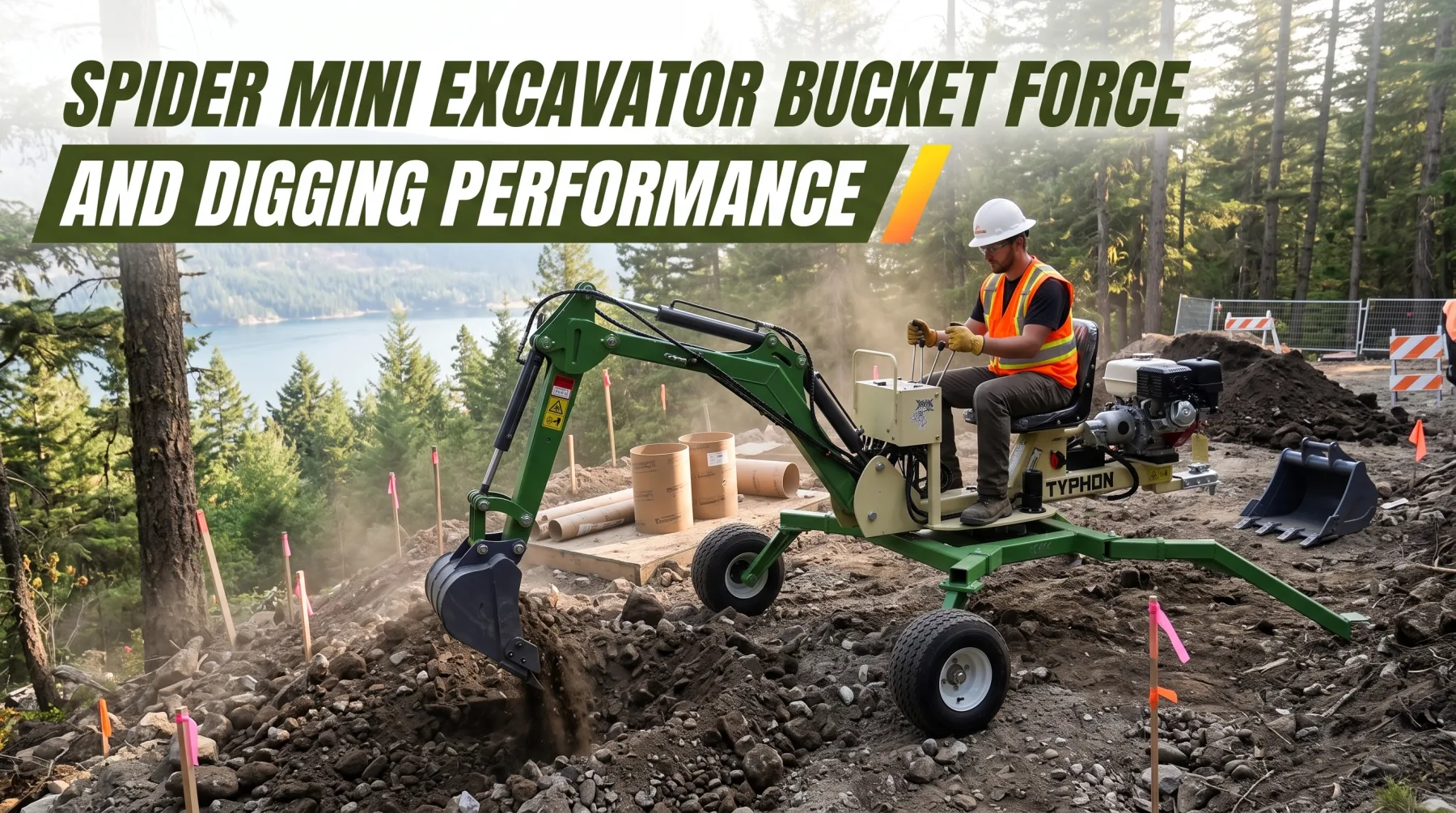
Digging performance on steep and wooded sites depends on more than the excavator’s available hydraulic power. Dense soil, compacted till, cobbles, and other resistant materials can expose weaknesses in bucket selection, hydraulic components, or operating technique. A spider mini excavator needs the right combination of bucket, hydraulic condition, machine positioning, and digging method to convert available force into useful penetration.
Hydraulic pressure acts through the bucket cylinder to create digging force, while the boom, arm, and bucket geometry determine how that force reaches the cutting edge. Bucket width and tooth design affect how easily the attachment penetrates different materials, while worn seals, loose pins, or bushings can reduce control and effective force. Operators can also improve performance by setting depth with the boom, pulling with the arm, and taking controlled cuts instead of forcing the bucket against hydraulic relief.
Routine inspection helps ensure the hydraulic system and digging components can deliver the force required for the job. Operators should check cylinders, seals, pins, bushings, bucket teeth, and attachment connections while adjusting the digging approach to the ground conditions. Matching bucket design and operating technique to the material, while maintaining the hydraulic and mechanical systems, supports efficient digging and more consistent machine performance.
Hydraulic Pressure and Bucket Force
Every digging movement on a spider mini excavator starts with hydraulic pressure. The engine drives a hydraulic pump that pressurizes fluid. When the operator moves a control, the control valve directs that fluid into the correct cylinder. Pressure acts against the piston inside the cylinder barrel, and the rod extends or retracts. That linear push or pull is what moves the boom, arm, and bucket.
Cylinder force depends on two main factors: system pressure and the piston’s surface area. A larger piston operating at the same pressure produces more force. Manufacturers size each cylinder for its job. The bucket cylinder controls curl and breakout, the arm cylinder pulls the bucket through the material, and the boom cylinder sets the height and depth of the work.
Manufacturers often publish two digging force figures. Bucket breakout force describes the force available as the bucket cylinder curls the bucket through material. Arm digging force describes the force the arm cylinder applies as it pulls the bucket toward the machine. Together, these figures give a useful picture of how the machine performs in tough ground.
Relief valves set the maximum working pressure in each circuit and protect components from overload. When the bucket meets more resistance than the system can overcome, the relief valve opens and the bucket stops moving. Holding a function against relief for long periods creates heat and adds strain to seals, hoses, and the pump. On a spider excavator, pushing hard against resistance can also shift forces through the supports and affect stability. If the bucket stalls, change the approach instead of forcing it.
Key takeaway: Hydraulic pressure drives the cylinders that move the boom, arm, and bucket, so a healthy system operating within its relief limits supplies the force needed for penetration and material removal.
Boom and Arm Geometry
Hydraulic force alone doesn’t determine how hard the bucket digs. Machine geometry decides how that force reaches the cutting edge. The boom, arm, and bucket work as a series of levers, and the design of those levers shapes the mechanical advantage available at each stage of the digging cycle.
Three design factors work together. Pivot locations set the points where each component rotates. Component lengths determine how far the bucket sits from each pivot. Cylinder mounting points decide where force is applied along each component. A cylinder mounted farther from a pivot gains turning force but moves the component through a smaller arc. A cylinder mounted closer to the pivot produces faster, larger movement with less force. Manufacturers balance these factors to suit the machine’s size and intended work.
Mechanical advantage changes throughout the cycle. As the arm and bucket rotate, the angle between each cylinder and its component changes, and so does the leverage. Digging force is often strongest when the bucket works in the middle of its range, closer to the machine. At full reach, with the arm extended far out, the same hydraulic pressure delivers less effective force at the teeth. That’s why a bucket that cuts easily near the machine may struggle at the far edge of the working envelope.
Arm length is a clear example of this trade-off. Where a longer arm option is available, it increases reach and digging depth, but it places the bucket farther from the arm pivot and can reduce digging force and lifting capacity. On a spider excavator, reach also affects stability, since a loaded bucket held far out increases tipping force on uneven ground. Work as close to the machine as the job allows, and use the manufacturer’s working range and lift charts to plan each setup.
Key takeaway: Pivot locations, component dimensions, and cylinder mounting points determine mechanical advantage, so digging force changes throughout the cycle and is generally strongest when the bucket works closer to the machine.
Bucket Design and Material Penetration
Bucket design directly affects how effectively a machine can penetrate and move different materials. Shape, teeth, width, construction, and attachment compatibility all influence digging force, material handling, and overall productivity. Matching the bucket to the job helps the machine use its available hydraulic and digging power more effectively.
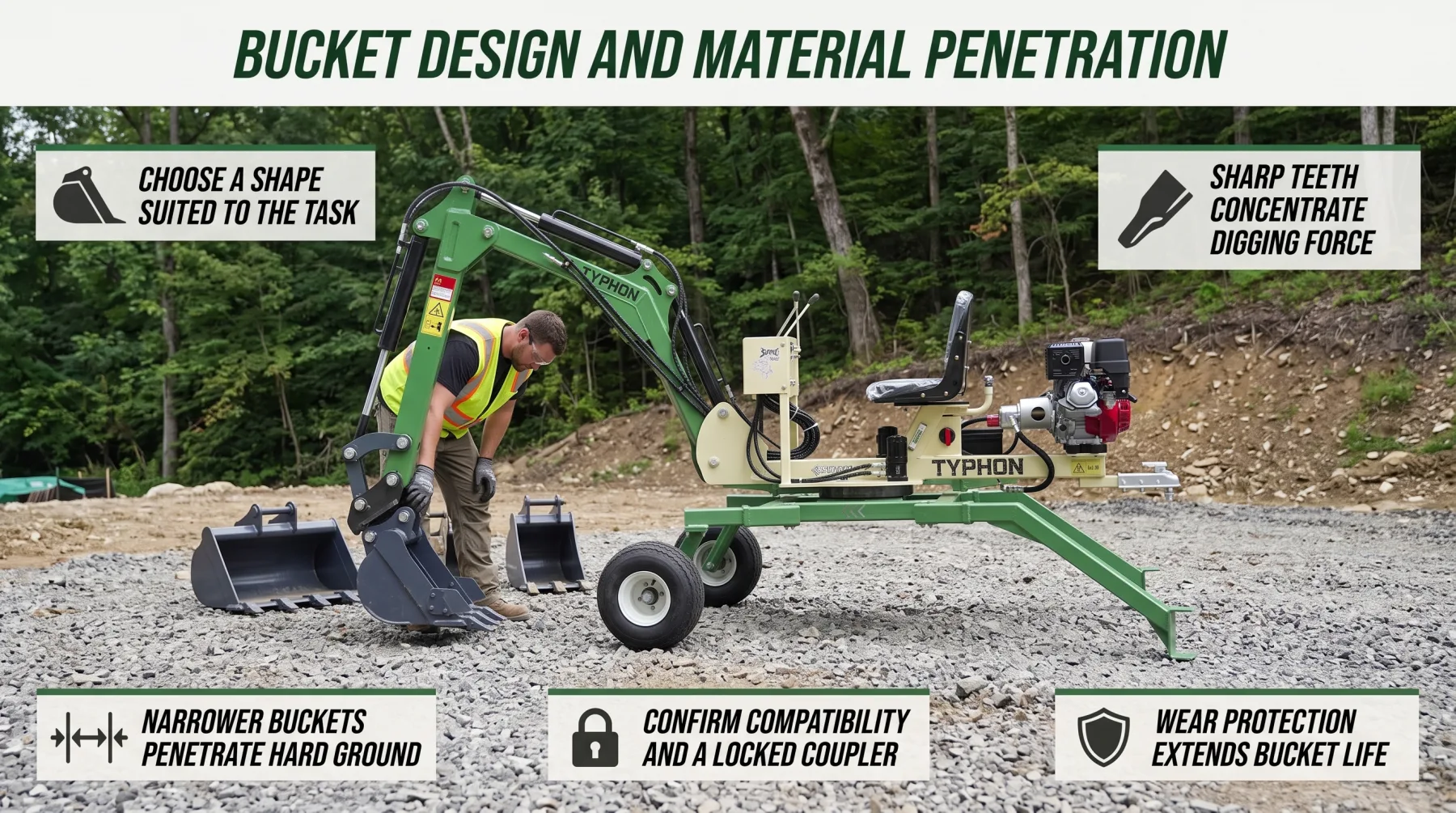
- Bucket Shape: Curved digging buckets support penetration and material pickup, while wider or flatter buckets are better suited for grading and finishing.
- Teeth & Cutting Edge: Sharp teeth concentrate force for harder ground, while smooth cutting edges work well for loose material and finishing.
- Bucket Width: Narrower buckets concentrate digging force, while wider buckets move more material but can require greater breakout force.
- Bucket Construction: Reinforced steel, side cutters, and wear protection help the bucket withstand abrasive and rocky working conditions.
- Attachment Compatibility: Confirm the bucket matches the machine, coupler, and rated capacity, and verify the locking system is fully engaged before digging.
Key takeaway: Bucket shape, teeth, width, construction, and connection all affect ground penetration, so a bucket suited to the material makes the most of the machine’s available digging force.
Coordinated Digging Movement
Bucket force doesn’t work alone. Productive excavation comes from blending boom, arm, and bucket movements into one smooth cycle, so each function contributes its strength at the right moment. Coordinated movement puts the machine’s full design to work and gets more done with less strain.
A typical cycle begins with the operator extending the arm, opening the bucket, and lowering the boom to place the teeth at the start of the cut. The bucket enters the material at an angle that lets the teeth bite rather than skid. The operator then pulls the arm toward the machine, dragging the bucket through the material. Small boom adjustments during the pull keep the cut at the correct depth. As the bucket fills, the operator curls it to trap the load, raises the boom, swings, and places the material.
The arm and bucket do most of the digging. Operators who rely on the boom alone to force the bucket down take shallow, uneven bites and push the machine against the ground, which can unsettle a spider excavator on uneven terrain. Pulling with the arm and curling the bucket uses the machine’s leverage as designed and produces cleaner, more consistent cuts.
Smooth inputs protect both performance and stability. Gradual, overlapping control movements let one function flow into the next without jerks. Abrupt movements shift the load suddenly, rock the machine, and send shock through pins, cylinders, and supports. Keep the loaded bucket close to the machine during lifting and swinging, swing slowly, and avoid swinging heavy loads toward the downhill side. Many spider excavators offer fine-control modes, which help on steep or delicate sites. Keep workers on foot outside the swing radius throughout the cycle.
Key takeaway: Coordinating boom, arm, and bucket movement lets the operator penetrate material, curl the bucket, lift the load, and place it efficiently while protecting the machine’s stability.
Soil and Ground Conditions
Digging performance changes with the material in front of the bucket. The same machine and bucket that move loose topsoil with ease can slow to a crawl in compacted clay or cobbly till. Understanding how ground conditions affect digging effort helps you choose the right setup and technique before problems start.
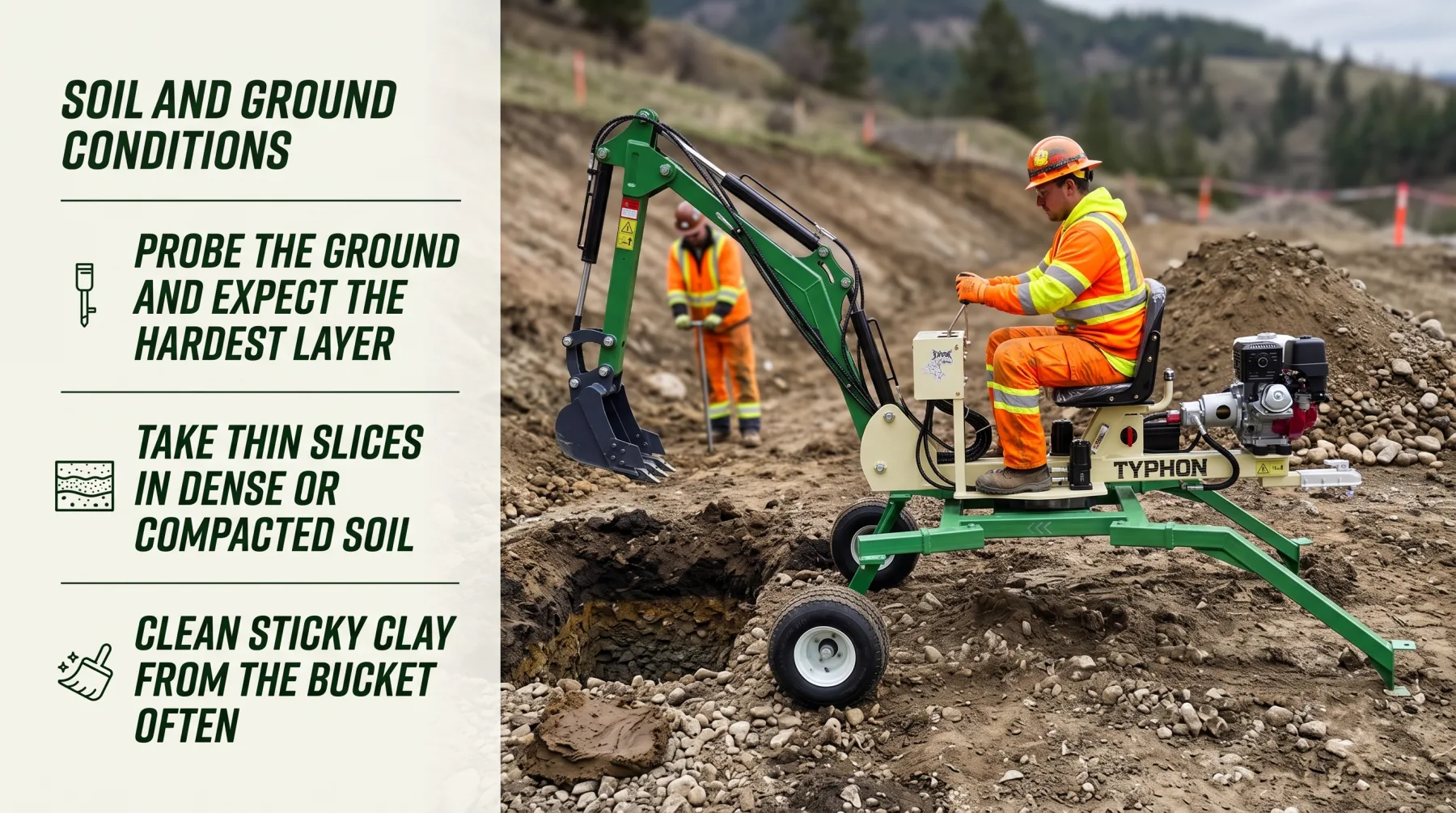
Loose soil, sand, and topsoil generally require little digging force. The bucket fills quickly, and the main concern is preventing loose walls from sloughing back into the excavation. Moist clay cuts readily but can stick to the bucket and teeth, which adds weight and reduces capacity with every cycle. Dry, hard clay behaves very differently and can resist penetration almost like soft rock. Compacted ground, such as old driveways, fill, and heavily traveled areas, resists the teeth and calls for shallow, controlled cuts. Gravel and cobbles increase tooth wear and can deflect the bucket. Roots and buried debris catch on teeth and slow progress. Solid rock may exceed what a bucket alone can handle and may require a breaker or other method.
Conditions often change over a short distance, especially on the slopes and irregular sites where spider excavators work. A single footing may pass through topsoil, compacted fill, and dense clay within a few feet. Probe the ground before digging, review any soil information available for the site, and expect the hardest layer to set the pace.
Adjust technique to the ground. In hard material, take thinner slices and let the teeth break the material loose layer by layer instead of forcing a deep cut. Change the bucket angle so the teeth meet the ground at an effective attack angle. In sticky clay, clean the bucket regularly. Watch how the machine responds, since difficult ground transfers more force back through the supports. Moisture also matters. Saturated soil weakens excavation walls and can soften the ground beneath the supports. Before any digging, contact your local utility locating service and confirm lines are marked.
Key takeaway: Loose soil requires less digging force, while compacted clay, cobbles, and dense ground demand more effort, so match the bucket and technique to the material and adjust as conditions change.
Hydraulic and Bucket System Maintenance
A machine can only deliver the bucket force it was designed for when its hydraulic and mechanical systems are in good condition. Leaks, worn pins, damaged cylinders, and loose connections quietly reduce effective digging performance. Regular inspection preserves the connection between the machine and its digging attachment. Begin every inspection with the machine on firm, level ground, the bucket lowered to the ground, the engine off, and the key removed.
Inspect the boom, arm, and bucket cylinders closely. Look for scoring, nicks, pitting, and bends on the chrome rods, and check for fresh oil or a dust-caked ring around each gland. A damaged rod can tear seals, and worn seals reduce holding force and digging power. A bucket that drifts open or loses force under load can point to internal seal wear. Check hoses and fittings for abrasion, cracks, bulges, and seepage, especially where hoses flex at joints. Never check for leaks by running your hand along a hose. Pressurized fluid can penetrate skin and cause serious injury, so use a piece of cardboard instead.
Pins and bushings carry concentrated loads with every cut. Watch each joint during a slow test movement for play, and listen for clunking when the bucket or arm changes direction. Worn pins let force escape as movement, which reduces penetration and digging accuracy. Confirm retaining bolts and clips are present, and check mounting brackets and nearby welds for cracks. Regular maintenance and inspection help identify wear early and keep joints operating reliably. Grease every pivot according to the manufacturer’s maintenance schedule, and more often in muddy conditions or during heavy-duty work. When the machine crawls over rough ground or climbs slopes, check that joints and connections remain secure under changing loads.
Inspect the bucket itself for worn or missing teeth, a worn cutting edge, and cracked side plates. Confirm the coupler engages fully and that any secondary lock is seated. Keep hydraulic fluid at the correct level and in clean condition, replace filters on schedule, and clean cooler screens regularly. Record every inspection and repair in a maintenance log, and repair any problem before the machine returns to work.
Key takeaway: Hydraulic leaks, worn pins, damaged cylinders, and loose bucket connections reduce digging performance, so regular inspection and maintenance preserve the full force the machine was built to deliver.
Conclusion
Spider mini excavator bucket force is the product of several systems working together, and digging performance depends on how well each one does its part: hydraulic pressure drives the cylinders that create force, boom and arm geometry determines how much of that force reaches the teeth at each point in the cycle, and a bucket matched to the material concentrates that force where penetration happens. Ground conditions set the effort each cut requires, so adjusting bucket choice and technique to loose soil, compacted clay, or cobbly ground keeps the work moving, while smooth coordination of boom, arm, and bucket turns available force into clean, efficient cycles without unsettling the machine on uneven terrain. Regular inspection of cylinders, hoses, pins, bushings, teeth, and couplers protects every link in that chain, so the force your machine was engineered to deliver reaches the ground on every pass. Before your next shift, inspect the bucket and its connection, check the cylinders and pivots, confirm the bucket suits the ground ahead, and plan your cuts to work close to the machine for safe, dependable digging performance.
Frequently Asked Questions
What determines spider mini excavator bucket force?
Hydraulic pressure, cylinder size, boom and arm geometry, bucket design, and operating conditions all influence bucket force. The condition of the hydraulic system also matters because leaks, worn seals, damaged cylinders, or restricted flow can reduce effective force. Proper attachment selection and machine maintenance help the excavator deliver consistent digging performance.
Does soil type affect digging performance?
Yes. Dense, compacted, rocky, or cobbly material generally requires more digging effort than loose soil. Ground moisture and material structure can also change cutting resistance. Using thinner cuts, a suitable toothed bucket, and an effective digging angle can help the machine penetrate difficult ground while reducing unnecessary stress on the attachment and hydraulic system.
How does bucket design affect digging?
Bucket width, shape, teeth, and construction influence ground penetration, material entry, and removal. Narrower toothed buckets can concentrate digging force and are useful for trenching or harder ground, while wider buckets can move more material in loose soil. The bucket should be matched to the excavation task, material, and machine’s hydraulic and lifting capabilities.
Can maintenance affect bucket force?
Yes. Hydraulic leaks, worn pins and bushings, damaged cylinders, restricted hydraulic flow, and loose connections can reduce effective digging performance. Wear in the boom, arm, or bucket linkage can also affect how force is transferred to the cutting edge. Regular inspection, lubrication, and hydraulic maintenance help preserve consistent bucket force and machine performance.