
Best Mini Excavator in 2026: Why Typhon Models Stand Out for Contractors, Farms, and Landscaping
Choosing the best mini excavator in 2026 is not just about buying a machine with enough digging depth or horsepower. It is about finding equipment that fits the way real people work. Contractors need compact machines that can move through tight jobsites without losing productivity. Farmers need equipment that can handle daily property
work, drainage, land clearing, and lifting tasks without the cost and bulk of full-size machinery. Landscapers need a machine that is precise, easy to transport, and versatile enough to handle everything from trenching to tree planting.
That is why mini excavators continue to grow in popularity.
In 2026, buyers are looking for more than just raw power. They want better maneuverability, strong attachment compatibility, operator comfort, lower operating costs, and dependable performance. This is where Typhon Machinery is gaining attention. The brand is building a reputation around compact machines that are practical, flexible, and built for real-world work across construction, agriculture, and landscaping.
If you are comparing compact equipment options this year, understanding what makes Typhon mini excavators stand out can help you decide whether they are the right fit for your business or projects.
What Is Typhon Machinery?
Typhon Machinery is a growing name in the compact heavy equipment market, especially in the mini excavator category. The brand focuses on machines designed to deliver a strong balance of power, size, and jobsite flexibility. Instead of trying to compete through sheer machine size, Typhon centers its value around compact performance, accessibility, and versatility.
That matters because many users today do not need a large excavator for every job. In fact, oversized equipment often creates its own problems. Large machines cost more to buy, cost more to transport, and often cannot access tight spaces. A well-designed mini excavator can do many of the same essential tasks while being easier to move, easier to position, and often more economical to run.
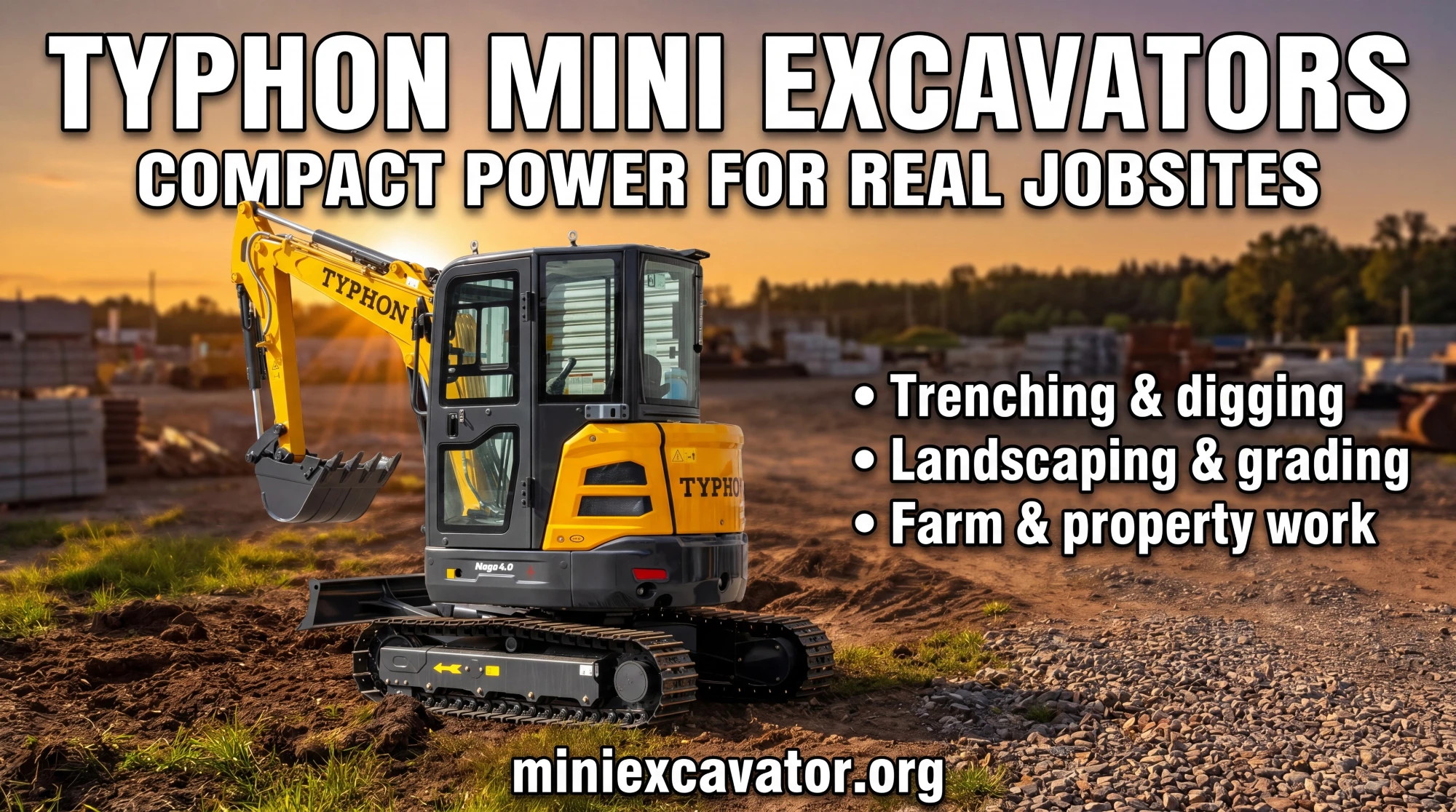
Typhon mini excavators are built to serve users who need real digging capability in a more compact and manageable format. Whether the job involves trenching, grading, site cleanup, hardscaping, utility work, land maintenance, or light demolition, these machines are designed to take on everyday tasks efficiently.
Why Mini Excavators Matter More in 2026
The best mini excavators in 2026 are not just smaller alternatives to full-size machines. They are becoming the preferred choice for more types of work because jobsites are changing.
Urban and residential projects often have tighter access. Labor costs remain high, which makes compact machines more valuable for doing more work with fewer people. Property owners and contractors want equipment that is easier to haul, easier to store, and easier to use across different jobs. The market is also paying more attention to operator comfort, lower fuel use, and machine versatility through attachments.
All of that creates the perfect space for compact excavators to lead.
Typhon Machinery fits into this shift by offering equipment that helps users stay productive without stepping up to oversized machines that may be harder to justify.
What Makes Typhon Mini Excavators Attractive
 Compact Size With Real Jobsite Power
One of the main reasons buyers consider Typhon mini excavators is their ability to handle meaningful work without taking up the space of larger equipment. That compact design matters on tight jobsites, in backyards, between structures, near fences, or in crowded work zones.
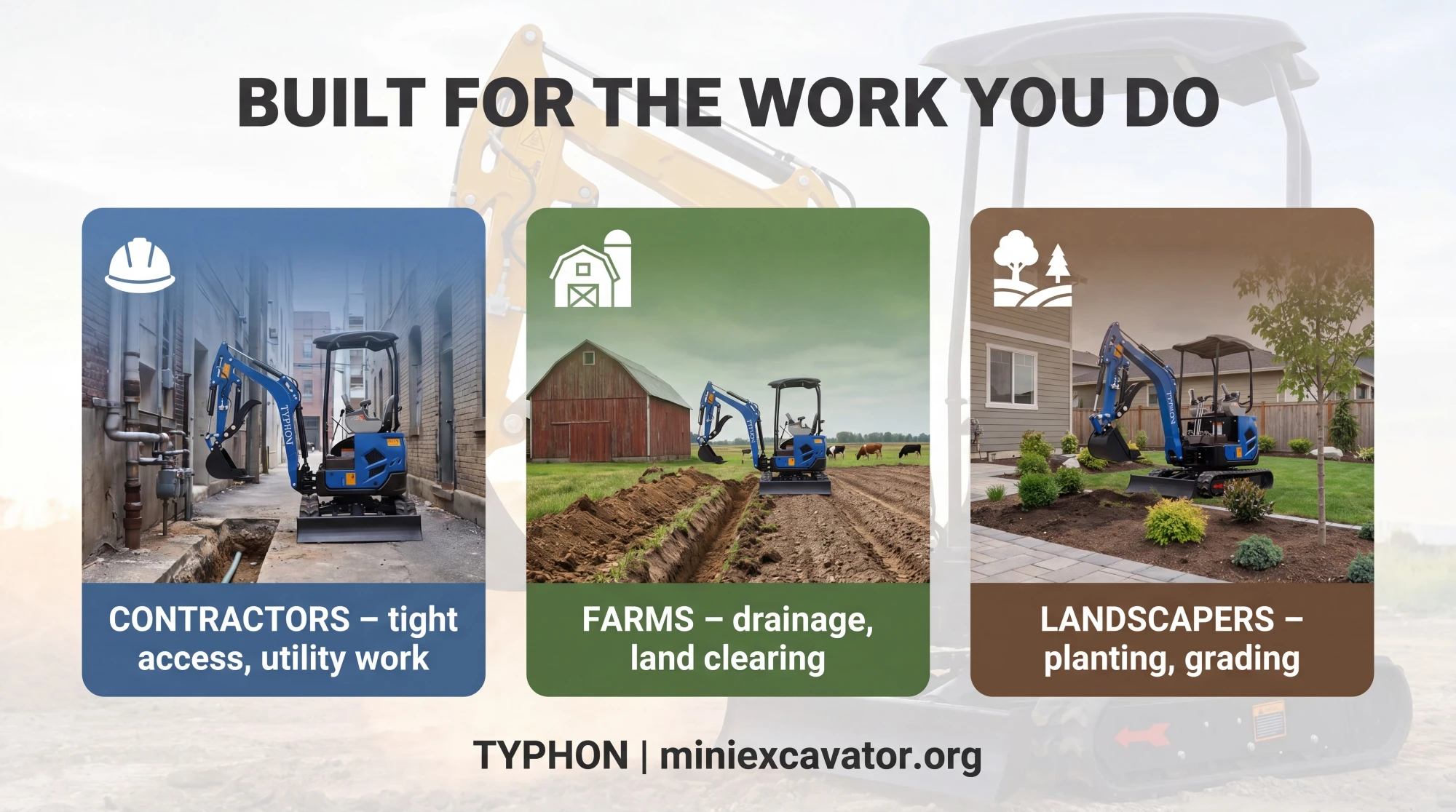
For contractors, that means easier operation on residential and urban jobs. For farmers, it means better maneuverability around barns, fence lines, and smaller property work areas. For landscapers, it means easier access to finished or partially finished spaces where large equipment would be impractical.
Strong Versatility With Attachments
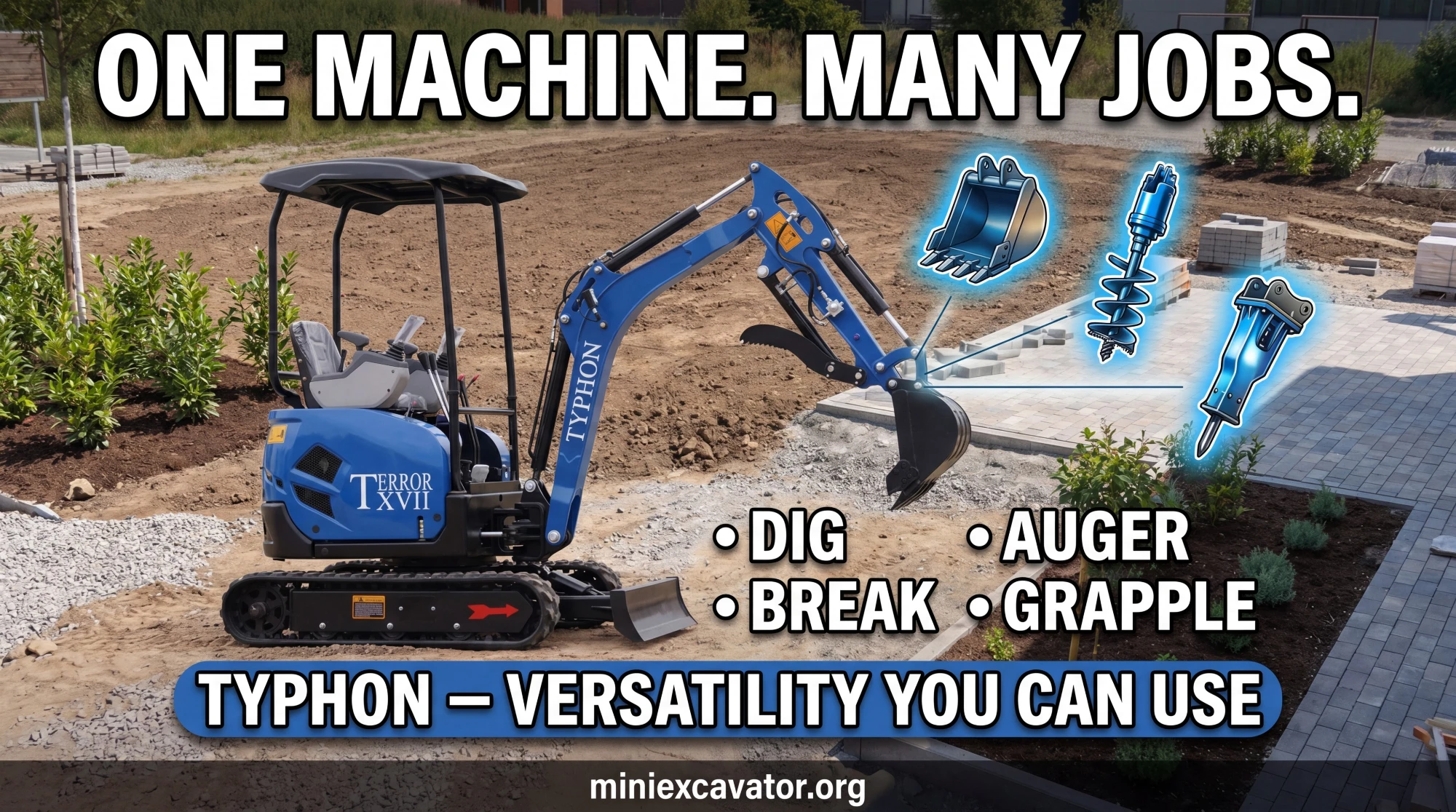
A mini excavator becomes much more valuable when it can do more than dig. Typhon machines are especially attractive when paired with the right attachments.
Depending on the model and setup, operators may use different buckets, augers, hydraulic breakers, grapples, trenching tools, or other compatible attachments. That means one compact machine can often handle multiple tasks throughout the day instead of forcing the owner to rely on several different machines.
This kind of flexibility is especially useful for small businesses. A contractor can trench, lift, and clean up with the same base machine. A landscaper can dig for drainage, plant trees, and move materials. A farm owner can handle fencing work, ditch maintenance, and small demolition jobs without maintaining a large fleet.
Better Access to Tight Work Areas
Access is one of the biggest reasons many users choose a mini excavator in the first place. Typhon equipment is attractive because the compact format helps the operator work where larger equipment cannot.
That makes a difference in:
- residential landscaping
- utility trenching
- interior or close-quarters work
- farm maintenance
- narrow-side access projects
- urban improvement jobs
The ability to get into a smaller work zone and still perform useful excavation work can create major time savings and open up jobs that would otherwise be difficult or impossible with larger equipment.
Lower Operating Burden Than Larger Equipment
Larger machines bring larger costs. That includes not only purchase price, but also transport, storage, fuel, and maintenance. One of the practical advantages of Typhon mini excavators is that they fit the needs of many users without carrying the same burden as heavy full-size equipment.
For many buyers, especially small contractors or independent operators, that matters just as much as digging performance. A compact excavator that gets to the site easily, performs well, and keeps operating costs manageable can be far more valuable than a bigger machine that rarely gets used to its full potential.
Why Contractors May Choose Typhon in 2026
Contractors need machines that help them stay efficient and flexible. In many cases, that means having equipment that can work across a variety of jobs rather than serving only one narrow purpose.
Typhon mini excavators make sense for contractors who need:
- a machine for trenching and utility work
- compact access in residential or urban areas
- easier hauling between jobsites
- attachment flexibility
- reliable support for everyday construction tasks
For a contractor working on small foundations, drainage systems, residential utility lines, and site prep, the value of a compact excavator comes from being able to move quickly from one kind of job to another. Typhon’s focus on compact power and practical usability makes that especially attractive.
Why Farmers May Choose Typhon in 2026
A farm does not always need a full-size excavator, but it often needs a machine that can dig, lift, clear, and maintain the property efficiently. This is one of the strongest use cases for mini excavators.
Typhon equipment can be useful for farm work such as:
- drainage and ditch maintenance
- fence post and auger-related work
- clearing brush or debris
- moving soil and materials
- small trenching jobs
- digging around structures or utilities
For farms, versatility matters more than appearance or brand prestige alone. A compact machine that can be used regularly across multiple tasks often becomes one of the most useful tools on the property.
Why Landscapers May Choose Typhon in 2026
Landscaping is one of the most natural fits for a mini excavator. Landscapers often work in finished or semi-finished environments where machine size, precision, and ease of movement all matter.
Typhon mini excavators are appealing for landscaping because they can support:
- tree planting
- drainage installation
- garden and hardscape preparation
- grading and site shaping
- trenching for irrigation
- removing old materials or small structures
Landscapers also benefit from machines that can move through narrower access points and work with less disruption than larger equipment. That can help protect existing surfaces and improve control during detail-oriented outdoor work.
 How to Get Started With Typhon Machinery
If you are considering Typhon Machinery in 2026, the best place to start is by clearly defining what kind of work the machine needs to handle most often.
Before choosing a model, think about:
- your usual jobsite size
- access limitations
- typical digging depth needs
- whether you need special attachments
- how often the machine will be transported
- whether the machine is for business or property use
Once those needs are clear, compare Typhon models based on machine size, power, attachment support, and overall practicality for your work. Budgeting is also important. Buyers should think beyond just the purchase price and include insurance, transport, storage, service, and attachments in the full ownership picture.
Just as important is operator readiness. Even compact excavators are still heavy equipment. Safe operation, regular inspections, and proper maintenance are essential from day one.
Best Practices for Running a Typhon Mini Excavator
Getting good results from a mini excavator is not only about buying the right machine. It is also about using it properly.
Good practices include:
- performing a full pre-use inspection
- checking fluid levels and machine condition daily
- confirming attachments are secure
- working on stable ground whenever possible
- using the right attachment for the job
- following the service schedule
- training operators properly
- keeping the machine clean and maintained
A compact excavator becomes much more valuable when it is treated like a real productivity tool instead of just occasional equipment.
Is Typhon One of the Best Mini Excavator Choices in 2026?
Typhon stands out because it fits what many buyers actually need in 2026. It is not just about having a compact excavator. It is about having one that offers useful power, practical maneuverability, versatile attachment options, and value across different industries.
That makes Typhon especially interesting for buyers who want a machine that can work across multiple tasks without the cost and complexity of larger equipment. For contractors, farms, and landscaping businesses, that combination can be very attractive.
Final Thoughts
The best mini excavator in 2026 is not always the biggest, most expensive, or most powerful machine on paper. The best choice is the one that actually fits the work. Typhon Machinery is earning attention because it aligns with what many real operators need: compact equipment that is capable, adaptable, easier to manage, and suitable for a wide range of daily jobs.
For contractors, that can mean tighter jobsite access and more job flexibility. For farmers, it can mean one machine that supports many routine property tasks. For landscapers, it can mean precision work with less hassle and more efficiency.
If your goal is to find a practical compact excavator for 2026 that supports productivity without unnecessary size or complexity, Typhon is a name worth serious consideration.
Frequently Asked Questions
1. What is Typhon Machinery known for?
Typhon Machinery is known mainly for compact heavy equipment, especially mini excavators designed to offer strong versatility, compact access, and practical performance for construction, farm, and landscaping work.
2. Why are Typhon mini excavators attractive in 2026?
They are attractive because many buyers in 2026 want compact machines that are easier to transport, easier to operate in tight spaces, and flexible enough to handle multiple jobs with the right attachments.
3. Are Typhon mini excavators only for contractors?
No. They can also be useful for farms, landscapers, and even serious property owners who need compact digging and material-handling capability.
4. What kind of jobs can Typhon mini excavators handle?
They can be used for trenching, grading, digging, light demolition, drainage work, landscaping, utility work, and many other compact jobsite tasks depending on the model and attachments.
5. Why do attachments matter so much on a mini excavator?
Attachments increase versatility. With the right setup, one mini excavator can often handle several different tasks instead of requiring multiple machines.
6. Are compact excavators better than large excavators?
Not always. Large excavators are better for heavy large-scale work, but compact excavators are often better for tight access, easier transport, lower operating cost, and more flexible everyday jobs.
7. What should buyers check before choosing a Typhon model?
Buyers should check machine size, jobsite access needs, digging depth, attachment compatibility, transport plans, budget, and how often the machine will actually be used.