

How Hydraulic Pump Flow Affects Forklift Lifting Speed
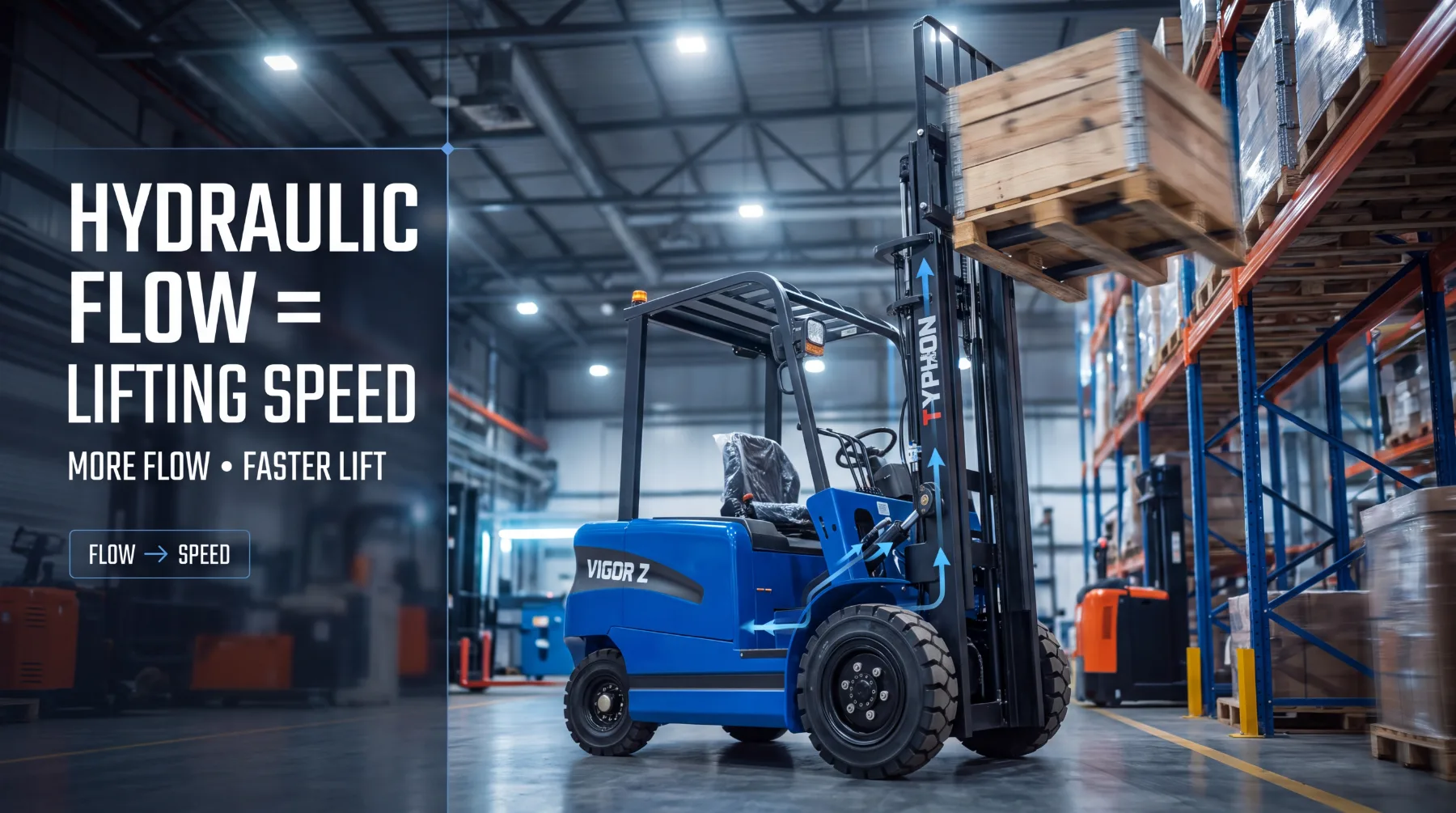
Ask any operator what makes a forklift feel productive, and lifting speed usually comes up fast. A machine that raises its forks quickly moves more pallets per hour and keeps a busy warehouse running smoothly. Behind that speed sits the hydraulic pump, quietly pushing oil to the lift cylinder every time you pull the control lever. How much oil it delivers, and how well the rest of the system is matched to it, decides whether your forks glide up briskly or crawl toward the rack. This guide breaks down how hydraulic pump flow shapes lifting speed, along with the pressure, cylinder size, engine speed, and efficiency factors that work alongside it. Understanding these connections helps you judge performance, spot problems, and get dependable results from your equipment.
Hydraulic Pump Flow Rate and Lifting Speed
Flow rate is the single biggest factor in how fast a forklift raises its forks. Flow describes the volume of hydraulic oil the pump delivers over a given period, usually measured in liters or gallons per minute. When you lift a load, that oil travels to the lift cylinder and drives the piston upward. The more oil the pump pushes in a moment, the faster the piston moves, and the faster the forks climb. A higher hydraulic pump flow rate therefore delivers quicker lifting, while a lower flow rate means the forks rise more slowly.
The relationship is direct and easy to picture. Think of filling the cylinder like filling a bucket. A wide-open tap fills it quickly, while a trickle takes far longer. In the same way, generous flow fills the lift cylinder rapidly and drives the forks up at a brisk pace, while reduced flow slows everything down. This is why a machine with a strong, well-matched pump feels responsive and eager, and why a forklift losing flow, perhaps from a worn pump or a restriction in the lines, feels sluggish on every lift.
For operators moving loads all day, this speed compounds into real productivity. Faster lifting shaves seconds off each cycle, and those seconds add up across hundreds of lifts in a shift. That said, flow only translates into speed when the rest of the hydraulic system is built to handle it. The pump, valves, hoses, and cylinder all need to work together, so the oil the pump supplies reaches the cylinder without needless restriction. When the system is properly matched, higher flow reliably means faster, more productive lifting.
How Hydraulic Pressure Affects Lifting Performance
If flow governs how fast the forks rise, pressure governs how much weight they can lift. Hydraulic pressure is the force the oil exerts within the system, and it determines the lifting force available at the cylinder. When a heavy load sits on the forks, the machine has to overcome that weight, and it does so through hydraulic pressure pushing the piston with enough force to raise the load. Higher pressure means more lifting force, which is why pressure is the key factor behind a forklift’s lifting capacity.
It helps to keep the roles of flow and pressure separate in your mind. Flow mainly affects speed, moving the piston quickly, while pressure mainly affects force, giving that movement the strength to lift heavy weight. A machine can have plenty of flow yet still struggle with a heavy pallet if it lacks the pressure to generate the needed force. The two work as a team, each handling a different part of the job.
Pressure also has a quieter effect on overall lifting performance. While its primary role is capacity, insufficient pressure can reduce lifting performance more broadly. If the system cannot maintain adequate pressure, the forklift may lift heavy loads slowly, hesitate under weight, or fail to reach full capacity, even when flow is sufficient on paper. In practice, that means a machine short on pressure feels underpowered whenever the load gets demanding. A properly maintained hydraulic system keeps pressure within its designed range, so the forklift produces the force it needs to handle rated loads confidently. Pressure and flow together determine both how fast and how much a forklift can lift.
Lift Cylinder Size and Oil Flow
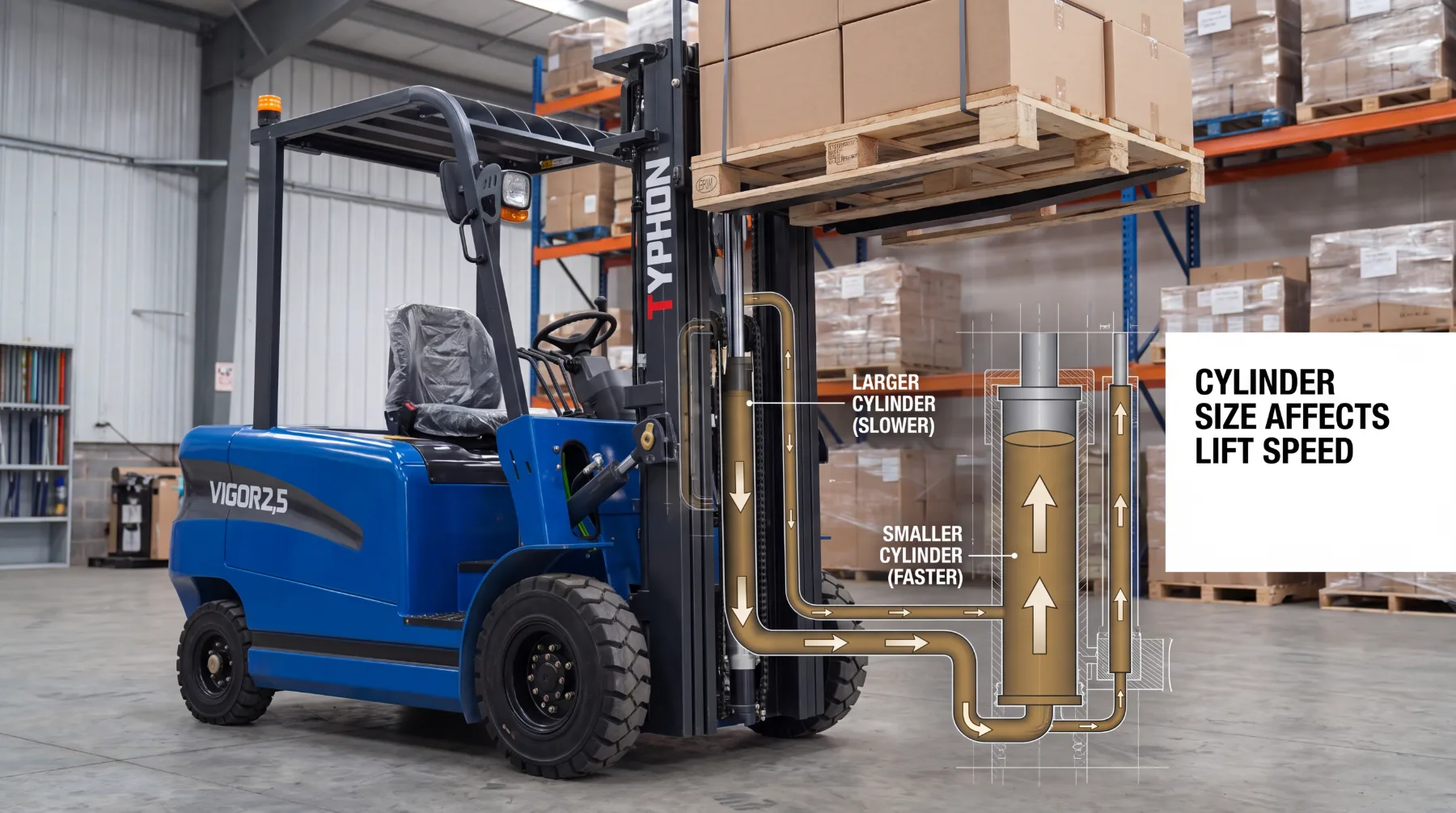
The lift cylinder is where hydraulic oil becomes physical movement, and its size plays a major role in how flow translates into lifting speed. For a given flow rate, the size of the cylinder influences how quickly the forks move. A smaller cylinder has less internal volume to fill, so a given amount of oil raises the piston further and faster. A larger cylinder holds more volume, which means it needs more oil to move the piston the same distance. As a result, larger cylinders require more hydraulic oil to achieve the same lifting speed as smaller ones.
This connection is worth understanding because it explains why two forklifts with similar pumps can lift at different speeds. A machine with a large-diameter lift cylinder demands more flow to move quickly, so if its pump supplies only moderate flow, the forks may rise slowly despite the pump working hard. Conversely, a machine with a smaller cylinder can achieve brisk lifting with less flow, since each unit of oil does more to move the piston. The cylinder and the pump have to be considered together, not in isolation.
There is a practical trade-off built into cylinder sizing as well. Larger cylinders typically generate more lifting force at a given pressure, since the oil acts on a larger piston area, which supports heavier capacity. But that same larger volume slows lifting speed unless the pump delivers enough flow to match. Manufacturers balance these factors when designing a forklift, matching cylinder size, pump flow, and pressure to deliver the intended combination of speed and capacity. When the cylinder is well matched to the pump, the machine lifts at the pace and power its work requires.
Engine Speed and Pump Output
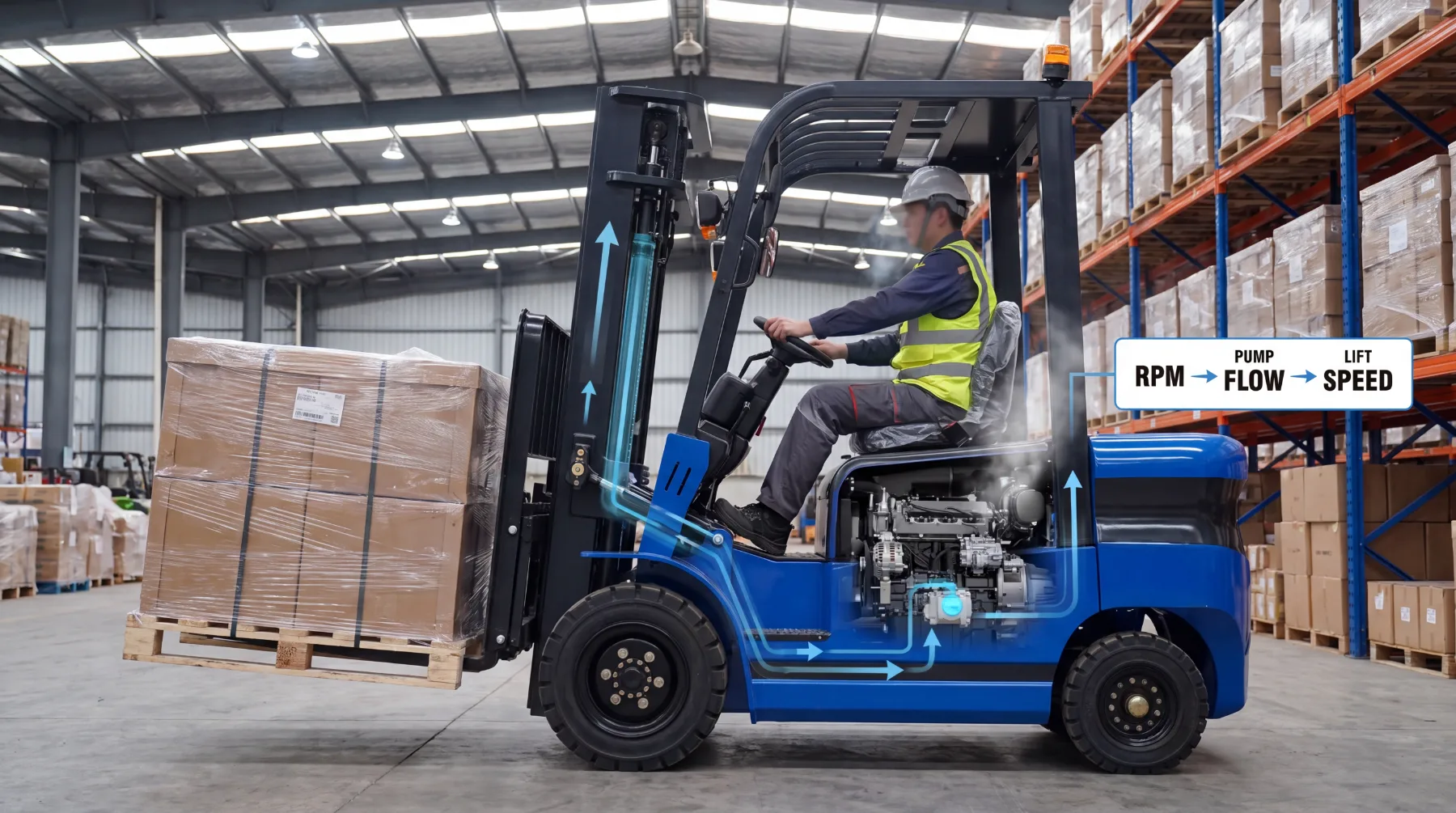
On many forklifts, the hydraulic pump draws its power from the engine or drive motor, which means the speed of that power source directly affects pump output. A hydraulic pump moves a set amount of oil with each rotation, so the faster it turns, the more oil it delivers over time. Because engine or motor speed drives the pump, increasing that speed can increase the pump’s output flow, and more flow means faster lifting. This is why revving the engine on some forklifts noticeably speeds up how quickly the forks rise.
The effect depends on how the forklift’s hydraulic system is designed. On internal combustion machines, the engine typically drives the pump, so higher engine RPM raises flow and lifting speed until the system reaches its limits. Operators often notice they can lift a load faster with the throttle open than at idle. Electric forklifts work on the same principle but through an electric motor, where the motor speed governs pump output. In both cases, the relationship between power-source speed and pump flow shapes how quickly the machine can raise a load.
There are sensible limits to this, however, and understanding them matters. Increasing engine speed only improves lifting speed up to the point where the pump, valves, and cylinder can effectively use the added flow. Beyond that, pushing the engine harder simply burns more fuel or energy without lifting any faster, and it can add unnecessary heat and wear. Many modern forklifts are designed to manage this relationship automatically, supplying the flow the lift needs without demanding that the operator manually rev the engine. Knowing how engine speed and pump output connect helps operators use their machines efficiently rather than working them harder than the task requires.
Balancing Lifting Speed and System Efficiency
More flow sounds like an easy win for faster lifting, but the full picture involves balancing speed against efficiency and machine health. Higher flow can provide faster lifting, yet pushing excessive flow through a system creates problems that offset the benefit. When more oil moves than the components can comfortably handle, the surplus forces its way through valves and passages that were not sized for it. That restriction wastes energy, and the wasted energy turns into heat, higher fuel or power consumption, and added strain on components over time.
Heat is the main concern here. Forcing too much oil through the system raises the temperature of the hydraulic fluid, and hot oil thins out, which can compromise lubrication and stress seals and hoses. Elevated temperatures also accelerate wear on pumps, valves, and cylinders, shortening the life of parts that are costly to replace. At the same time, the engine or motor burns extra energy to move oil that produces no additional useful lifting. In short, chasing maximum flow can leave a machine running hotter, wearing faster, and costing more to operate, all without lifting meaningfully quicker.
This is why a properly matched hydraulic system matters so much. Rather than aiming for the highest possible flow, good design balances speed, power, and efficiency together. The pump, valves, cylinder, and engine are matched so the system delivers responsive lifting while keeping heat, energy use, and wear under control. A well-balanced forklift lifts quickly enough to stay productive, generates the force its loads require, and does so efficiently, protecting both its components and your operating costs. That balance, not raw flow alone, is what defines dependable lifting performance over the long working life of the machine.
Frequently Asked Questions
- How does hydraulic pump flow rate affect forklift lifting speed?
Hydraulic pump flow rate is the volume of oil the pump delivers over a given period, and it directly sets how fast the forks rise. When you lift a load, oil travels to the lift cylinder and drives the piston upward, so the more oil the pump supplies in a moment, the faster the piston and the forks move. A higher flow rate delivers quicker lifting, while a lower flow rate means the forks rise more slowly. Picture filling a bucket: a wide-open tap fills it fast, while a trickle takes much longer. The same logic applies to the lift cylinder. However, flow only translates into speed when the rest of the system, including valves, hoses, and the cylinder, is matched to handle it. When everything works together, higher flow reliably produces faster, more productive lifting. - What is the difference between hydraulic flow and hydraulic pressure?
Flow and pressure handle two different jobs in a forklift’s hydraulic system. Flow is the volume of oil the pump moves, and it mainly affects speed by driving the lift piston quickly. Pressure is the force the oil exerts, and it mainly affects lifting capacity by generating the force needed to raise heavy loads. Think of it this way: flow determines how fast the forks rise, while pressure determines how much weight they can lift. A machine can have plenty of flow yet still struggle with a heavy pallet if it lacks sufficient pressure, and it can have strong pressure yet lift slowly if flow is limited. The two work as a team, each covering part of the task. A well-designed forklift supplies both in the right measure so it lifts loads quickly and powerfully. - Why do larger lift cylinders lift more slowly at the same flow rate?
The size of the lift cylinder determines how much oil it takes to move the piston a given distance. A larger cylinder has more internal volume to fill, so it needs more hydraulic oil to raise the piston the same amount as a smaller cylinder. For a fixed flow rate, that added volume means the forks move more slowly, because the pump has to fill a bigger space with each lift. A smaller cylinder fills faster with the same oil, so the forks rise more quickly. This is why two forklifts with similar pumps can lift at different speeds. Larger cylinders do offer an advantage, though: they typically generate more lifting force at a given pressure because the oil acts on a larger piston area. Manufacturers match cylinder size, pump flow, and pressure to deliver the intended balance of speed and capacity. - Does increasing engine speed make a forklift lift faster?
It can, depending on how the forklift’s hydraulic system is built. On many machines, the engine or drive motor powers the hydraulic pump, and the pump moves a set amount of oil with each rotation. Turning the pump faster delivers more oil over time, so increasing engine speed can raise flow and speed up lifting. On internal combustion forklifts, operators often notice the forks rise faster with the throttle open than at idle. Electric forklifts follow the same principle through motor speed governing pump output. There are limits, however. Higher engine speed only improves lifting until the pump, valves, and cylinder can no longer use the extra flow effectively. Beyond that point, revving harder just burns more fuel or energy and adds heat and wear without lifting any faster. Many modern forklifts manage this automatically, supplying the flow the lift needs. - Can too much hydraulic flow harm a forklift?
Yes. While higher flow can speed up lifting, excessive flow creates problems that outweigh the benefit. When more oil moves than the components can comfortably handle, the surplus forces its way through valves and passages that were not sized for it, wasting energy. That wasted energy becomes heat, which is the main concern. Hot hydraulic oil thins out, compromising lubrication and stressing seals and hoses, while elevated temperatures accelerate wear on the pump, valves, and cylinders. At the same time, the engine or motor burns extra energy to move oil that produces no additional lifting. The result is a machine running hotter, wearing faster, and costing more to operate without lifting meaningfully quicker. This is why a properly matched hydraulic system matters. Good design balances speed, power, and efficiency, keeping heat, energy use, and wear under control for dependable long-term performance.