

Choosing Wheel Loader Based on Operating Weight and Tipping Load
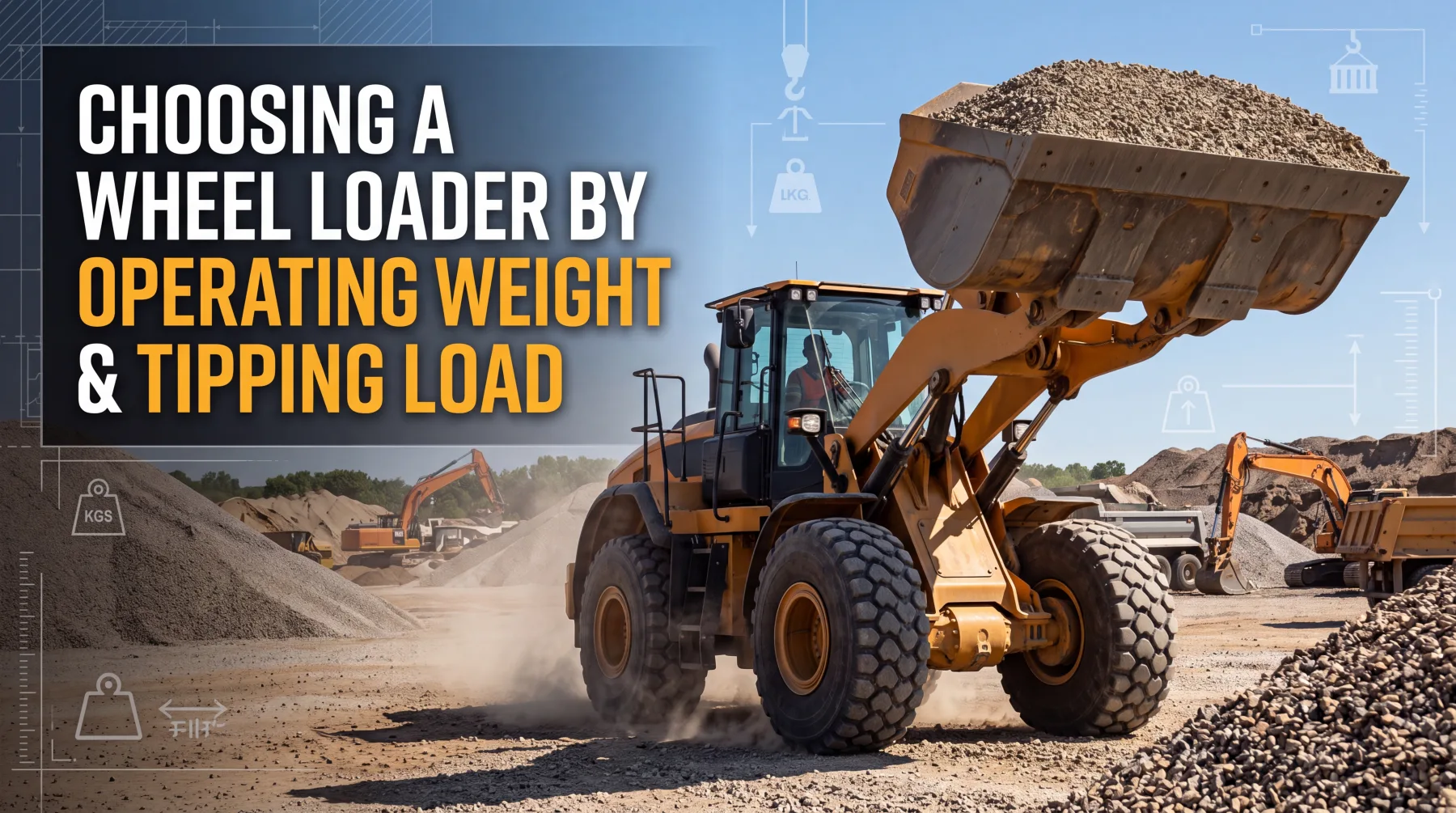
Buying a wheel loader comes down to more than horsepower and bucket size. Two specifications often decide whether a machine will serve you well or let you down: operating weight and tipping load. These numbers reveal how a loader will behave under real working conditions, from how firmly it grips the ground to how much material it can safely lift. Understanding them helps you avoid costly mistakes, whether that means buying a machine that struggles under load or one far heavier than your work requires. This guide walks you through what these specifications mean, how they shape performance, and how to match them to your job so you invest in equipment that delivers reliable results.
Understanding Wheel Loader Operating Weight and Tipping Load
When you evaluate a wheel loader, two specifications deserve your close attention: operating weight and tipping load. Together, they tell you far more about real-world performance than engine power alone. Operating weight is the total weight of the machine ready to work, including fluids, a full fuel tank, and the operator. Tipping load, on the other hand, describes the maximum weight the loader can lift before it begins to lose stability and tip forward. Both figures come directly from the manufacturer, and both play a central role in how safely and productively the machine performs on your site.
These two numbers are closely connected, and that relationship is worth understanding from the start. A loader’s operating weight provides the counterbalance that keeps it planted when lifting a heavy load at the front. The heavier and better-balanced the machine, the more it can lift before tipping becomes a concern. This is why you cannot judge lifting capability by looking at bucket size alone. A large bucket means little if the machine lacks the weight and stability to lift a full load safely.
For contractors and equipment buyers, treating these specifications as a pair rather than isolated figures leads to smarter decisions. A machine with strong operating weight and a generous tipping load handles demanding material work with confidence, while a lighter loader may prove unstable under the same conditions. Before comparing any two loaders, look at how these numbers relate to each other. That single habit gives you a far clearer picture of what each machine can actually accomplish, helping you match the equipment to the reality of your work rather than to a marketing spec sheet.
How Operating Weight Affects Wheel Loader Performance
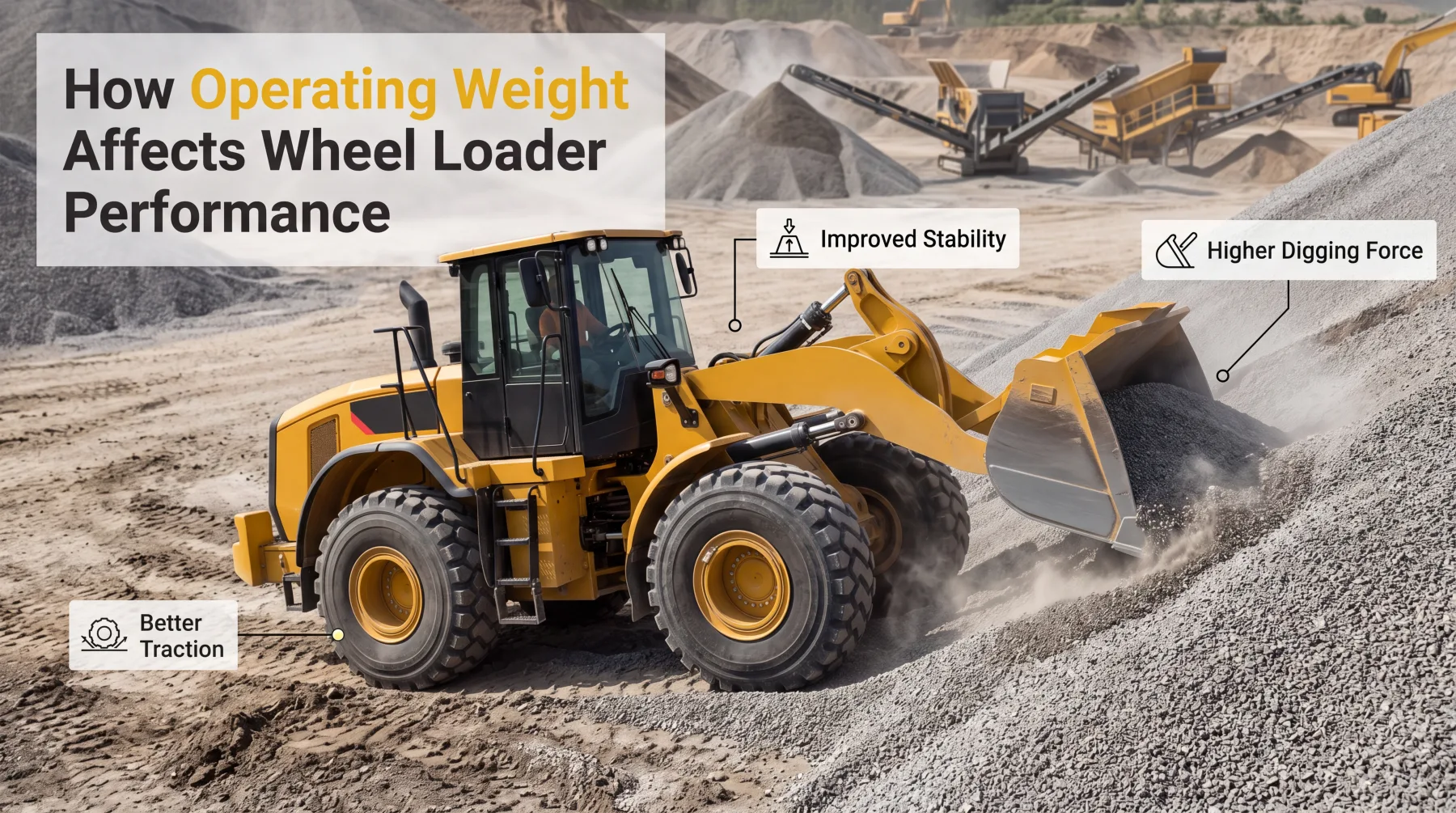
Operating weight influences nearly every aspect of how a wheel loader performs, starting with traction. A heavier machine presses its tires more firmly into the ground, generating the grip needed to push into a pile, break loose compacted material, and climb inclines without slipping. On loose, muddy, or uneven surfaces, that added weight translates directly into productive digging force. A loader that is too light for the job simply spins its wheels, wasting fuel and time while accomplishing little.
Stability is the next major factor tied to operating weight. The mass at the rear of the machine acts as a counterbalance to the load carried at the front, keeping the loader steady when lifting, carrying, and dumping. This balance becomes especially important when handling heavy materials or working on slopes, where an underweight machine risks tipping. At the same time, weight affects how the loader interacts with different terrains, since a heavier unit provides confidence on rough ground but may sink into soft soil that a lighter machine would cross with ease.
Weight also carries trade-offs that buyers should weigh carefully:
- Traction and digging force improve with greater operating weight, especially on demanding surfaces.
- Stability and safety increase, giving the machine a planted, secure feel under load.
- Fuel efficiency tends to decline, as a heavier machine requires more energy to move and operate.
- Ground impact rises, which can be a concern on delicate or finished surfaces.
The goal is not simply to choose the heaviest loader available. Instead, aim for the operating weight that gives you the traction and stability your work demands without burning unnecessary fuel or damaging sensitive ground. Understanding how weight shapes these performance factors lets you select a machine that works with your conditions rather than against them, delivering the productivity and reliability your operation depends on.
Understanding Rated Tipping Load and Lifting Capacity
Tipping load is one of the most critical specifications for any material handling operation, because it defines the limit of what a loader can safely lift. Specifically, the rated tipping load is the weight at which the machine’s rear wheels begin to lift off the ground, signaling the point where stability is lost. Manufacturers typically publish this figure for both straight and full-turn positions, since a loader is less stable when articulated. The full-turn tipping load is the more conservative and important number, as it reflects the machine’s stability during real-world maneuvering.
From the tipping load, manufacturers calculate the safe lifting capacity, usually setting it at a fraction of the full-turn tipping load to build in a margin of safety. This is why you should never plan your work around the raw tipping figure itself. The rated operating capacity gives you the weight the machine can handle repeatedly and safely throughout a shift, protecting both the operator and the equipment. Ignoring this margin and pushing toward the tipping point invites accidents, dropped loads, and premature wear on the machine.
For material handling tasks, understanding this relationship is essential to choosing the right loader. If your daily work involves lifting heavy pallets, loading trucks with dense aggregate, or stacking material at height, you need a machine whose safe lifting capacity comfortably exceeds your typical loads. A loader that only meets your requirements at its absolute limit will struggle over time and leave no room for the heavier loads that inevitably arise. By selecting a machine with a tipping load and rated capacity that give you genuine headroom, you ensure safe, dependable performance across the full range of your work. That confidence in the machine’s limits is what keeps your operation productive and your crew protected on every lift.
Matching Wheel Loader Size to Your Work Requirements
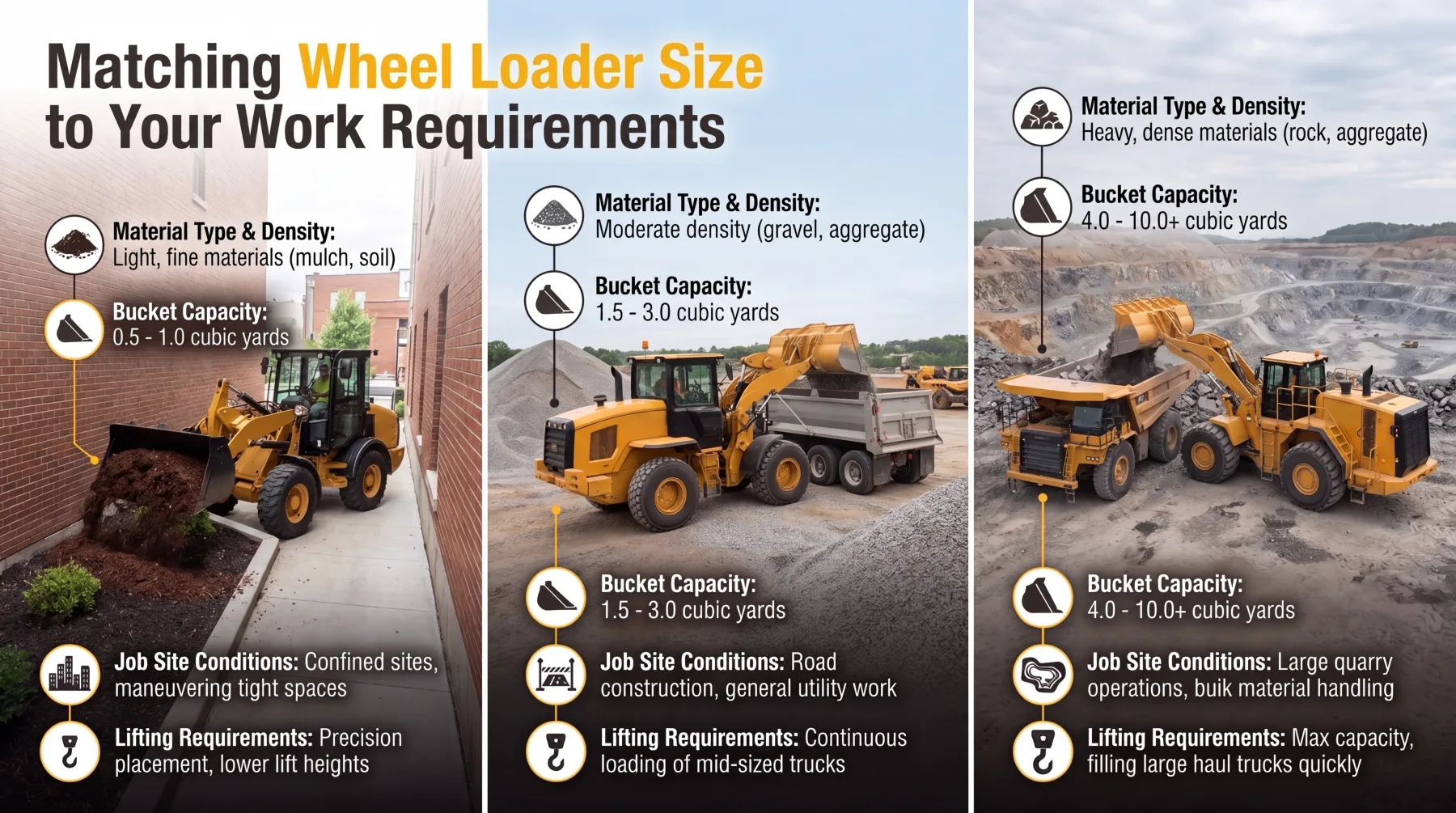
Choosing the right size wheel loader begins with an honest look at the materials you handle and the conditions you work in. A machine sized correctly for your tasks moves material efficiently, stays stable under load, and keeps operating costs in proportion to the work. One that is too small forces you to take smaller bites, work more slowly, and push the equipment to its limits, while an oversized machine burns extra fuel, costs more to maintain, and may prove awkward on tighter sites. The right fit sits squarely between these extremes.
Several practical factors should guide your decision. The type and density of your materials matter enormously, since a bucket of dense wet gravel weighs far more than the same volume of loose mulch. Bucket size must align with both the material and the machine’s lifting capacity, so the loader can carry a full bucket without approaching its tipping limit. Job site conditions, including space, ground firmness, and travel distances, also shape which size performs best.
Keep these considerations in mind as you compare machines:
- Material type and density determine how much weight each bucket load carries.
- Bucket size should match both the material and the loader’s safe lifting capacity.
- Job site conditions such as access width, ground stability, and slopes influence the ideal size.
- Required lifting performance must cover your heaviest routine loads with room to spare.
Matching the machine to these requirements is what drives real productivity gains. A loader that handles your typical loads comfortably, fits your sites, and lifts your heaviest materials safely will outperform a poorly matched machine every time. Take the time to assess your work accurately, weigh it against each loader’s operating weight and tipping load, and you will select a size that boosts output while keeping fuel, maintenance, and ownership costs firmly under control.
Finding the Right Balance Between Power and Efficiency
It is tempting to assume that a heavier, more powerful wheel loader is always the better buy, but that logic often leads to wasted money and lost efficiency. The ideal machine is not the largest one you can afford; it is the one that delivers enough stability, lifting capacity, and performance for your specific work while running as efficiently as possible. An oversized loader may handle your loads with ease, yet it will consume more fuel, cost more to service, and place unnecessary strain on delicate surfaces, undercutting the value it was meant to provide.
Striking the right balance means weighing capability against operating cost with your actual applications in mind. A machine with sufficient operating weight gives you the traction and stability you need, while an appropriate tipping load ensures you can lift your heaviest routine materials safely. Beyond those thresholds, additional size and power simply add expense without improving your results. The smartest choice provides comfortable headroom for your demands without pushing far past them, keeping fuel consumption, maintenance, and purchase price in proportion to the work.
This balanced approach pays off over the entire life of the machine. A well-matched loader completes your daily tasks reliably, transports more easily between sites, and keeps running costs manageable, all of which strengthen your return on investment. Rather than fixating on maximum power, focus on the combination of weight, stability, and efficiency that suits your operation best. Ask what your work genuinely requires, then choose the loader that meets those needs with a sensible margin. When you select based on real performance rather than raw size, you invest in a machine that serves you dependably for years, delivering the productivity you want without the excess cost you do not.
Conclusion
Choosing the right wheel loader comes down to understanding two specifications that shape everything about how the machine performs: operating weight and tipping load. Operating weight determines traction, stability, and how well a loader handles your terrain, while tipping load defines how much it can lift safely before stability is lost. Read together, these figures reveal far more than engine power ever could, giving you a clear picture of what each machine can truly accomplish. Match them thoughtfully to your materials, bucket size, and job site conditions, and aim for the balance of capability and efficiency that fits your specific work. Do that, and you will invest in a wheel loader that delivers dependable performance, controls your operating costs, and rewards you with strong returns for years to come.