

Pilot Controls vs Mechanical Controls on Mini Excavators
You’re standing at the dealer lot, ready to buy your first mini excavator, when the salesperson asks a question you didn’t expect: “Do you want pilot or mechanical controls?” Suddenly a straightforward purchase feels like a pop quiz. The two machines look nearly identical on the outside, but how they feel in your hands and how they hold up over the years can be very different.
For many first-time buyers, this choice doesn’t get nearly as much attention as engine power, digging depth, or operating weight. Yet the control system directly affects how precisely you operate the machine, how quickly new operators become comfortable, and what maintenance requirements you can expect over the life of the excavator.
Understanding the differences between pilot and mechanical controls before you buy can help you avoid costly surprises later. By matching the control system to your experience level, working environment, and long-term ownership goals, you’ll be better equipped to choose a mini excavator that delivers the performance and reliability you need.
How Each Control System Actually Works
Before you can pick a side, you need to understand what’s happening under the hood. Both systems move the same boom, arm, and bucket, but they get there in completely different ways. That difference drives everything else, from feel to repair costs.
Mechanical controls use a network of levers and linkages to transfer the operator’s input directly to the machine’s hydraulic valves, while pilot controls use low-pressure hydraulic signals to activate those valves with minimal physical effort. Although both systems perform the same digging functions, the way they transmit operator input has a significant impact on control precision, responsiveness, maintenance requirements, and overall operating comfort.
Mechanical Controls: Direct and Simple
Mechanical controls connect your levers directly to the hydraulic valves through rods, linkages, or cables. When you move a lever, you’re physically shifting a valve spool through that connection. It’s a straightforward, time-tested design with fewer components in the signal path.
Because the link is direct, you feel the machine working through the levers. Many longtime operators appreciate that raw, connected feedback. The tradeoff is that the levers take more physical effort, since your hand is doing the mechanical work of moving the valve.
Pilot Controls: Hydraulic Assistance
Pilot controls place a small hydraulic circuit between your joystick and the main valves. Moving the joystick sends a low-pressure oil signal that tells the main valve how far to open. Your hand barely works at all, because the hydraulics do the heavy lifting.
This is the setup you’ll find on most newer and mid-to-higher-end machines. The joysticks move smoothly with light pressure, and the response feels refined rather than mechanical.
- Mechanical: Lever → linkage or cable → valve spool.
- Pilot: Joystick → pilot oil signal → main valve.
- Feel: Mechanical is direct; pilot is smooth and assisted.
Ease of Learning and Everyday Operation
For most landowners and first-time buyers, how quickly you can get productive matters more than any spec sheet. The control system shapes your learning curve and how the machine feels hour after hour.
Pilot controls generally require less physical effort and provide smoother, more responsive operation, making them easier for most new operators to learn and use over long workdays. Mechanical controls offer a more direct feel and can take longer to master, but some experienced operators appreciate their predictable feedback and straightforward operation, particularly in demanding jobsite conditions.
Which Is Easier for a Beginner
Pilot controls tend to be friendlier for newcomers. The joysticks move with light, consistent pressure and give smooth, predictable responses, so you dial in coordination faster. Many rental fleets and newer machines use pilot controls partly for this reason.
Mechanical controls aren’t hard to learn, but they demand more muscle and a steadier hand. Some new operators find the extra effort tiring while they’re still building coordination.
Comfort Over a Long Day
Operator fatigue is real, especially on big projects. With mechanical controls, your hands and arms work against the linkage all day, and that effort adds up on long trenching or clearing jobs.
Pilot controls barely require any force, so you stay fresher through hours of steady work. For anyone tackling weekend-long projects on their land, that comfort difference is easy to feel.
- Learning curve: Pilot is gentler for first-timers.
- Physical effort: Mechanical demands more; pilot is light.
- Long jobs: Pilot reduces fatigue over extended sessions.
Precision, Control, and Maintenance
Ease of use is only half the story. How finely you can control the machine, and how much upkeep it demands, both come down to the control system you choose. Understanding these differences helps you balance operating performance with long-term ownership costs.
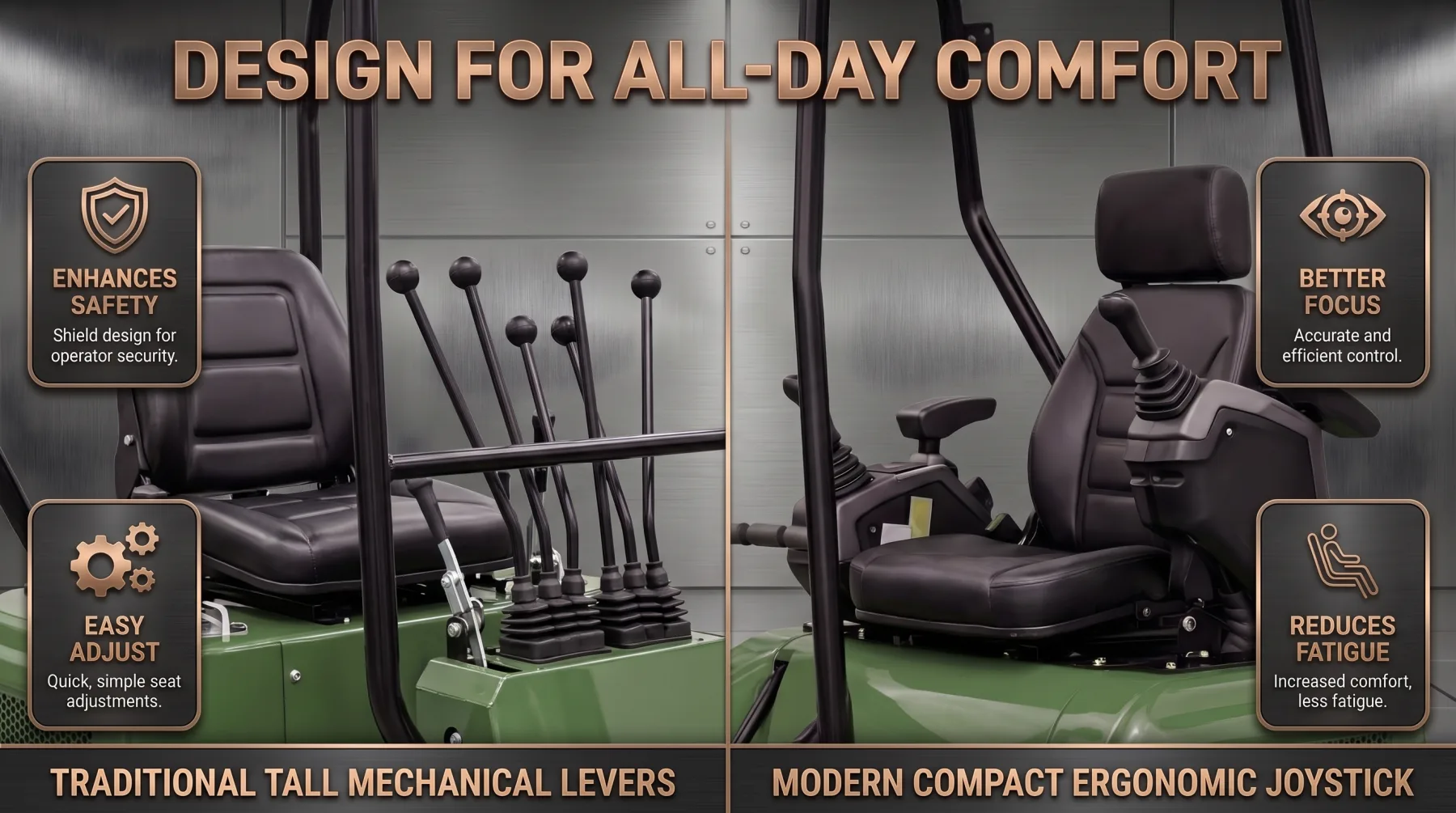
Pilot controls typically provide smoother, more precise movements that make tasks such as trenching, grading, and working around utilities easier to perform accurately. Mechanical controls are known for their simple design and can be easier to troubleshoot in the field, but they often require more physical input and periodic adjustment of linkages and components to maintain consistent performance.
Fine Control for Delicate Work
Pilot controls shine when you need precision. The hydraulic signal lets you feather movements smoothly, which helps with grading, fine trenching, and delicate lifts near structures. Small joystick movements translate into small, controlled machine movements.
Mechanical controls can be precise too, but they reward experience. Once you learn the feel, you can be very accurate, though the effort makes long stretches of fine work more demanding.
What Maintenance to Expect
Mechanical controls are known for their simple design, making them easy to inspect, maintain, and repair. Most wear components, such as linkages, pins, and cables, are inexpensive to replace. Their straightforward construction also makes routine maintenance more accessible for owners who prefer to perform repairs themselves. This simplicity often results in lower long-term maintenance costs and less downtime.
Pilot controls use hydraulic hoses, valves, and pilot circuits to deliver smoother, more precise machine operation. They provide better control for fine grading, trenching, and other tasks that require accurate movements. Because these systems rely on hydraulic pressure, clean hydraulic oil and regular maintenance are essential for reliable performance. While repairs are typically more complex and costly, many operators consider the improved control and comfort worth the investment.
Which Control System Suits You Best
There’s no single right answer, only the right match for your work, budget, and comfort. Here’s how to line up each system with real situations so you can choose with confidence. Considering how often you’ll use the machine, who will operate it, and the type of projects you tackle will make the decision much clearer.
For occasional property maintenance or users who value simplicity, mechanical controls can offer dependable performance with a straightforward design. If you expect to spend long hours operating the excavator, perform precision work, or have multiple operators using the machine, pilot controls often provide greater comfort, smoother operation, and improved productivity over the long term.
When Pilot Controls Make Sense
Pilot controls are a smart pick if you value comfort, plan long workdays, or want the easiest learning curve. They also suit precise jobs like finish grading and careful lifts near buildings.
If you’re buying a newer machine or one bundled with attachments for varied work, pilot controls likely come standard and pay off in daily comfort.
When Mechanical Controls Make Sense
Mechanical controls are a strong choice for budget-conscious buyers who value simple, affordable maintenance and dependable operation. Their straightforward design makes them especially suitable for owners who perform their own repairs or work in remote locations where access to service may be limited. Many experienced operators also appreciate the direct, responsive feel of mechanical controls, particularly for shorter jobs where reduced operating comfort is less of a concern.
Pilot controls are better suited for operators who prioritize comfort, smooth precision, and ease of use. They reduce operator fatigue during long workdays and make fine, controlled movements easier, making them ideal for precision applications and for those with less operating experience. Choosing between pilot and mechanical controls ultimately depends on the type of work you perform, your maintenance preferences, and the operating environment in which the machine will be used.
Conclusion
Choosing between pilot and mechanical controls comes down to how you work and what you value. Pilot controls offer light effort, smoother precision, and an easier learning curve, making them ideal for long days and detailed jobs. Mechanical controls reward you with simple, low-cost maintenance and a direct feel that many operators trust, especially when budget or remote servicing is a factor.
Choosing between pilot and mechanical controls is just one part of finding the right mini excavator. The best machine is the one that fits your experience level, workload, and long-term plans while giving you the confidence to work efficiently. A knowledgeable equipment specialist can help you compare models, explain the benefits of each control system, and recommend the right configuration so your investment continues to perform well as your projects grow.
Frequently Asked Questions
Can you convert mechanical controls to pilot controls?
Yes, but it’s rarely worth it. A conversion means adding a pilot valve, hoses, and joysticks, plus the labor to install and tune the system. The cost often approaches the price difference of simply buying a machine with pilot controls from the start. If pilot operation matters to you, it’s usually smarter to buy that setup rather than retrofit later.
Which control type is better for beginners?
Pilot controls are generally the better choice for beginners. The joysticks move with light, consistent pressure and respond smoothly, so new operators build coordination faster and tire less. Mechanical controls are still learnable, but the added physical effort and firmer feel can slow the learning curve while you’re getting comfortable.
Do pilot controls cost more to repair?
Usually, yes. Pilot systems include extra components like hydraulic hoses, a pilot valve, and joystick assemblies, and repairs often call for a technician. Mechanical controls use simple linkages, pins, and cables that are cheap to replace and friendly to do-it-yourself fixes. Keeping your hydraulic oil clean helps pilot systems avoid many issues.
Do mechanical controls last longer than pilot controls?
Both can last for years with proper care. Mechanical controls have fewer parts to fail and are simple to service, which appeals to owners in remote areas. Pilot controls are highly reliable too, but depend on clean hydraulic oil and well-maintained hoses and seals. Neither is clearly more durable; the difference is how simply and cheaply you can service them.