

 Mini Excavator vs. Skid Steer: Which Machine Is Right for Your Job?
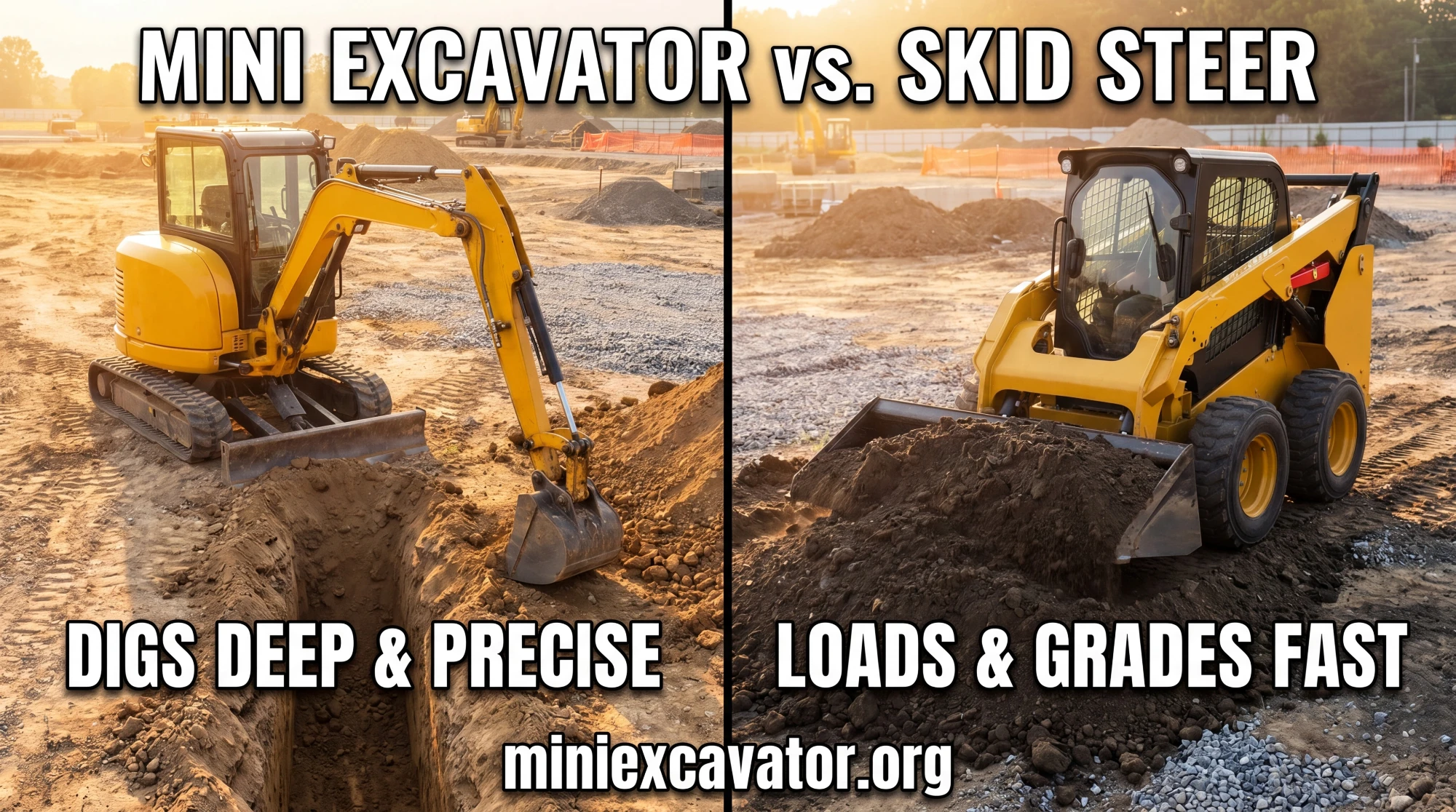
When it comes to compact construction equipment, two machines stand out on almost every jobsite: the mini excavator and the skid steer. Both are powerful, versatile, and built to work in tighter spaces than full-size equipment. At first glance, they may seem similar because they are both compact machines used in construction, landscaping, farming, and property maintenance. However, they are designed for very different tasks.
Choosing the right one can save time, reduce labor, and improve the overall efficiency of your project. If you pick the wrong machine, the work may take longer, cost more, and create unnecessary frustration. That is why understanding the difference between a mini excavator and a skid steer is so important.
In this guide, we will break down how each machine works, their key benefits, where they perform best, and how to decide which one fits your job.
What Is a Mini Excavator?
A mini excavator, also known as a compact excavator, is a smaller version of a standard excavator. Its main purpose is digging, trenching, lifting, and demolition in places where larger machines cannot fit. Most mini excavators run on tracks, which helps them stay stable on uneven ground while also reducing damage to soft or finished surfaces.
The most recognizable feature of a mini excavator is its boom, arm, and bucket. This digging system allows the operator to reach down into the ground, dig precisely, lift material, and place it exactly where needed. Another major advantage is that the upper structure can rotate independently from the undercarriage, often with a full 360-degree swing. This makes it highly efficient when digging in tight areas because the operator can excavate and dump spoil without constantly moving the whole machine.
Mini excavators are commonly used for:
- Trenching for water, gas, or electrical lines
- Digging footings and foundations
- Landscaping and tree planting
- Small demolition work
- Drainage and irrigation projects
- Working in backyards or narrow access areas
Because of their precision and compact size, mini excavators are often the best choice when the job requires controlled digging.
What Is a Skid Steer?
A skid steer is a compact machine built mainly for lifting, pushing, carrying, and loading material. Unlike a mini excavator, a skid steer does not dig with a boom and arm. Instead, it uses lift arms mounted on both sides of the machine, with an attachment fixed at the front.
The most common skid steer attachment is a bucket, but this machine becomes extremely versatile when paired with other tools such as forks, trenchers, augers, grapples, brush cutters, sweepers, or snow blowers. This is why many operators consider the skid steer one of the most flexible machines on a worksite.
A skid steer gets its name from the way it turns. Instead of steering like a normal vehicle, the wheels on each side operate independently. This allows it to pivot in place, making it very agile in tight spaces.
Skid steers are commonly used for:
- Loading dirt, gravel, or debris
- Grading and leveling ground
- Clearing brush or jobsite waste
- Moving pallets and materials
- Snow removal
- Surface preparation
- Light trenching with the right attachment
If your work involves moving material quickly and using multiple front-mounted attachments, a skid steer is often the better option.
The Main Difference Between a Mini Excavator and a Skid Steer
The simplest way to understand the difference is this:
- A mini excavator is best for digging
- A skid steer is best for loading, pushing, and carrying
A mini excavator is designed to dig below ground level with accuracy. A skid steer is designed to work at surface level with speed and versatility.
That difference affects nearly everything about how they perform. A mini excavator is more specialized for excavation and trenching. A skid steer is more versatile for general material handling and attachment-based tasks.
Benefits of a Mini Excavator
A mini excavator offers several major advantages, especially for jobs that require control and digging depth.
1. Better Digging Performance
This is the biggest advantage of a mini excavator. It can dig deeper and more precisely than a skid steer. If you need trenches, footings, drainage lines, or stump removal, a mini excavator is usually the right tool.
2. 360-Degree Rotation
The rotating upper body allows the operator to dig and dump without repositioning the entire machine. This is especially useful in narrow spaces or when working next to walls, fences, or structures.
3. Lower Ground Pressure
Because most mini excavators run on tracks, they spread their weight more evenly across the ground. This reduces surface damage, which is helpful on lawns, gardens, or softer soil.
4. Great for Tight and Sensitive Areas
Mini excavators can work in compact spaces and around finished landscaping with less disruption than many larger machines.
5. Useful Specialized Attachments
Although digging is their main strength, mini excavators can also use attachments like hydraulic breakers, augers, grapples, and grading buckets, making them more versatile than many people expect.
Benefits of a Skid Steer
A skid steer also brings major advantages, particularly when a project involves moving materials fast and switching between tasks.
1. High Versatility
A skid steer can use a huge range of attachments. This allows one machine to perform many jobs, including loading, grading, trenching, sweeping, lifting, and clearing.
2. Strong Pushing and Lifting Power
For moving dirt, gravel, mulch, snow, or demolition debris, a skid steer is extremely efficient. It can load trucks, backfill trenches, and spread materials much faster than a mini excavator in many cases.
3. Tight Turning Radius
Because it can pivot almost in place, a skid steer is ideal for tight work areas, yards, barns, alleys, and compact commercial sites.
4. Fast for Surface Work
When the task is grading, leveling, hauling, or site cleanup, a skid steer often works faster than a mini excavator.
5. Great Value for Multi-Task Jobs
If your project changes from one task to another throughout the day, a skid steer may offer better overall value because of its broad attachment compatibility.
 When to Choose a Mini Excavator
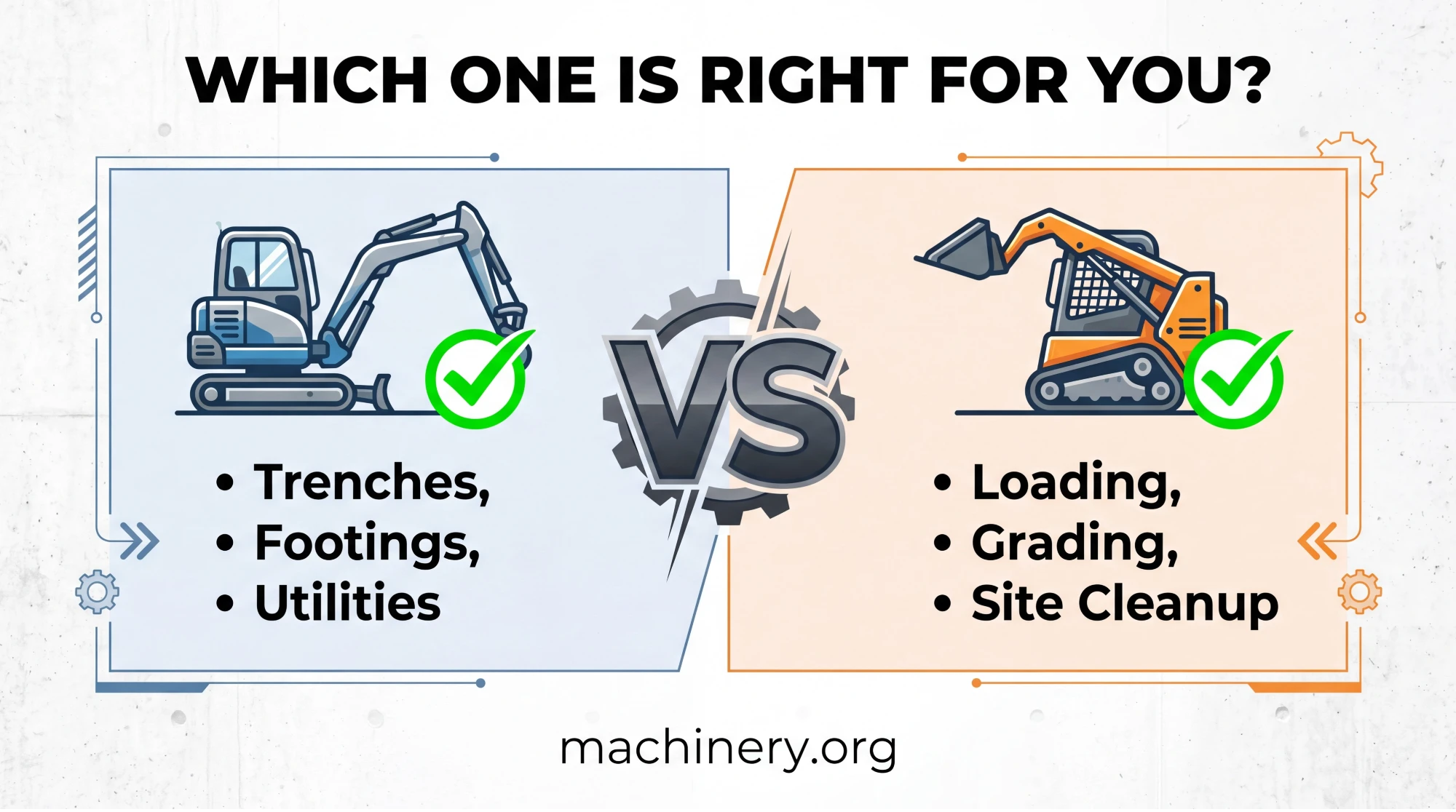
A mini excavator is the better choice when your project includes:
- Digging trenches or holes
- Installing utilities or drainage
- Foundation work
- Tree planting or stump removal
- Demolition with a breaker
- Working in narrow or delicate areas
- Jobs that require reach and precision
For example, if you are installing a new water line across a property, digging a trench for electrical conduit, or creating a drainage path, the mini excavator is the stronger option.
When to Choose a Skid Steer
A skid steer is the better choice when your project includes:
- Moving piles of material
- Loading trucks or trailers
- Backfilling and grading
- Spreading gravel or topsoil
- Clearing brush or debris
- Carrying pallets or equipment
- Surface cleanup and site preparation
For example, if you are preparing a driveway base, moving landscaping materials, clearing debris after demolition, or handling pallets around a yard, the skid steer is usually more efficient.
Can One Machine Replace the Other?
In some cases, there is overlap, but one machine does not fully replace the other.
A skid steer can use a trencher or auger attachment, but it still cannot match the digging depth, reach, or precision of a mini excavator. A mini excavator can move some material and do light grading, but it is not as efficient as a skid steer for pushing, carrying, and fast surface-level work.
That is why many larger projects use both machines together. The mini excavator handles the digging, while the skid steer moves the spoil, backfills, grades, and cleans up the site. They complement each other very well.
 Which One Is Easier to Use?
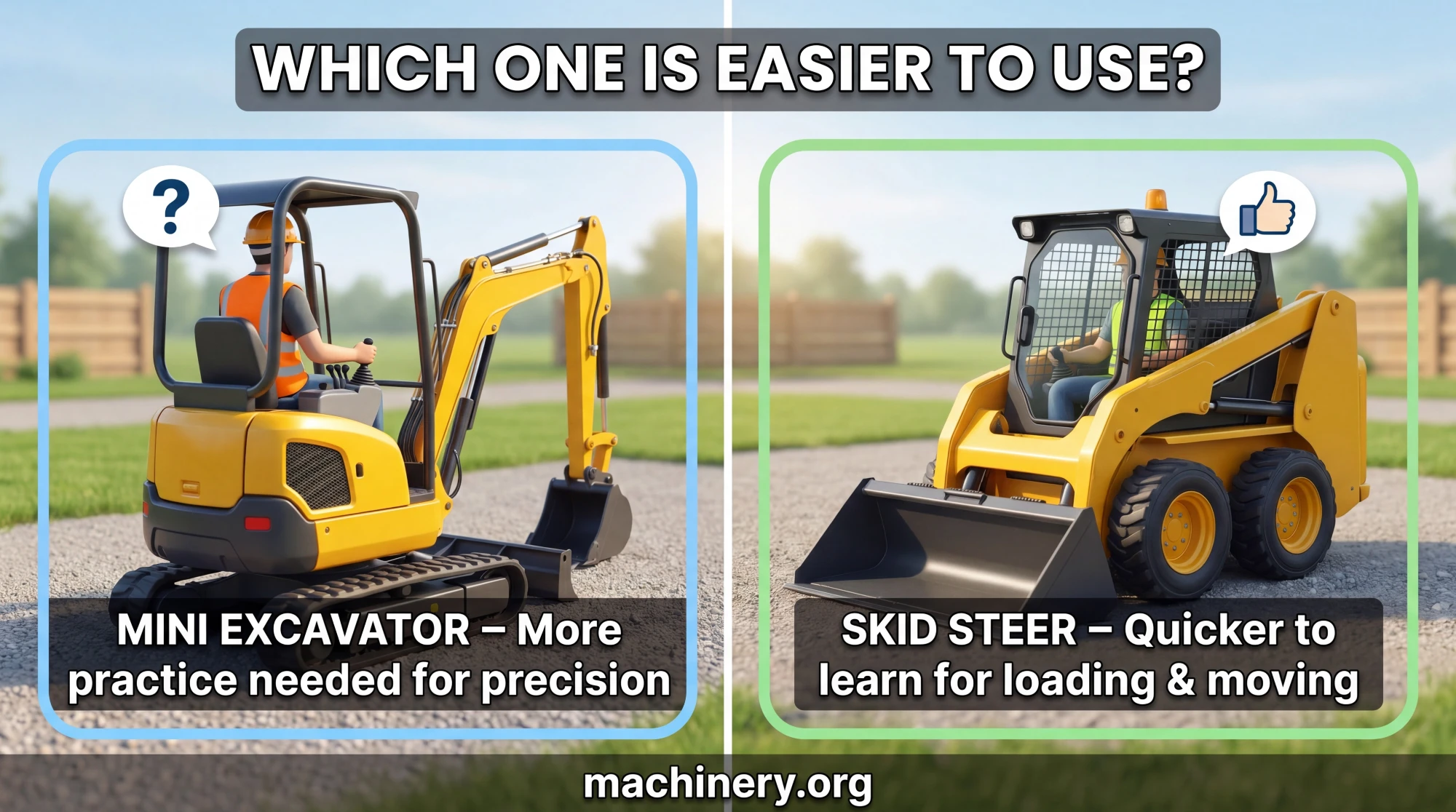
For beginners, both machines require training and care, but many people find skid steers quicker to understand for simple loading and material movement. However, mini excavators often feel easier for precise digging tasks once the controls are learned.
The better question is not which one is easier, but which one is more suitable for the job. Even if one machine seems simpler, using the wrong one can make the work much harder.
What About Ground Conditions?
Ground conditions matter a lot when choosing equipment.
Mini excavators with tracks perform better on soft ground, muddy terrain, and uneven surfaces. They also create less damage on finished landscapes.
Wheeled skid steers are excellent on firm surfaces, construction pads, and paved or compacted ground. If the site is muddy or soft, a compact track loader may be a better alternative than a wheeled skid steer.
Final Thoughts
When comparing a mini excavator vs skid steer, the best choice depends on the type of work you need to do. If the job is centered around digging, trenching, and precision excavation, the mini excavator is the better machine. If the job is focused on loading, lifting, grading, carrying, and using multiple attachments, the skid steer is often the better fit.
Neither machine is better in every situation. Each one is designed for a different purpose, and understanding that difference is the key to choosing wisely. In many cases, the most efficient jobsite is one that uses both machines together.
Before renting or buying, think carefully about the main task, site conditions, space limitations, and the type of material you will be handling. The right machine will save time, improve safety, and make the entire project easier from start to finish.
Frequently Asked Questions
1. What is the main difference between a mini excavator and a skid steer?
The main difference is their primary job. A mini excavator is built mainly for digging, trenching, and precise excavation, while a skid steer is built mainly for loading, lifting, pushing, carrying, and using front-mounted attachments.
2. Is a mini excavator better than a skid steer?
Not always. A mini excavator is better for digging and trenching, while a skid steer is better for moving material, grading, and handling multiple surface-level tasks. The better machine depends on the work you need to do.
3. Can a skid steer dig like a mini excavator?
A skid steer can do limited digging with the right attachment, such as a trencher or auger, but it cannot match the digging depth, reach, or precision of a mini excavator.
4. What jobs are best for a mini excavator?
Mini excavators are best for trenching, footing work, utility installation, landscaping excavation, tree planting, drainage work, and small demolition projects.
5. What jobs are best for a skid steer?
Skid steers are best for loading dirt or gravel, grading, clearing debris, moving pallets, backfilling, site cleanup, and tasks that require attachment flexibility.
6. Which machine is better for landscaping?
It depends on the landscaping work. A mini excavator is better for digging, planting, and drainage, while a skid steer is better for moving soil, mulch, gravel, and other materials. Many landscaping jobs benefit from both.
7. Can one operator use both machines on the same project?
Yes. On many jobsites, one operator may use both machines at different stages of the project. A mini excavator may handle the digging first, and a skid steer may handle hauling, grading, and cleanup after that.