


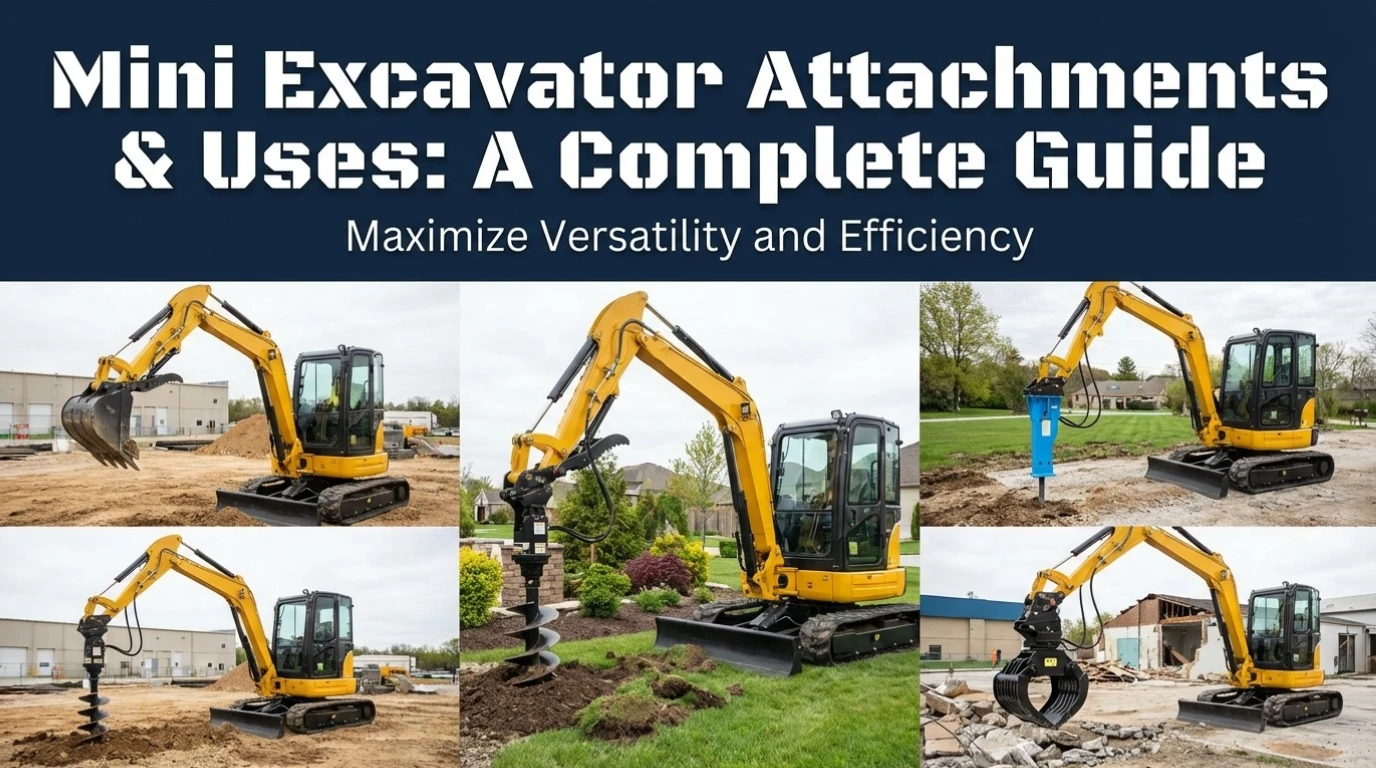
 Mini Excavator Attachments & Uses: A Complete Guide
To purchase equipment, you must have a clear idea of the potential return on investment. An excavator is an extremely versatile piece of equipment, much more than just an excavation device. By using the appropriate equipment, you can transform the equipment you own into a multi-purpose device rather than a single-purpose one.
Many construction, landscaping, and utility companies are utilizing mini excavator attachments to overcome very specific challenges. The type of equipment to be used is extremely important and can significantly affect productivity levels. Incorrect equipment, in addition to slowing productivity, can damage the hydraulic system of the equipment being used.
This comprehensive guide will discuss the most productive uses of mini excavators and the attachments available to you and your equipment fleet. We will discuss the most important bucket types, powered equipment, and other equipment types. We will also discuss the most important safety considerations when using heavy equipment attachments.
Unlocking the Versatility of Your Mini Excavator
The true value of a compact excavator lies in its flexibility. Compact excavators are designed to be strong tool carriers, allowing them to change purposes in just a matter of minutes. This flexibility eliminates the need to rent or buy additional machines, each designed to perform a specific task.
How Quick Couplers Improve Job Site Efficiency
This can be a costly and labor-intensive process. Modern excavators have incorporated quick coupler systems to help reduce this process. A quick coupler at the end of the stick lets you drop one tool and pick up another without leaving your seat. This allows you to get your work done without costly delays.
A high-quality quick coupler provides you with a tight fit, eliminating vibration and pin wear. By reducing wear on your equipment, you can extend its overall lifespan. To learn more about how this technology can be incorporated into your overall equipment strategy, check out our Complete Guide to Mini Excavators: Types, Uses, Pricing & Buying Tips (2026).
Hydraulic Flow Requirements for Powered Tools
Many advanced attachments require the auxiliary hydraulics system of the equipment to function properly. Before purchasing an attachment, ensure the excavator’s system can deliver enough gallons per minute (GPM) to power it. Each attachment requires a specific GPM range to function properly.
Operating an attachment on equipment that cannot provide sufficient power will cause the equipment to move very slowly and stall. On the other hand, overpowering an attachment’s hydraulic system will damage its seals and motors. Always check the operator’s manual and purchase attachments from reliable dealers.
Essential Bucket Attachments
Buckets are considered to be the most common and essential tools for any earthmoving activity. However, relying on a single standard bucket for all activities would significantly reduce your overall efficiency. Learning about different types of excavator buckets helps you use them precisely for your needs.
Standard Digging Buckets vs. Trenching Buckets
Ordinary digging buckets are equipped with large teeth designed to tear through hard, compacted soils and clays. This type of bucket has a great breakout force and is recommended for most digging and foundation excavations. The bucket is built to last, even in harsh and abrasive conditions.
Trenching buckets, however, are much narrower compared to ordinary digging buckets. Contractors use these buckets to dig precise and deep trenches for utility, plumbing, and irrigation pipes. The narrowness of this bucket reduces dirt removal, thereby greatly reducing the time spent later filling the trenches dug.
Grading and Clean out Buckets
For a smooth, finished surface, operators use grading or clean-out buckets. The grading or clean-out bucket lacks digging teeth and has a broad, flat cutting edge. It is best for scooping loose material, leveling topsoil, and cleaning out the bottoms of wide trenches.
Using a grading bucket for backfilling and finishing a construction site yields a professional, polished finish. The wider capacity also makes grading or clean-out buckets best for loading loose gravel or mulch into dump trucks. The choice of a bucket also helps to maintain cutting edges and prevent unnecessary strain on the excavator’s boom.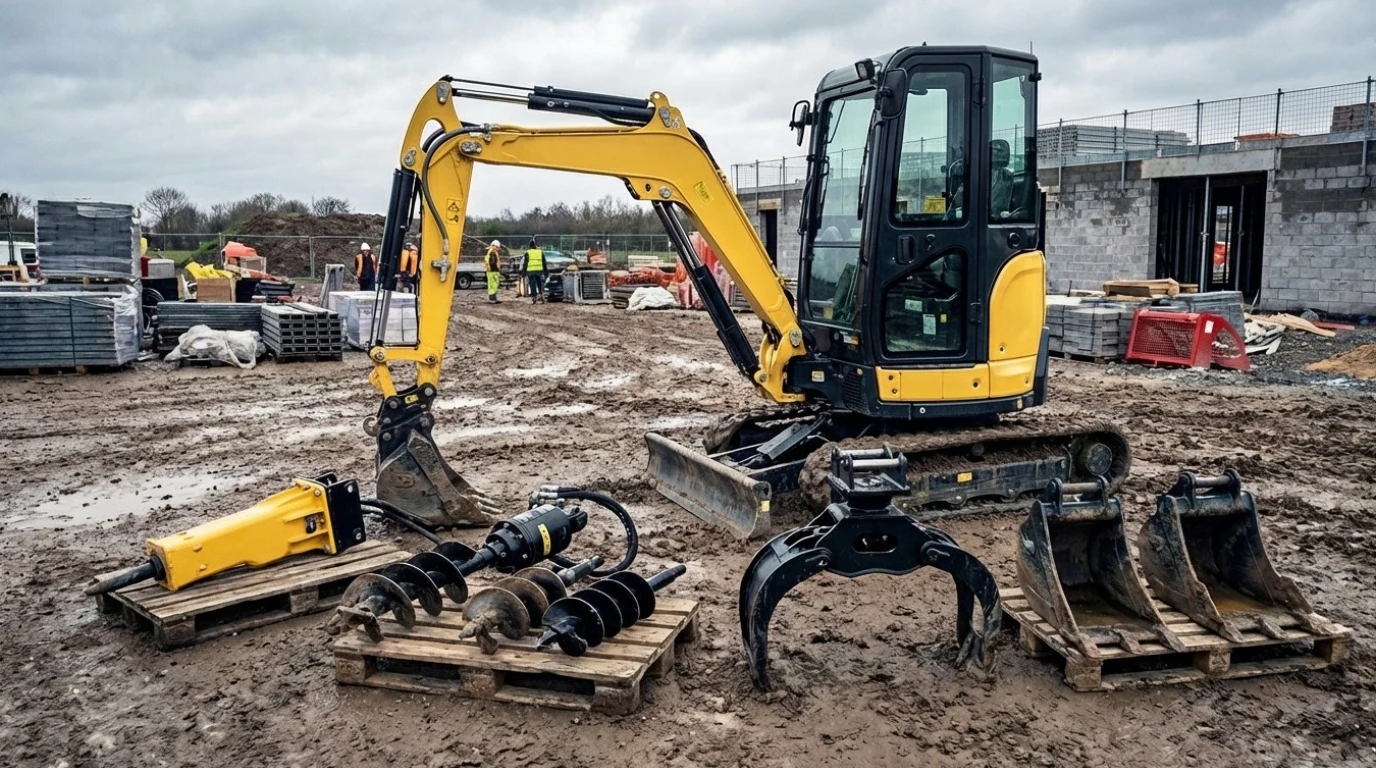
Specialized Attachments for Advanced Applications
However, when standard digging does not suffice, specialized tools come into play, taking on demolition, drilling, and handling large materials, greatly extending the uses of a compact excavator.
Hydraulic Breakers for Demolition
Demolishing concrete slabs, asphalt driveways, and rocky terrain requires significant striking power. The hydraulic breaker is attached to the excavator and uses the excavator’s hydraulic flow to deliver rapid, heavy blows to solid surfaces. The hydraulic breaker eliminates the need for manual jackhammers, protecting your crew from fatigue and vibration-related injuries.
When using a hydraulic breaker, always keep steady downward pressure and do not pry with the tip. This helps prevent damage to the internal parts and boom.
Augers for Fencing and Foundation Work
Digging holes, especially deep ones that have to be very round, is extremely labor-intensive. An excavator auger is driven by a hydraulic drive motor, spinning the drill bit directly into the ground. Augers are often necessary when installing fence posts, planting large trees, and drilling concrete footings for decks or retaining walls.
Augers are available in different sizes and have different types of bits, whether the ground is regular soil or solid rock. The boom reach on an excavator allows the operator to drill over obstacles or down steep embankments, where a skid steer could not safely reach.
Thumbs and Grapples for Debris Handling
A bucket alone struggles to grip odd-shaped items like stumps, boulders, or debris. Adding a hydraulic thumb lets the operator clamp objects and gives the excavator a mechanical hand. In earthmoving and demolition operations, the grapple attachment replaces the bucket altogether. The grapple is essentially two jaws that lock onto large amounts of brush, metal, and timber, greatly accelerating cleanup and sorting.
Brush Cutters for Land Clearing
Removing brush and small trees is a common step before excavation. A brush cutter or flail mower turns your excavator into a land-clearing tool. Attachments are designed to quickly mulch thick brush and saplings, leaving a clear, easy-to-manage surface. The brush cutter, attached to the articulating boom, also ensures easy, stable operation for clearing deep ditches, over fences, and even high branches. View in action
Industry-Specific Uses
With these attachments, mini excavators can work in many industries. Matching your equipment to your industry boosts daily output and keeps you competitive. Initial Construction and Plumbing
In residential construction, space is always a concern. Compact excavators with narrow trenching buckets are used to install sewer lines, water mains, and electrical conduit without damaging the surrounding properties. Zero-tail-swing excavators, especially those with hydraulic thumbs, are best for setting heavy retaining wall blocks in a backyard.
Landscaping and Hardscaping Projects
Landscapers make significant use of grading buckets, augers, and thumbs. The equipment is utilized to create intricate designs in the lawn, drill holes for mature trees, and transport large boulders to the desired location. The mini excavator’s minimal ground contact minimizes damage to the lawn.
Agricultural and Utility Trenching
Additionally, farms and rural properties require ongoing maintenance, including irrigation ditches, fences, and utility lines. An excavator with a V-shaped ditching bucket can clear miles of irrigation canals fast. However, when expanding your business to these new markets, you must consider whether your equipment can handle the new demands. To learn how to upgrade your equipment for your new markets, check out “How to Choose the Best Mini Excavator: Pricing, Brands & Buying Tips.”
Operating Safely with Heavy Attachments
Adding a heavy metal to the end of an extended boom shifts the center of gravity. To use this equipment safely, one must have a good understanding of the physical capabilities and stability requirements.
Understanding Lift Capacities and Machine Balance
Each mini excavator has a strictly defined lift capacity chart. The chart shows the maximum weight a mini excavator can lift, depending on boom extension and swing angle. If you lift more weight than specified, especially if you lift it over the side of the tracks, the mini excavator is more likely to tip.
You will always have to consider the attachment’s weight when calculating how much your mini excavator can lift. A heavy hydraulic breaker will limit how much additional weight your boom can lift. Heavy loads should be kept low to the ground and centered when driving.
Proper anchoring is also important, especially when working with high-vibration machines such as augers and breakers. It is important to always lower the backfill blade to the ground to anchor the chassis. If you need a refresher on these important operating procedures and stability methods, please refer to our guide on “How to Operate a Mini Excavator: Step-by-Step Beginner Guide.“
Conclusion
However, it is imperative to note that to maximize your return on investment with your heavy equipment, you should use it to its full potential. By becoming aware of the different attachment options for your mini excavator, you can enable your crew to work on multiple aspects of a construction site with just one machine.
Whether you are looking for excavator buckets for different soil conditions, breaking through concrete with a breaker, or drilling footings with an excavator auger, you can rest assured that you can do so efficiently and effectively. It is imperative to purchase high-quality equipment attachments that match your machine’s specific hydraulic capabilities.
Working with a reputable equipment company will enable you to obtain factual information on how to match your equipment to your fleet. It is imperative that you always work safely and use your equipment to its full potential.