

 Cab vs Canopy Mini Excavator: Which One Should You Choose?
Mini excavators are among the most useful machines in construction, landscaping, agriculture, property development, and utility work. Their compact size, strong digging power, and ability to work in narrow spaces make them ideal for a huge range of jobs. Whether the machine is being used for trenching, grading, digging foundations, site cleanup, drainage work, or backyard projects, the mini excavator has become an essential tool for both contractors and private owners. But when buying or renting one, there is an important question that many people do not think about carefully enough at the beginning: should you choose a cab mini excavator or a canopy mini excavator?
At first, the difference may seem simple. One machine has a fully enclosed operator station, and the other has an open structure with overhead protection. But in real-world use, that difference affects much more than appearance. It affects operator comfort, weather protection, safety, visibility, machine cost, productivity, and even the types of jobs the machine is best suited for. For someone who works only in mild weather for short periods, a canopy model may seem perfectly fine. For someone who spends long hours in dust, heat, rain, cold, or noisy job site conditions, a cab can make a major difference in performance and day-to-day comfort.
This is why the cab versus canopy decision matters so much. The right choice can improve efficiency, reduce operator fatigue, and make the machine more practical for your actual work environment. The wrong choice can lead to discomfort, reduced productivity, weather-related downtime, and regret after purchase. It is not simply a question of which one looks better or which one costs less. It is a question of how the machine fits into the real work you plan to do.
In this guide, we will break down the differences between cab and canopy mini excavators in a clear and practical way. We will explain what each one is, compare their benefits, look at the types of projects each suits best, and help you understand how to choose the right option based on budget, worksite conditions, operator needs, and long-term value. By the end, you should have a much clearer understanding of which style makes the most sense for your business, your projects, or your property work.
What Is a Canopy Mini Excavator?
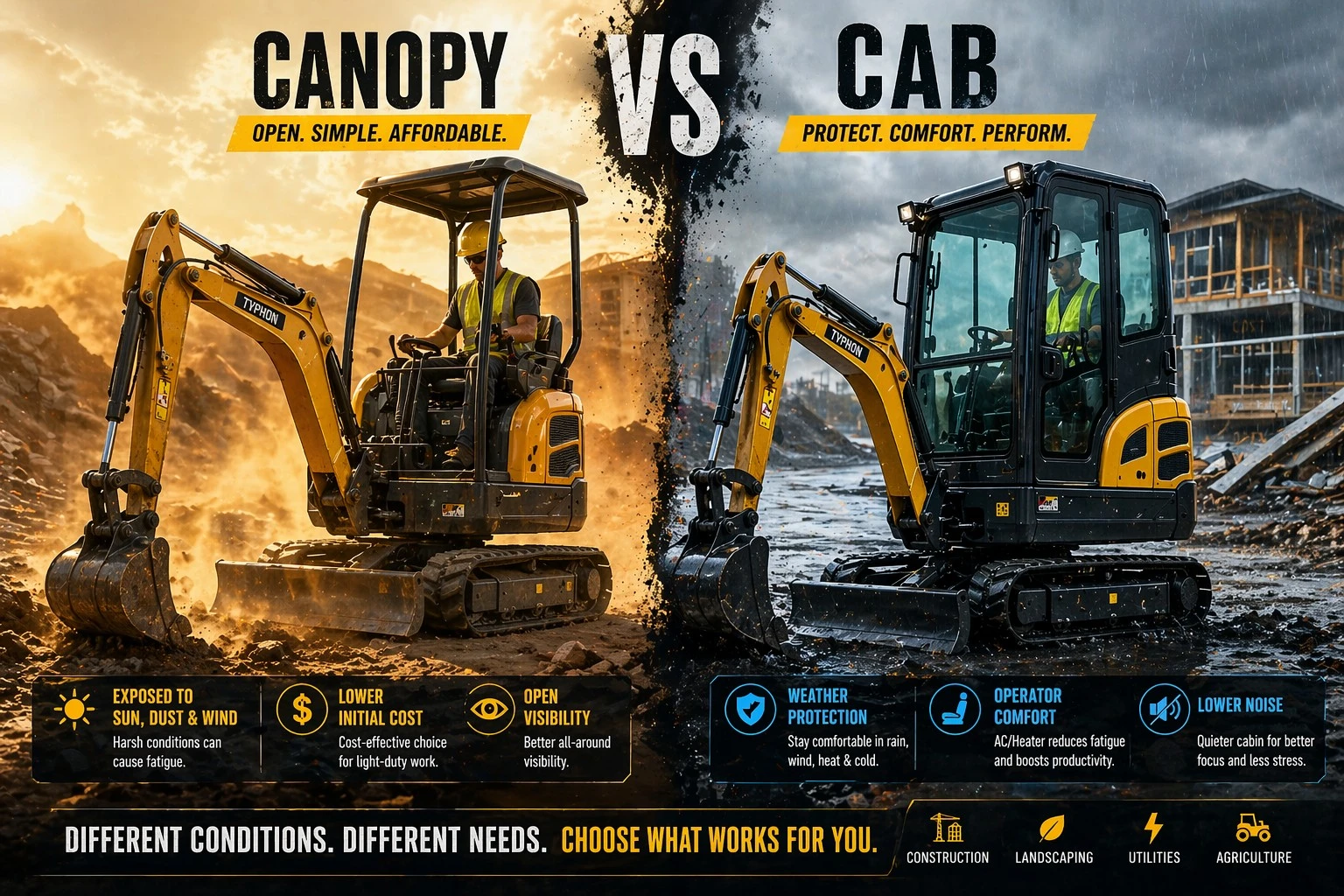
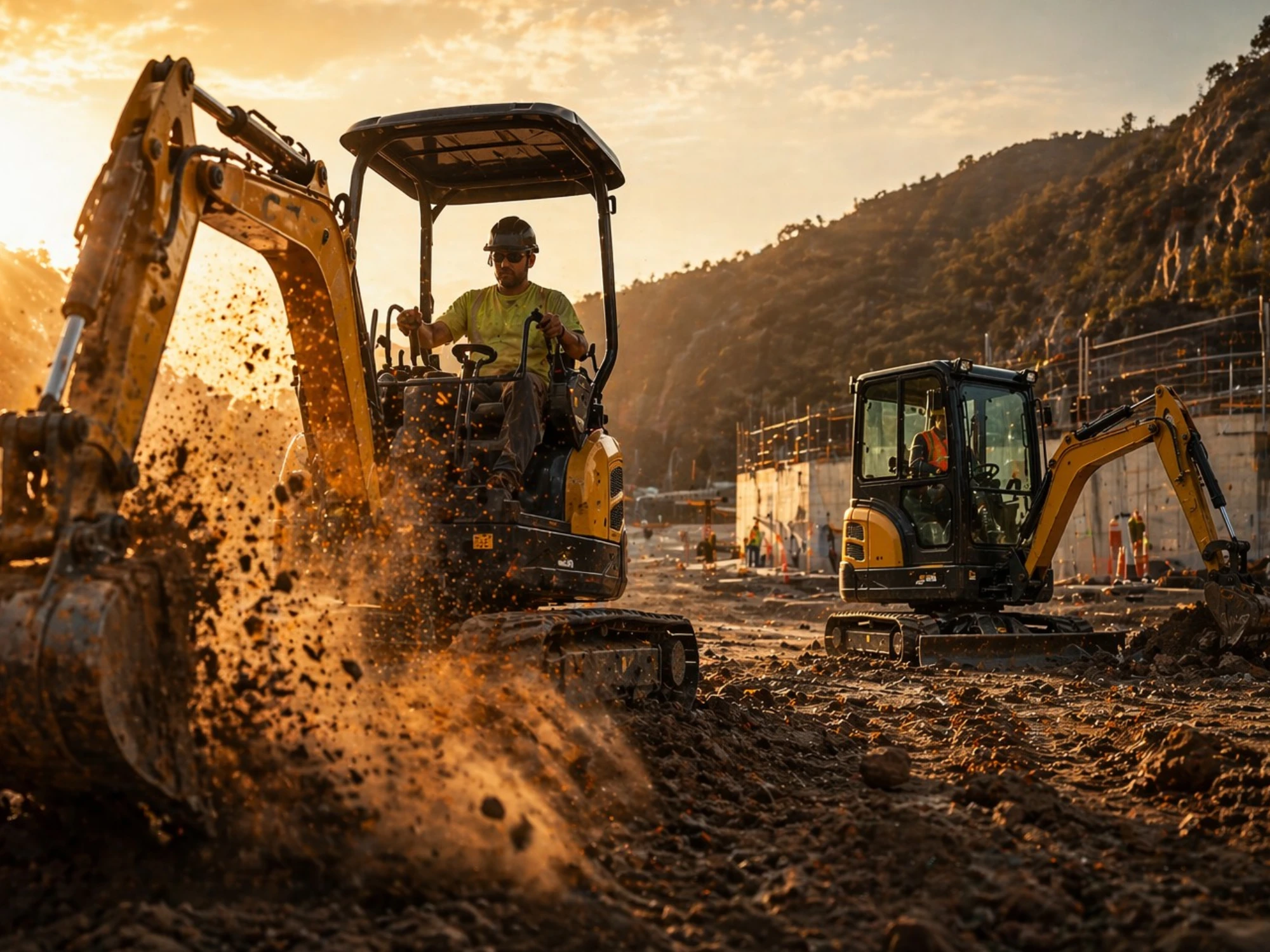
A canopy mini excavator has an open operator station with a protective roof and a structural frame around the operator area. It is designed to provide overhead protection and basic safety while leaving the sides largely open. Most canopy machines are built with protective structures that meet rollover and falling-object safety standards, which means they still provide important protection in serious situations. However, they do not fully enclose the operator the way a cab does.
The main benefit of a canopy setup is openness. Operators can get on and off quickly, communicate easily with workers around them, and enjoy a clear, open view of the surroundings. The design is simple, lighter in some cases, and usually more affordable than a fully enclosed machine.
Because there are no doors, no glass panels, and no full climate system, a canopy machine tends to feel more basic and straightforward. This can be a good thing for certain jobs. If the machine is being used occasionally, in warm weather, or in places where easy access matters more than enclosure, a canopy can be very practical.
What Is a Cab Mini Excavator?
A cab mini excavator has a fully enclosed operator compartment with doors, windows, and usually climate control features such as heating and air conditioning. It is designed to protect the operator not only from rollover or falling hazards but also from environmental conditions such as wind, rain, dust, cold, and heat.
A cab transforms the operator station into a more protected workspace. This is especially important for long workdays, commercial operations, and jobs where weather or site conditions are unpredictable. A cab also helps reduce noise and can improve concentration because the operator is less exposed to outside distractions.
In many cases, buyers who use mini excavators as serious working equipment rather than occasional-use tools often prefer cab models for comfort and productivity. While they cost more up front, they can deliver value through better operator endurance, less weather downtime, and a more professional overall machine setup.
The Main Difference Between Cab and Canopy
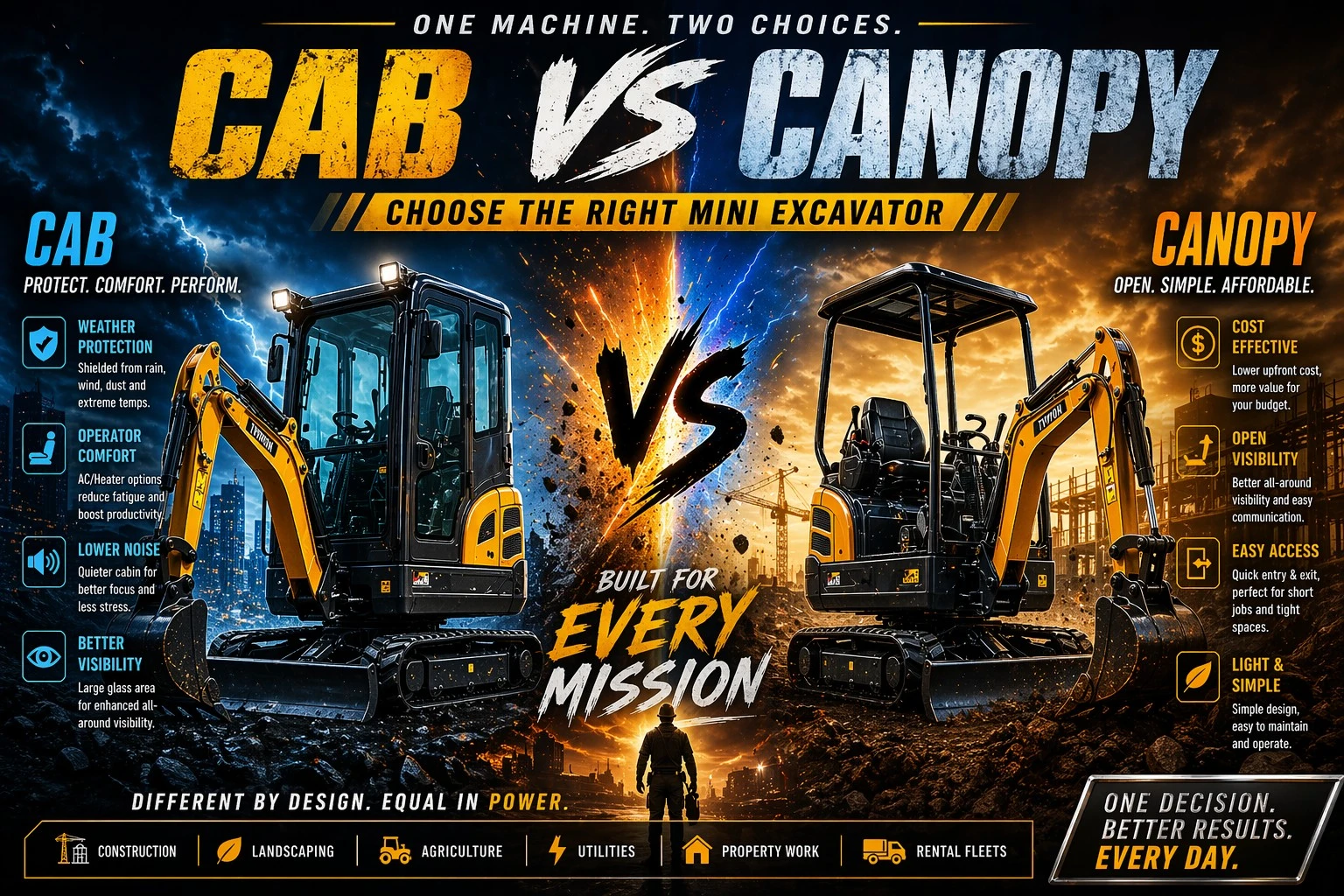
The real difference between a cab and a canopy comes down to protection versus openness. A canopy gives you basic overhead safety and an open-air operating experience. A cab gives you a sealed, enclosed work environment with greater comfort and protection.
This difference affects several key areas:
- protection from rain, wind, and temperature
- exposure to dust and noise
- ease of entry and exit
- operator visibility and awareness
- machine price
- long-hour operating comfort
- suitability for different types of job sites
Neither option is automatically better in every situation. The right one depends on how often the machine will be used, who will operate it, where it will work, and what conditions are most common on your job sites.
Advantages of a Canopy Mini Excavator
A canopy mini excavator has several strong advantages, especially for buyers who want simplicity, lower cost, and easy visibility.
The first major advantage is price. Canopy machines are usually less expensive than comparable cab models. This makes them attractive for smaller contractors, first-time buyers, rental operations, and property owners who want a mini excavator without paying for features they may not need. If budget is a major factor, a canopy often becomes the easier entry point.
Another advantage is visibility. Many operators like the open feel of a canopy because it gives them a direct, less restricted view of the jobsite. There are no door frames or glass pillars blocking lines of sight, and the open structure can make it easier to see the edges of trenches, nearby workers, fences, trees, and obstacles.
Ease of access is also important. Getting in and out of a canopy machine is usually faster and more convenient. This helps on jobs where the operator is constantly stepping off the machine to check alignment, measure distance, reposition materials, or communicate with ground crew. In some landscaping or utility jobs, this quick access can improve workflow.
Ventilation can also be a benefit in warm conditions. In hot climates, some operators actually prefer the open airflow of a canopy instead of sitting in a cab with doors closed. If the machine does not have a powerful air conditioning system or if the operator is constantly getting in and out, the open structure may feel more natural and less confined.
Canopy machines are also somewhat simpler in terms of maintenance around the operator area. There are no cab windows to crack, no wiper systems to repair, no door latches to replace, and no HVAC components to maintain. That simplicity can be appealing for owners who prefer fewer parts and fewer possible issues.
Disadvantages of a Canopy Mini Excavator
While canopy machines are practical, they come with real limitations that matter on many jobs.
The biggest disadvantage is exposure to the weather. Rain, strong sun, wind, dust, and cold temperatures all affect the operator directly. On a short task, this may not matter much. On a full-day shift, it can become exhausting. A canopy may provide overhead cover, but it does not shield the operator from side wind, blowing dust, freezing air, or driving rain.
Noise is another drawback. Because the operator is more exposed, engine noise and jobsite noise feel louder. Over a long day, that can increase fatigue. It can also make communication harder depending on the environment.
Dust and debris are also more noticeable in canopy machines. On dry construction sites, demolition zones, or dirt-heavy landscaping jobs, the operator may be constantly exposed to airborne particles. That affects comfort and may require more personal protective equipment.
Security is more limited as well. A canopy machine does not provide the same enclosed, lockable operator area that a cab does. That may not matter on every site, but it can matter for operators who store items in the machine or who work in places where vandalism and unauthorized use are concerned.
Advantages of a Cab Mini Excavator
A cab mini excavator offers a much more protected and comfortable operator experience, and that can create major advantages over time.
The biggest advantage is weather protection. A cab protects the operator from rain, snow, wind, cold air, heat, and blowing dust. This allows work to continue more comfortably in conditions that would be unpleasant or even unsafe in a canopy machine. In areas with changing seasons or unpredictable weather, this makes a huge difference.
Climate control is another major benefit. Heating and air conditioning help maintain comfort throughout the year. In summer, air conditioning can reduce fatigue and dehydration. In winter, heat helps maintain focus and keeps the operator more effective for longer periods. This becomes especially important for contractors who use mini excavators every day, not just occasionally.
Noise reduction is one of the most underrated benefits of a cab. The enclosed structure helps reduce engine and outside noise, creating a quieter environment. That can improve concentration, reduce stress, and make long shifts more manageable.
Cabs also improve jobsite comfort in dirty environments. Dust, mud splash, debris, and wind stay outside far more effectively than with a canopy. This helps keep the operator cleaner and more focused.
Another advantage is professionalism and resale appeal. Many buyers view cab machines as more premium and more capable for serious commercial use. Because of that, cab mini excavators often hold stronger resale value. They appeal to a wider group of buyers who prioritize comfort, year-round use, and machine quality.
Disadvantages of a Cab Mini Excavator
A cab model is not perfect for every buyer. The most obvious disadvantage is price. A cab mini excavator usually costs more than the same size machine with a canopy. For a buyer with a limited budget, that extra cost may be difficult to justify, especially if the machine will only be used part-time.
Another drawback is that cabs add complexity. Glass can break, doors can be damaged, wipers may need repair, and HVAC systems require service. This does not mean the machine is unreliable, but it does mean there are more components to maintain.
Some operators also feel that cabs slightly reduce the open visibility and freedom of movement compared to a canopy. Modern cab designs are much better than older ones, with large glass panels and improved sight lines, but there are still more visual barriers than in an open machine.
A cab can also be less convenient for operators who frequently climb in and out. If the job involves constant checking, guiding, measuring, or moving between machine and ground, opening and closing the cab repeatedly can feel less efficient than a canopy setup.
Which One Is Better for Landscaping?
For landscaping work, the answer depends on the type of landscaping being done. If the machine is being used for short tasks in residential yards during good weather, a canopy can work very well. It offers easy access, strong visibility, and lower cost, which makes sense for light-duty or occasional landscaping work.
However, for professional landscaping businesses that run machines daily, a cab may still be the better choice. Landscaping often involves dusty conditions, full-day operation, and year-round work. In those cases, the comfort of a cab can improve productivity and reduce operator fatigue, especially in hot summers or wet seasons.
So for casual or budget-focused landscaping work, a canopy may be enough. For commercial landscaping with frequent machine use, a cab often provides better long-term value.
Which One Is Better for Construction and Utility Work?
Construction and utility jobs often favor cabs because these environments tend to involve longer shifts, harsher conditions, and more consistent machine use. On these sites, operators may work through dust, cold mornings, hot afternoons, and unpredictable weather. A cab helps the operator stay more comfortable and productive throughout the day.
In utility trenching, site prep, drainage work, and general contracting, the machine may be in use for many hours at a time. That is where the difference between open exposure and enclosed comfort becomes very noticeable. For businesses that treat the mini excavator as a core daily machine, the cab is often the stronger choice.
 Which One Is Better for Indoor Work?
Indoor work can go either way depending on the space. In some interior demolition or low-clearance environments, a canopy may offer more flexibility because it feels less bulky and provides easier operator entry and exit. The open structure may also feel more practical when visibility and quick movement matter.
However, if the indoor site is dusty, dirty, or subject to falling debris, a cab can still offer strong advantages. The right answer depends on machine size, ceiling clearance, ventilation, and the specific type of indoor project.
How to Choose the Right One for Your Needs
The best way to choose between a cab and canopy mini excavator is to ask practical questions about your real work.
How often will the machine be used?
If the excavator is only for occasional use, a canopy may be more than enough. If it will be used daily, a cab may be worth the extra investment.
What is the local weather like?
If you work in heavy rain, cold winters, strong sun, or dusty conditions, a cab becomes much more valuable.
How long are the average shifts?
For short tasks, operator comfort matters less. For all-day operation, comfort becomes a major productivity factor.
Is budget your main priority?
If you need to minimize upfront cost, a canopy may be the smarter option.
Will multiple operators use the machine?
If different people will run the machine, comfort and protection may become more important, which supports choosing a cab.
Do you want stronger resale value later?
A cab may help the machine appeal to more buyers when it is time to sell or trade in.
Frequently Asked Questions
Is a cab mini excavator safer than a canopy mini excavator?
Both are designed with important protective structures, and both can be safe when used properly. However, a cab offers more complete protection from weather, dust, flying debris, and noise. So while both provide structural safety, the cab gives the operator more overall environmental protection.
Is a canopy mini excavator cheaper?
Yes, in most cases a canopy mini excavator costs less than a comparable cab model. It is usually the more budget-friendly option for buyers who do not need enclosed comfort.
Is a cab worth the extra money?
For many professional users, yes. If the machine will be used often, in difficult weather, or for long workdays, the added comfort and protection of a cab can absolutely be worth the extra cost.
Which one is better for hot weather?
This depends on the machine and the work pattern. A cab with strong air conditioning is usually better for long hot days. A canopy may feel cooler for quick jobs with lots of getting in and out, especially if there is a breeze.
Which one is better for beginners?
Either one can work for a beginner, but many beginners appreciate the comfort and protection of a cab. On the other hand, some new operators feel more comfortable with the open visibility of a canopy. It depends on the person and the environment.
Which one has better resale value?
Cab mini excavators often have stronger resale appeal because many buyers prefer enclosed comfort, especially for commercial work.
Conclusion
Choosing between a cab and a canopy mini excavator is an important decision because it affects daily use far more than many buyers expect. A canopy mini excavator offers simplicity, lower cost, easy entry, and excellent open visibility. It is a smart option for light-duty work, occasional use, good-weather projects, and buyers who want to keep spending under control.
A cab mini excavator offers stronger weather protection, reduced noise, better comfort, cleaner operation in dusty sites, and a more professional setup for long workdays. For contractors, frequent operators, and buyers who need year-round performance, a cab often becomes the better long-term investment.
The best option is the one that matches your actual working conditions. If your projects are short, local, and weather-friendly, a canopy may be all you need. If your machine will be used heavily, across changing seasons, or in more demanding environments, a cab is likely the smarter choice.
In the end, this is not just about choosing a machine style. It is about choosing the work environment you want for the operator and the level of comfort, productivity, and protection you expect from your equipment. When you match the machine properly to the job, both cab and canopy mini excavators can be excellent choices.