
TYPHON PROPACT SERIES for Construction and Material Handling
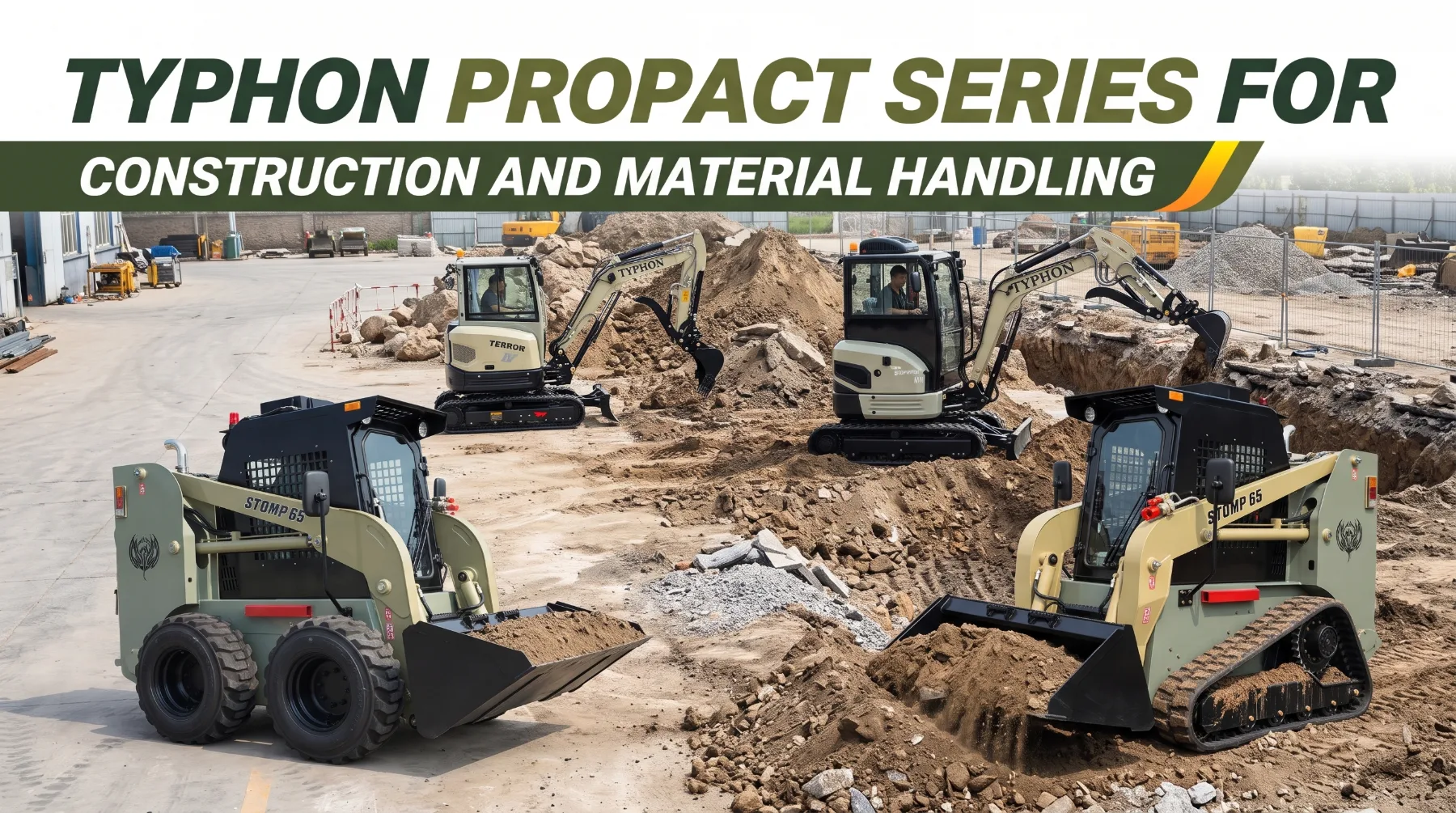
Construction and material handling projects rarely stay the same from one week to the next. One job may call for digging footings beside an existing building. The next may involve moving aggregate across a paved yard, clearing spoil from a drainage trench, or loading material on soft, uneven ground. Site access changes, soil conditions shift with the weather, and the tasks themselves vary from excavation to transport to placement. Contractors need equipment that fits these conditions, not equipment that forces the job to fit the machine.
The TYPHON PROPACT SERIES brings together compact equipment built for this kind of varied work. The lineup includes four machines: TERROR III, TERROR IV, STOMP 65 Wheel, and STOMP 65 Tracked. Each one offers a different configuration, which gives contractors, equipment managers, and operators several options for matching the machine to the task, the terrain, and the site.
Having several options brings a responsibility with it. Each model has its own dimensions, operating weight, capacity, attachment requirements, and operating limits. A machine that performs well on one project may be the wrong choice for another. Selecting the right PROPACT machine means looking at the work in detail and confirming the model-specific specifications before deployment.
A Series for Different Jobsite Needs
The PROPACT lineup brings together compact equipment intended for construction and material handling applications. Rather than offering one machine for every job, the series provides several configurations so contractors can select equipment that suits the specific work in front of them.
The four models fall into two broad groups:
- Excavation machines: TERROR III and TERROR IV support digging, trenching, and ground preparation, with differences in machine size and capability.
- Material handling machines: STOMP 65 Wheel and STOMP 65 Tracked support material movement, with wheeled and tracked configurations suited to different ground conditions.
Each model has its own operating characteristics. Size, weight, reach, capacity, travel system, and attachment compatibility all vary across the lineup. Two machines may look similar at a glance yet perform very differently on a soft site, in a narrow side yard, or with a heavy load.
Project requirements should guide selection rather than assuming one machine fits every task. Before choosing a PROPACT model, consider the questions that define the job:
- What is the main task? Excavation, trenching, grading, loading, and material transport each place different demands on a machine.
- Where will the machine work? Access width, overhead clearance, turning space, and proximity to structures all affect which model can operate safely.
- What are the ground conditions? Firm paving, compacted gravel, soft soil, mud, and slopes favor different configurations.
- What materials will be handled? Material density, moisture, and volume affect the capacity a machine needs.
- How will the machine reach the site? Transport weight, dimensions, and loading arrangements must suit the available trailer and route.
Some projects need more than one machine. A foundation job, for example, may use an excavator to dig footings and a material handling machine to move spoil and deliver backfill. Planning how the machines will work together, including loading positions, travel routes, and exclusion zones, keeps the site organized and safe.
Every PROPACT machine should be operated by trained personnel who are familiar with the specific model. Controls, safety features, and operating limits can differ between machines, so familiarization matters even for experienced operators.
Key takeaway: The PROPACT SERIES offers several machine configurations for different tasks and site conditions, so define the task, access, ground, materials, and transport needs before selecting a model.
TERROR III for Compact Excavation
TERROR III is a compact excavator suited to excavation and ground preparation where machine size and maneuverability matter. It fits the kind of work found on residential projects, landscaping jobs, utility connections, and renovation sites, where larger excavators may not reach the work area or may not have room to operate once they arrive.
Digging requirements. Confirm the required excavation depth, width, and length. Compare these with the machine’s model-specific digging depth and working range, and plan to work with some margin inside the published maximum rather than at the edge of the machine’s limits.
Working reach. Check how far the bucket must extend from each planned setup position. Lifting capacity drops as reach increases, so use the manufacturer’s load and reach information for the exact configuration. Plan setups that keep most digging within the machine’s comfortable middle range.
Access width. Measure gates, side yards, passageways, and every other restriction along the route from the unloading point to the work area. Compare the narrowest point with the machine’s full dimensions, including the bucket and any components that extend beyond the body. Allow working clearance on both sides.
Ground conditions. Inspect the work area for soft soil, loose fill, slopes, and unsupported edges. Even a compact excavator concentrates significant weight on its tracks, and ground near excavations can give way under load.
Working close to structures is common with compact excavators. Identify walls, windows, foundations, meters, and pipes within the machine’s swing range. Control swing carefully, and use a spotter when the operator cannot see the full machine envelope. Complete the required utility locating process, such as contacting 811 in the United States, before any digging begins, and arrange private locating where privately owned lines may be present.
Attachment choice affects both productivity and safety. Use only buckets and attachments approved for TERROR III, and confirm they match the machine’s mounting system, hydraulic requirements, and capacity. A smaller bucket often delivers better control in tight spaces, while an oversized bucket can increase load, reduce visibility, and widen the excavation beyond what the job requires.
Key takeaway: TERROR III suits compact excavation where size and maneuverability matter, so confirm digging requirements, working reach, access width, and ground conditions before bringing it onto a site, and use only approved attachments.
TERROR IV for Excavation Tasks
TERROR IV supports excavation and material handling work that requires a different machine size and capability from smaller compact equipment. It suits projects where the work calls for more than the smallest machine can comfortably deliver, such as larger excavation volumes, deeper digging, or heavier handling tasks, while still working within a compact equipment category.
Choosing between TERROR III and TERROR IV comes down to the job. A larger machine may complete demanding excavation more efficiently, but it may also need more access width, more turning space, and a heavier transport arrangement. A smaller machine may fit the site better but take longer on high-volume work. Compare both against the project’s real requirements rather than defaulting to either size.
Review the following before operating TERROR IV.
Site access. Measure the full route from the unloading point to the work area, including gates, paths, overhead restrictions, and ground transitions. Confirm the machine has room to travel, set up, swing, and exit once excavation and spoil piles are in place.
Transport arrangements. Confirm the machine’s transport weight and dimensions using the model-specific specifications. Select a trailer and towing vehicle rated for the load, and confirm that the transport configuration meets applicable road requirements. Use the manufacturer’s designated tie-down points and approved securing methods.
Attachment compatibility. Confirm that every bucket, breaker, grapple, or other tool is approved for TERROR IV. Check the mounting system, hydraulic flow and pressure requirements, and the combined weight of the attachment and its expected load against the machine’s rated capacity.
Planned digging depth. Compare the required depth with the machine’s digging range from the planned setup position. Account for slope, ground level at the setup point, and bucket geometry, all of which can change the usable depth.
Larger excavation tasks bring larger spoil volumes. Plan where excavated material will go before digging begins. Keep spoil back from excavation edges, away from support structures and foundations, and clear of travel routes and drainage paths. Where space is limited, coordinate removal with a material handling machine such as a STOMP 65 model so storage areas do not overflow.
Deeper excavations also raise ground stability concerns. Follow site requirements for trench and excavation protection, keep the machine back from unsupported edges, and keep workers out of any excavation that has not been assessed as safe. Stop and reassess if cracks appear near the excavation or if water enters the dig.
Key takeaway: TERROR IV suits excavation tasks that call for a different size and capability than the smallest compact equipment, so review site access, transport arrangements, attachment compatibility, and planned digging depth before operation.
STOMP 65 Wheel for Firm Surfaces
A wheeled STOMP 65 configuration may suit material movement and work areas where surface conditions support wheel travel. On paved yards, concrete slabs, compacted gravel, and well-maintained haul routes, a wheeled machine can move material efficiently and travel between work areas with ease.
Traction. Wheels depend on surface grip. Firm, dry surfaces provide good traction, while wet clay, mud, loose gravel, snow, and ice can cause slipping and longer stopping distances. Reduce speed and avoid sudden acceleration, sharp turns, and hard braking when traction is reduced.
Tire condition. Inspect tires before every shift for cuts, wear, embedded debris, sidewall damage, and correct inflation. Improper pressure affects traction, stability, and handling, especially when the machine is loaded.
Turning space. Map out where the machine will turn, approach loading points, and position for unloading. Allow clearance for the machine, its attachment, and any rear or side movement during turns. Tight turns on finished surfaces can also scuff pavement or damage edges.
Ground firmness. Confirm that the surface can carry the machine and its heaviest load. Ground that looks firm may hide soft spots, recently backfilled areas, drainage covers, or buried tanks. Keep wheels away from excavation edges and unsupported embankments.
Plan travel routes with these factors in mind. Choose the firmest available path, fill ruts and remove debris where practical, and keep routes separate from pedestrian walkways wherever possible. Reassess routes after rain or freeze-thaw cycles, since a firm surface in the morning can become slippery or soft by the afternoon.
Load management matters on every trip. Keep loads within the machine’s rated capacity, account for material density and moisture, and carry loads low during travel. Raise the load only when positioned at the unloading point, and follow the manufacturer’s instructions for operating on slopes.
Key takeaway: STOMP 65 Wheel suits material movement on surfaces that support wheel travel, so assess traction, tire condition, turning space, and ground firmness when planning routes, and adjust operation when conditions change.
STOMP 65 Tracked for Uneven Ground
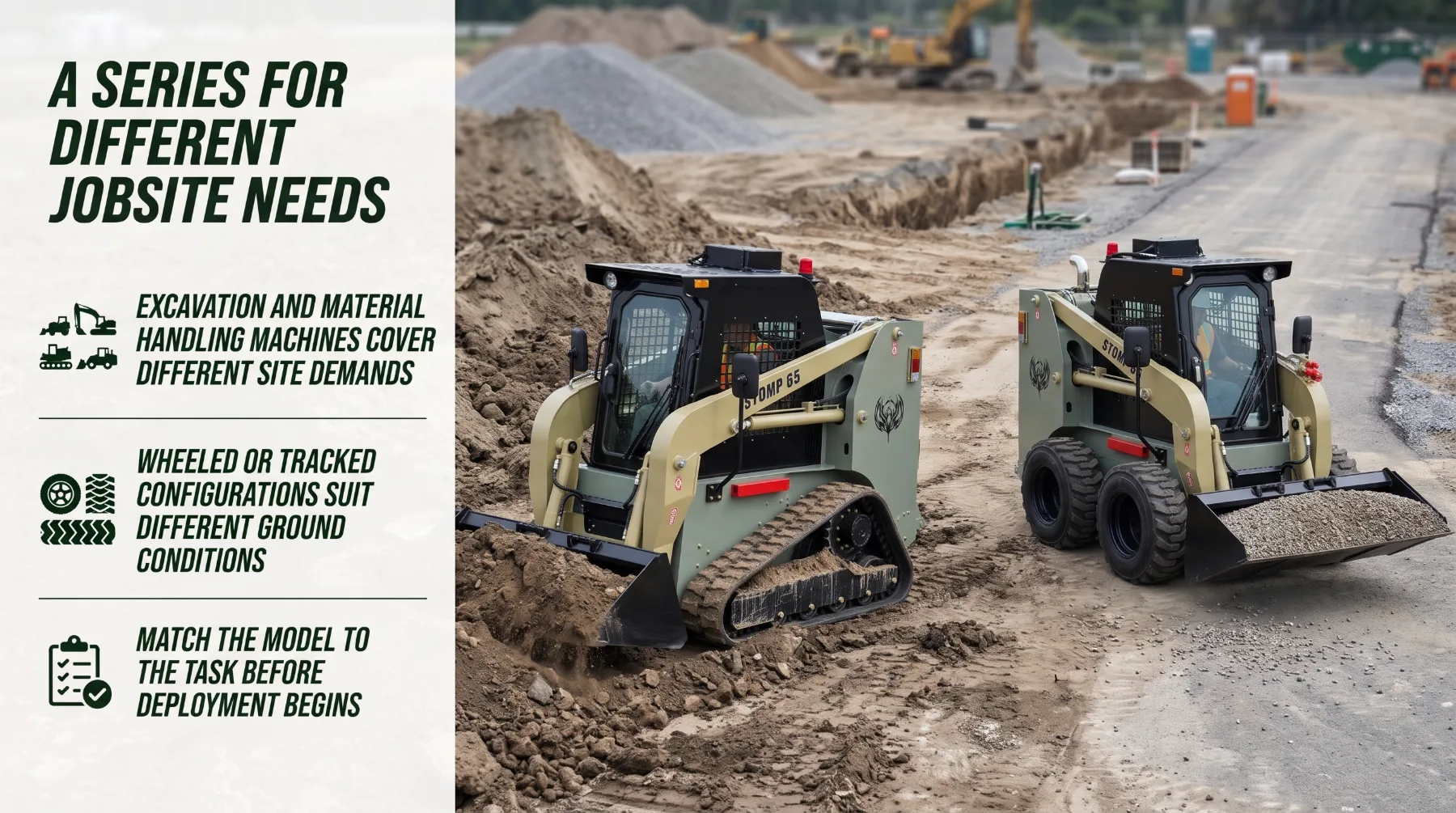
A tracked STOMP 65 skid steer configuration may be useful where the site requires track-based mobility. Soft soil, mud, rough terrain, and uneven ground can stop a wheeled machine, while tracks spread the skid steer’s weight over a larger contact area and provide stronger traction on loose surfaces.
Ground pressure. Tracks distribute weight more widely than wheels, which can reduce surface damage and sinking on soft ground. That benefit has limits. Very soft, saturated, or recently filled ground can still fail under a loaded machine.
Traction. Tracks generally grip well on loose and uneven surfaces, but traction can still be lost on wet clay, ice, steep grades, and hard, smooth surfaces. Operate with smooth, gradual inputs.
Turning behavior. Tracked machines often turn by driving the tracks at different speeds or in opposite directions. Part of each track drags sideways during a turn, which can tear turf, damage soft surfaces, and increase undercarriage wear. Use gradual turns wherever space allows, and limit counter-rotation turns, especially on hard or abrasive surfaces.
Rated capacity. Tracks change how the machine travels, not how much it can safely carry. Keep every load within the model-specific rated capacity, and account for material density, moisture, and attachment weight.
Tracks do not make every slope or soft surface safe. Follow the manufacturer’s permitted slope limits and travel direction guidance, avoid turning on side slopes, and keep the machine well back from excavation edges and embankments. A tracked machine can still slide, tip, or sink when conditions exceed its limits.
Undercarriage care is part of operating a tracked machine. Inspect tracks, tension, rollers, sprockets, and idlers before each shift. Remove packed mud and debris during scheduled cleaning with the machine shut down and isolated, and never clear the undercarriage while the tracks can move. Keep track tension within the manufacturer’s specified range, since both overtightened and loose tracks cause problems.
Key takeaway: STOMP 65 Tracked suits sites that require track-based mobility, but ground pressure, traction, turning behavior, and rated capacity still matter, and tracks do not make every slope or soft surface safe.
Matching the Machine to the Project
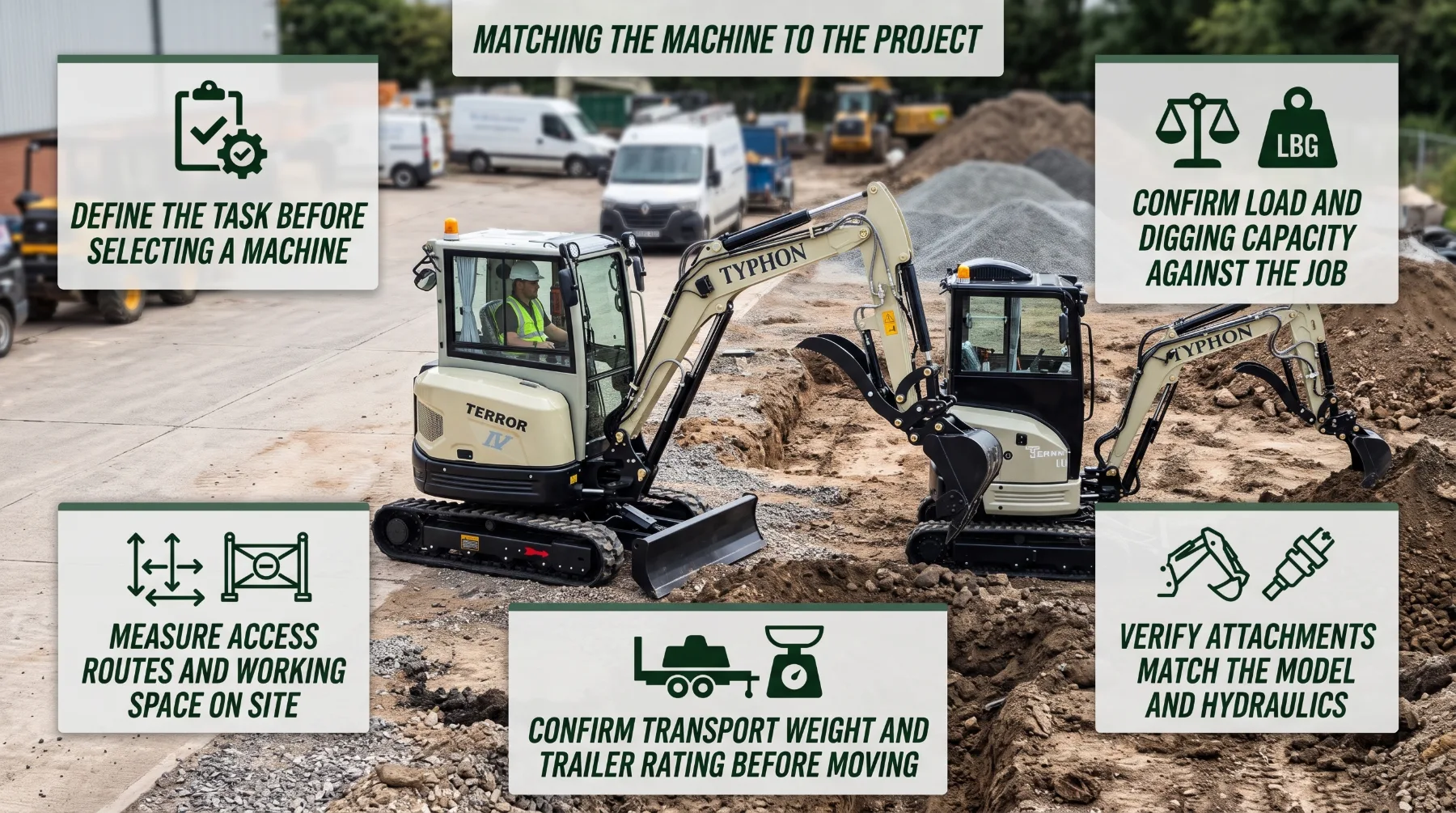
Selecting the right PROPACT machine brings together everything covered so far. The goal is a machine that can complete the work efficiently, operate within its limits on the site’s conditions, and reach the site safely.
Compare the following against the project plan:
- Operating weight: Affects ground pressure, transport requirements, floor or surface loading limits, and the machine’s stability when working.
- Load or digging capacity: Confirm the machine can handle the required digging depth, reach, or material loads with margin, using the model-specific charts and ratings.
- Dimensions: Compare width, length, and height with access routes, overhead clearances, and working space at the job location.
- Attachment requirements: Confirm the attachments the job needs are approved for the model and match its mounting system, hydraulic output, and capacity.
- Transport needs: Confirm the transport weight and dimensions suit the available trailer, towing vehicle, route, and any applicable permit requirements.
Site conditions narrow the choice further. Firm, paved, or compacted ground may favor STOMP 65 Wheel for material movement, while soft or uneven ground may call for STOMP 65 Tracked. Tight excavation sites may suit TERROR III, while larger digging tasks may justify TERROR IV, provided access and transport allow it. When a project includes both excavation and material movement, plan how the machines will share space, including loading positions, travel routes, and exclusion zones.
Confirm model-specific specifications before purchase or deployment. General descriptions, brochure figures, or numbers from a similar machine may not reflect the exact configuration you plan to use. Review the current specifications for the specific model, configuration, and attachments.
Before every shift, inspect the machine with it parked on firm, level ground, the attachment lowered, the engine off, and the key removed. Use a piece of cardboard rather than your hand to check for hydraulic leaks, since pressurized fluid can cause serious injury. Report any defect that affects safe operation, and keep the machine out of service until it has been corrected.
Key takeaway: Compare operating weight, capacity, dimensions, attachment requirements, and transport needs with the project plan, confirm model-specific specifications before deployment, and rely on the operator’s manual for safety limits and maintenance procedures.
Conclusion
The TYPHON PROPACT SERIES provides several machine configurations for construction and material handling work. TERROR III offers compact excavation capability where size and maneuverability matter, while TERROR IV supports excavation tasks that call for a different size and capability. STOMP 65 Wheel suits material movement on firm surfaces that support wheel travel, and STOMP 65 Tracked provides track-based mobility for uneven or soft ground. Each model has its own strengths, and each has limits that must be respected.
Choosing well starts with the work itself. Define the task, measure the access route, assess the ground, estimate the materials, and plan the transport before selecting a machine. Then confirm the model-specific specifications, approved attachments, and operating limits for the exact configuration you plan to use. Trained operators, thorough pre-use inspections, and adherence to the operator’s manual keep every machine working safely and reliably. When you review each model’s capabilities against site conditions, access, and task requirements, you can identify the right PROPACT machine for the project and get dependable performance on every job.
FAQs
Which machines are included in the PROPACT SERIES?
The series includes TERROR III, TERROR IV, STOMP 65 Wheel, and STOMP 65 Tracked. TERROR III and TERROR IV support excavation and ground preparation in different machine sizes, while the STOMP 65 Wheel and STOMP 65 Tracked configurations support material movement on different types of ground.
Is the wheeled configuration suitable for every construction site?
No. Surface firmness, traction, slopes, and the machine’s operating limits must be considered. STOMP 65 Wheel generally suits paved, compacted, or otherwise firm surfaces. On soft soil, mud, loose gravel, or steep grades, a wheeled machine may lose traction or sink, and a tracked configuration or different method may be more appropriate.
Are tracked machines always better on uneven ground?
Not always. Track configuration can affect traction and ground pressure, but safe operation still depends on terrain and machine limits. Tracks spread weight and grip well on loose surfaces, yet they can still slide on wet clay or ice, sink in saturated ground, and tip on slopes beyond the permitted range. Rated capacity and slope limits apply regardless of the travel system.
What should be checked before selecting a PROPACT machine?
Review the intended task, machine dimensions, operating capacity, attachments, access route, and transport requirements. Compare each with the project plan and site conditions, confirm the model-specific specifications for the exact configuration, and use the operator’s manual to understand the machine’s safety limits and maintenance requirements.