

How Digging Radius and Digging Height Affect Mini Excavator Performance
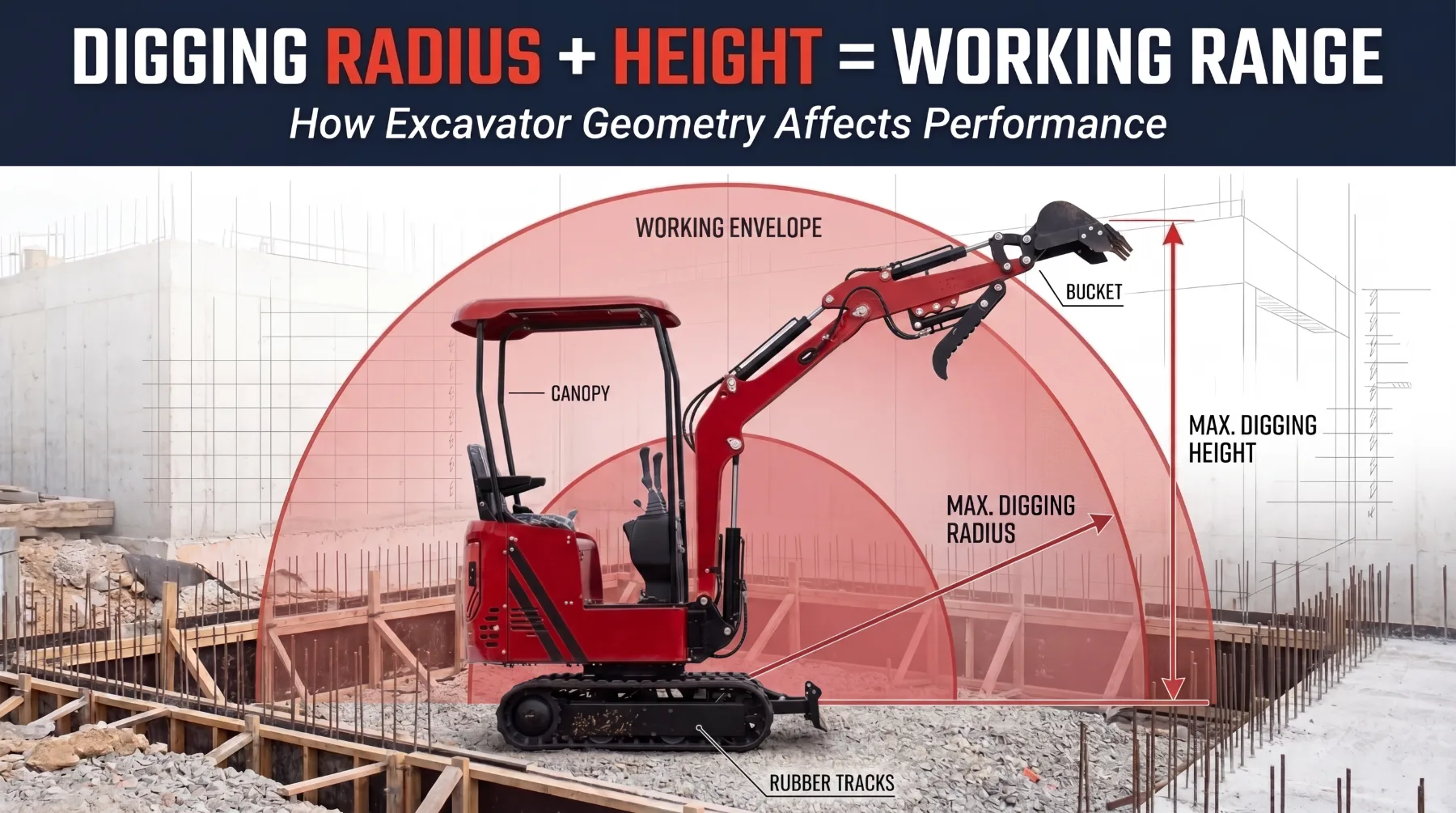
Digging radius and digging height are two of the most telling specifications on a mini excavator’s data sheet, yet they’re often overlooked in favor of horsepower or operating weight. Together, they define the machine’s working envelope, the space in which it can reach, dig, lift, and place material without moving its tracks. A machine with the right combination of reach and height works faster and more efficiently, while one that’s mismatched to the job forces constant repositioning and wasted effort. Understanding what these numbers actually mean helps you choose a machine that fits your work and get dependable results on every project. This post breaks down five ways digging radius and digging height shape mini excavator performance, covering what each measurement tells you, how reach trades off against digging force, how a compact radius helps in tight spaces, and how to match the machine’s geometry to the tasks you perform most.
What Digging Radius Tells You
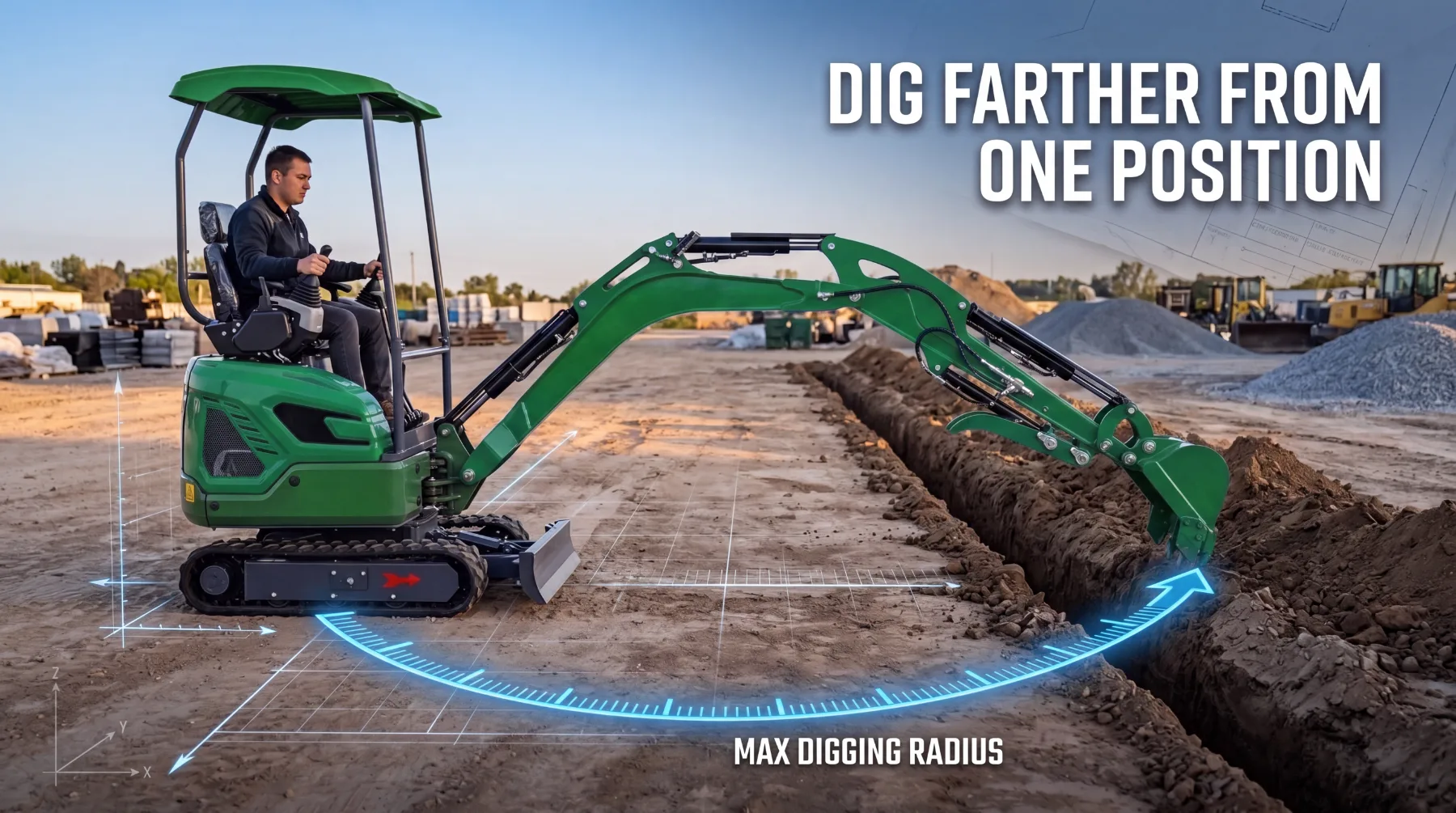
Digging radius measures how far a mini excavator can reach from its center of rotation, giving you a clear sense of how much ground the machine can cover from a single position. When the boom and arm extend fully, the digging radius marks the outer edge of the working envelope, the farthest point the bucket can reach while the tracks stay planted. This measurement matters because it directly shapes how efficiently the machine works. A larger radius lets the operator dig across a wider area, cutting long trenches or clearing material without stopping to reposition every few feet.
The practical value of a generous digging radius shows up in reduced downtime and smoother workflow. Every time an operator has to move the machine, that’s time spent not digging, and on a busy site those small delays add up quickly. A machine that reaches farther completes more of the task from one spot, keeping the work continuous and the operator focused on the job rather than on constant repositioning.
Digging radius connects to real productivity in several ways:
- Ground coverage – a larger radius sweeps a wider area from one position, reducing track movement.
- Trenching efficiency – long, continuous cuts become possible without frequent repositioning.
- Reach over obstacles – extra radius lets the machine work past low barriers or across a ditch.
When comparing machines, treat digging radius as a measure of how much work the excavator can accomplish before it needs to move. A machine with the reach to match your typical tasks keeps material handling efficient and helps you get more done in every working hour.
Digging Height and Material Placement
Digging height determines how high a mini excavator can raise and position material, and it plays a decisive role whenever the job involves lifting spoils above ground level. This measurement describes the maximum point the bucket can reach when the boom and arm extend upward, and it sets the ceiling for how the machine handles elevated work. A greater digging height opens up tasks that a lower-reaching machine simply can’t perform cleanly, making it a key specification for anyone who regularly loads or places material above the tracks.
The most common place digging height proves its worth is loading trucks and trailers. To empty a bucket into a high-sided dump truck, the machine needs enough height to clear the wall and release material squarely inside rather than spilling it down the outside. A machine that falls short forces the operator to work awkwardly or to load lower vehicles only, limiting the range of jobs it can handle. Adequate height turns truck loading into a clean, repeatable motion that keeps the work moving.
Beyond loading, digging height supports a range of elevated tasks. Placing soil onto raised beds, backfilling above grade, working on slopes and embankments, and depositing material onto elevated surfaces all depend on the machine’s ability to lift and position accurately at height. An excavator with strong digging height gives the operator the reach to place material precisely where it needs to go, rather than dumping it short and moving it again by hand or with a second pass. For landscaping, grading, and general site work that involves building up or filling elevated areas, this vertical capability directly affects how efficiently and cleanly the machine completes the task.
Reach vs. Digging Force
Maximum reach and maximum digging performance are not the same thing, and understanding the difference helps operators use a machine to its full potential. As the boom and arm extend farther from the machine, the digging force available at the bucket changes, because hydraulic geometry and leverage shift throughout the working range. A mini excavator that reaches impressively at full extension may deliver less breakout force at that distance than it does when the arm is tucked closer to the body. Reach tells you where the bucket can go; it doesn’t guarantee how hard the machine can dig once it gets there.
The reason comes down to leverage and the angles at which the cylinders apply force. When the arm is drawn in close, the hydraulic system works at a mechanical advantage that lets it apply strong force to break ground and fill the bucket. As the arm extends outward, that advantage diminishes, and the same hydraulic pressure produces less usable digging force at the bucket. This is why the toughest digging is best done with the arm pulled in rather than stretched to the limit, where the machine has the most force to cut through resistance.
Operators who understand this relationship plan their work accordingly:
- Dig hard material close in, where leverage gives the machine its strongest breakout force.
- Use full reach for lighter work, such as leveling loose soil or reaching over an obstacle.
- Position the machine thoughtfully, so the toughest cuts happen within the high-force range rather than at full extension.
Recognizing that digging force varies across the reach lets operators position the excavator to match the task. Placing the machine so demanding digging happens within its strongest range delivers cleaner, faster cuts and reduces strain on the hydraulic system, turning an understanding of geometry into better real-world performance.
Working in Tight Spaces
A compact digging radius is a genuine advantage when the work happens near buildings, walls, fences, and other obstacles. In confined settings, the ability to reach efficiently without swinging or repositioning the entire machine makes the difference between smooth, controlled work and a constant struggle against the surroundings. A mini excavator with a well-suited radius can dig accurately in close quarters, staying productive where larger machines or longer reaches would create clearance problems.
Tight jobsites reward a machine that can work close to its own footprint. When digging alongside a foundation, next to a fence line, or between structures, an operator needs precise control over where the bucket lands and confidence that the machine won’t strike nearby obstacles as it works. A compact radius keeps the working envelope manageable, letting the operator dig, swing, and place material within a controlled space rather than sweeping wide arcs that risk contact with walls or equipment.
The reduced need for repositioning also matters in restricted areas. Moving a machine in a tight space is slow and demanding, often requiring careful maneuvering to avoid obstacles on every side. A machine that reaches what it needs from a stable position spends less time shuffling and more time working, which keeps confined-space projects on schedule. This is especially valuable in urban work, residential landscaping, and interior or walled sites where space is genuinely limited. Many mini excavators pair a compact radius with features like a reduced or zero tail swing, which keeps the rear of the machine within the track width during rotation. Combined, these traits let the excavator operate confidently in spaces that would stop a larger machine, turning tight, obstacle-filled worksites into areas where the machine can still perform productively and safely.
Matching Excavator Geometry to the Job
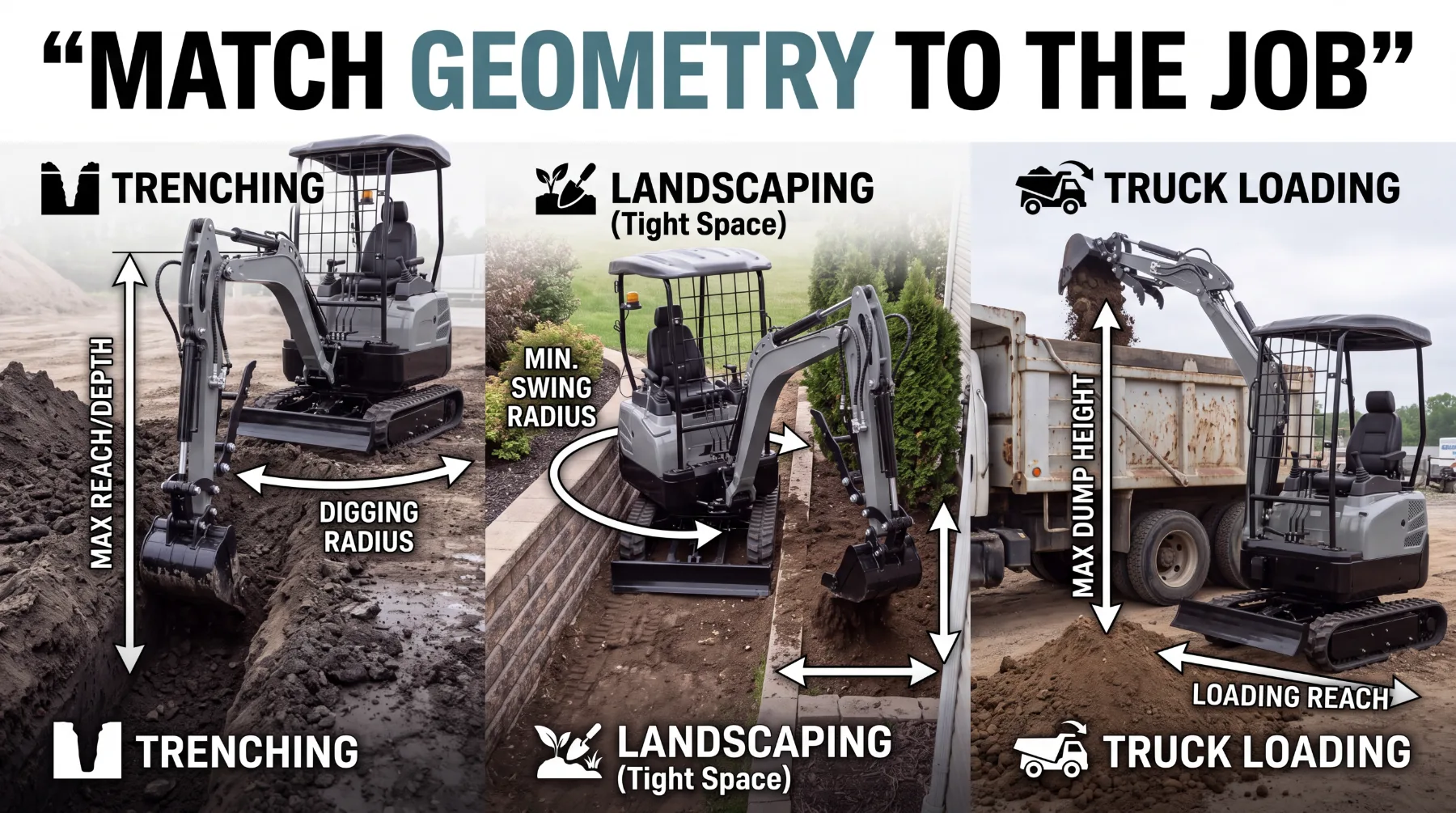
Digging radius and digging height are most useful when they match the demands of the worksite and the application, because no single combination of reach and height suits every task. The right geometry depends on what you dig, where you dig it, and what you do with the material afterward. Choosing a machine whose working envelope fits your typical work reduces repositioning, improves accuracy, and keeps projects moving efficiently, while a mismatch leaves the operator fighting the machine’s limits on every job.
Different applications call for different priorities. Consider how the work shapes the geometry you need:
- Trenching – benefits from a longer digging radius that cuts continuous runs without frequent repositioning.
- Landscaping – often rewards a compact radius for precise work around plantings, structures, and finished surfaces.
- Foundation work – demands strong digging force and enough depth close to the machine, where leverage is greatest.
- Truck loading – prioritizes digging height so the bucket clears high sides and places material cleanly inside.
Matching the machine to these needs means thinking beyond a single headline number. A machine built for deep trenching may not be the best fit for tight residential landscaping, and one optimized for loading tall trucks may offer more height than a low-clearance interior job requires. The goal is alignment between the machine’s capabilities and the work in front of you.
Site conditions round out the decision. The space available, the obstacles present, and the mix of tasks the machine will handle all influence which combination of radius and height serves you best. An operator who regularly moves between trenching, grading, and loading benefits from a balanced machine, while one focused on a single application can prioritize the geometry that task demands. Weighing these factors together helps you select an excavator whose reach and height deliver dependable, efficient performance across the work you actually do.
Conclusion
Digging radius and digging height shape far more of a mini excavator’s performance than their place on the spec sheet suggests. Radius defines how much ground the machine covers from a single position, height determines how well it lifts and places material above grade, and the relationship between reach and digging force reveals why the toughest work belongs close to the machine. A compact radius keeps the excavator productive in tight, obstacle-filled spaces, while the right overall geometry ties everything to the demands of the job at hand. No single measurement captures the full picture, which is why reach and height should always be considered together and matched to your specific applications. By understanding how these dimensions work as a system, you can choose a mini excavator that delivers dependable, efficient performance on the trenching, landscaping, foundation, and loading tasks you count on it to handle.
Frequently Asked Questions
- What does the digging radius tell me about a mini excavator?
Digging radius measures how far the machine can reach from its center of rotation when the boom and arm extend fully. It defines the outer edge of the working envelope, showing how much ground the excavator can cover before it needs to move. A larger radius lets an operator dig across a wider area from one position, which is valuable for trenching and material handling where continuous work saves time. Every repositioning move is time spent not digging, so a machine with reach matched to your tasks keeps the work smooth and helps you accomplish more from each stable position.
- Why is digging height important, and when does it matter most?
Digging height determines how high the machine can raise and position material, setting the ceiling for elevated work. It matters most when loading trucks and trailers, since the bucket needs enough height to clear the side wall and release material cleanly inside rather than spilling it down the outside. Adequate height also supports placing soil on raised beds, backfilling above grade, and working on slopes and embankments. A machine that reaches high enough handles these tasks in one clean motion, while one that falls short forces awkward workarounds or limits the range of jobs the excavator can perform.
- Does maximum reach mean maximum digging force?
No. As the boom and arm extend farther from the machine, the digging force available at the bucket decreases because hydraulic geometry and leverage shift across the working range. When the arm is tucked in close, the hydraulic system works at a mechanical advantage that delivers strong breakout force. At full extension, that advantage diminishes and the same pressure produces less usable force. This is why demanding digging is best done with the arm pulled in, where the machine cuts hardest, while full reach is better suited to lighter tasks like leveling loose material or reaching over an obstacle.
- How does a compact digging radius help in tight spaces?
A compact radius keeps the working envelope manageable, letting the operator dig accurately near buildings, walls, fences, and other obstacles without sweeping wide arcs that risk contact. In confined settings, precise control over where the bucket lands matters greatly, and a smaller radius makes that control easier to achieve. It also reduces the need to reposition, which is slow and demanding in restricted areas. Many mini excavators pair a compact radius with reduced or zero tail swing, keeping the rear within the track width during rotation, so the machine stays productive in spaces that would stop larger equipment.
- How do I match a mini excavator’s geometry to my work?
Start with the tasks you perform most often. Trenching favors a longer radius for continuous cuts, landscaping often rewards a compact radius for precise work around finished surfaces, foundation work demands strong digging force and depth close to the machine, and truck loading prioritizes digging height to clear tall sides. Then factor in site conditions such as available space, obstacles, and the mix of jobs the machine will handle. An operator moving between many tasks benefits from balanced geometry, while a single-application user can prioritize the reach or height that task requires. Matching the machine to your real work reduces repositioning and keeps projects efficient.