


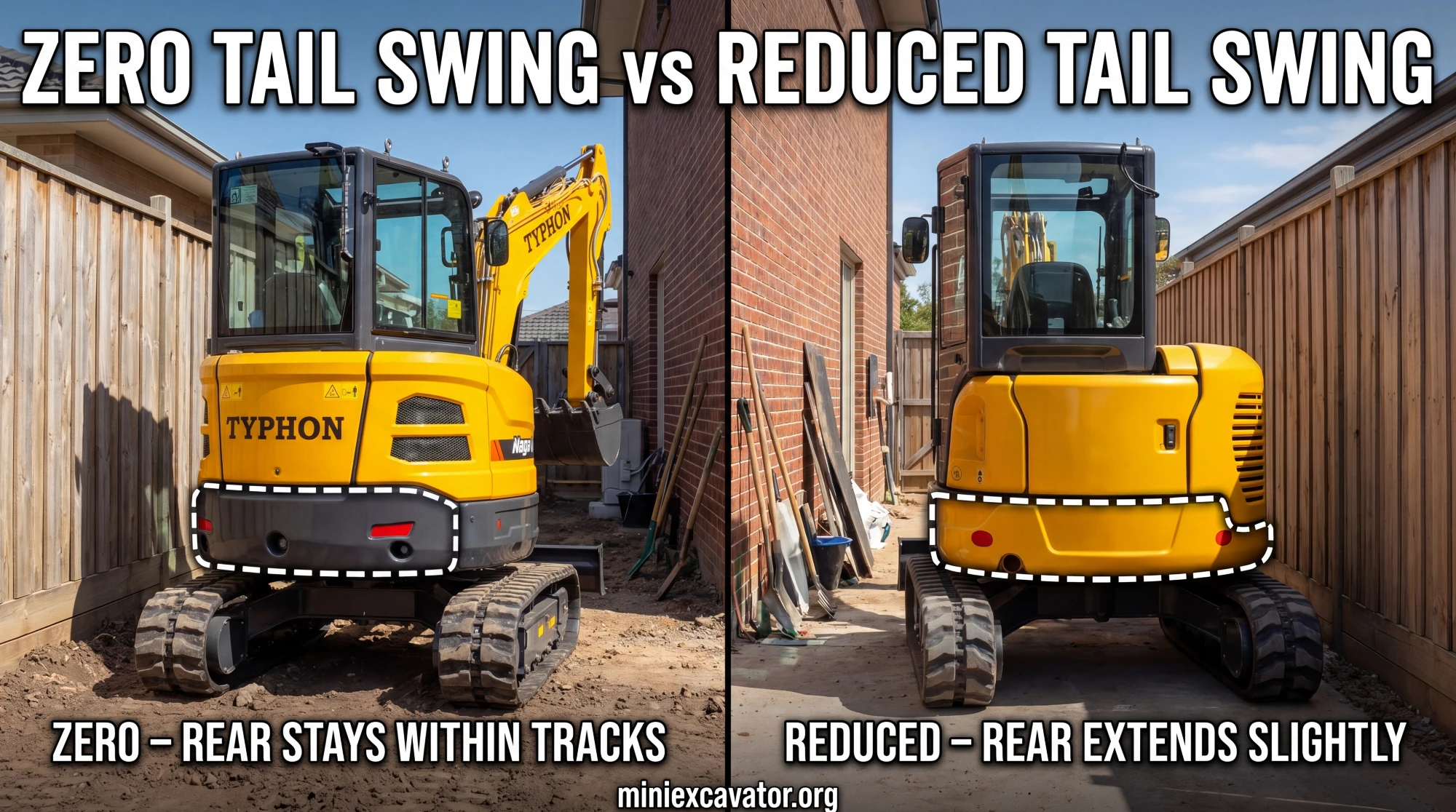
 Zero Tail Swing vs Reduced Tail Swing Mini Excavator: Which One Should You Choose?
When choosing a mini excavator, most buyers look first at digging depth, machine weight, engine power, and attachment options. Those things matter, but one design detail can make an even bigger difference on the jobsite than many people expect: tail swing.
If you have ever worked in a narrow backyard, beside a house foundation, along a fence line, or in a crowded urban area, you already know how important every inch of machine movement can be. In those situations, the way the back of the excavator swings can affect productivity, safety, property damage risk, and overall ease of operation.
That is where the choice between zero tail swing and reduced tail swing mini excavators becomes important.
Both designs are built for compact work, but they are not the same. A zero tail swing excavator is designed to keep the rear of the machine within the width of the tracks as it rotates. A reduced tail swing machine still has a compact design, but the rear extends slightly beyond the tracks during rotation. That small difference can matter a lot depending on where and how you work.
In this guide, we will explain what zero tail swing and reduced tail swing really mean, how each one performs, and which type is more practical for your projects.
What Is Zero Tail Swing?
A zero tail swing mini excavator is designed so that the rear of the upper structure stays completely within the width of the tracks when the machine rotates.
In practical terms, this means if the tracks clear an obstacle, the counterweight will also clear it. The machine does not swing out past its own footprint at the rear.
That design makes zero tail swing excavators especially useful for tight and sensitive work areas.
Common advantages of zero tail swing include:
- better performance in narrow spaces
- lower risk of hitting walls, fences, or buildings
- improved safety around nearby workers
- easier operation in urban and residential areas
- more confidence for operators in confined spaces
Zero tail swing machines are popular for utility work, residential landscaping, indoor demolition, and any project where space is limited and mistakes can be expensive.
What Is Reduced Tail Swing?
A reduced tail swing mini excavator is still compact, but the rear of the machine extends slightly beyond the width of the tracks when it rotates.
This means it is not as tight as a zero tail swing design, but it still offers a much smaller rear swing radius than a traditional excavator.
Reduced tail swing machines are often chosen because they offer a strong balance between compact operation and traditional machine feel. In many projects, they provide enough compactness without the need for a full zero tail swing design.
Common advantages of reduced tail swing include:
- compact design for many jobsite conditions
- good maneuverability without full zero tail swing engineering
- often strong overall performance and stability
- suitable for many residential and commercial jobs
- sometimes a lower purchase price than zero tail swing models
For operators who have a little more working room, reduced tail swing may be more than enough.
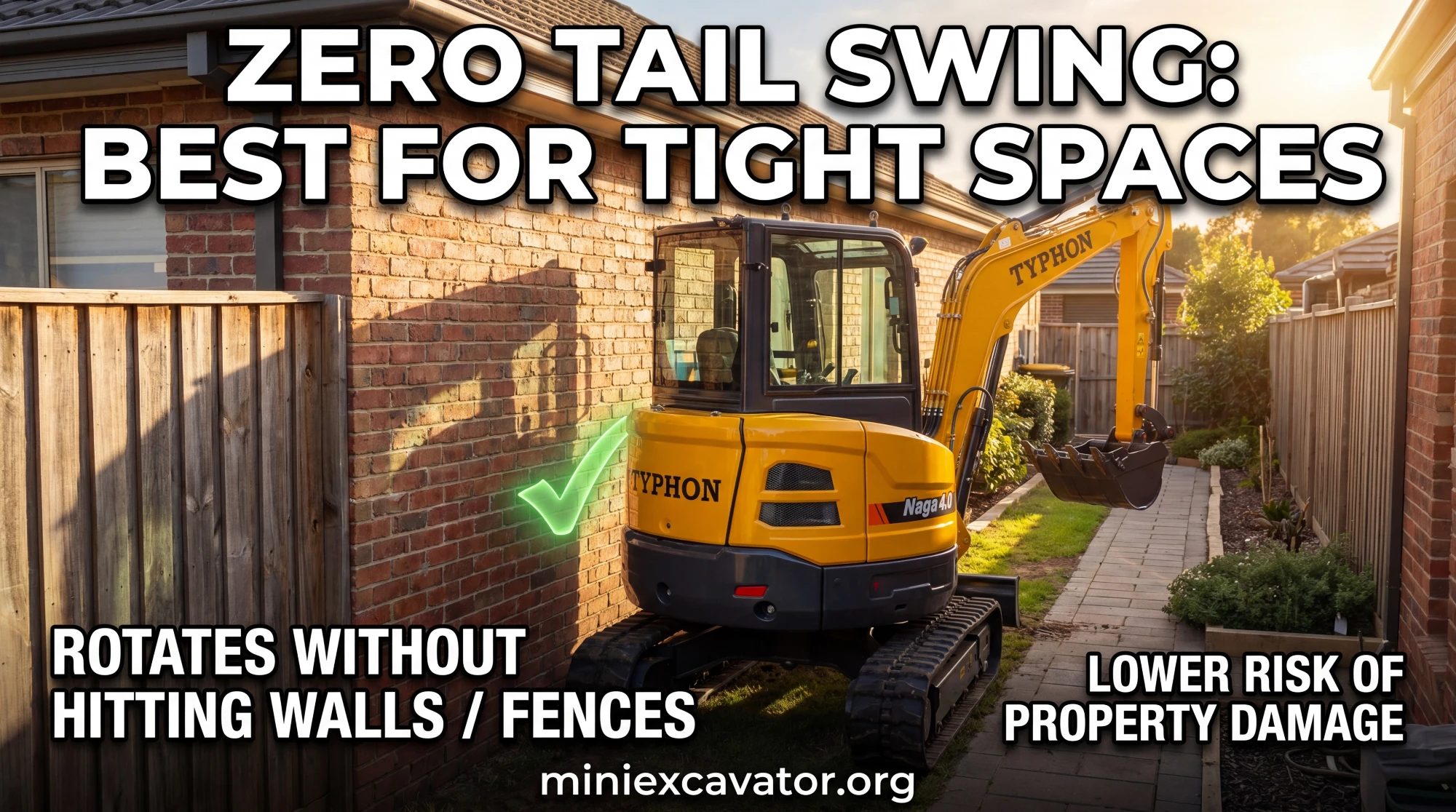 The Main Difference Between Zero Tail Swing and Reduced Tail Swing
The simplest way to understand the difference is this:
- Zero tail swing: the rear stays within the tracks
- Reduced tail swing: the rear goes slightly beyond the tracks
That is the key distinction.
A zero tail swing machine can rotate in tighter areas with less risk of rear-end contact. A reduced tail swing machine still needs a little extra clearance behind the machine.
This directly affects:
- how close you can work to walls or structures
- how safe the machine feels in crowded areas
- how often you need to reposition
- how much attention the operator must give to the rear swing area
Why Tail Swing Matters on Real Jobsites
Tail swing matters because mini excavators are often chosen specifically for restricted access and compact work areas.
If the rear of the machine swings into a wall, parked car, fence, utility box, or nearby worker, the results can range from simple project delays to serious injury or expensive damage.
In open space, the difference may not feel very important. But once you start working:
- beside houses
- near sidewalks
- next to retaining walls
- inside buildings
- in narrow alleys
- along roadsides
- between structures
the tail design becomes a major factor.
Benefits of Zero Tail Swing Mini Excavators
1. Best for Tight Spaces
This is the biggest reason people choose zero tail swing. These machines are made for confined work. The operator can rotate the upper body without worrying that the rear of the machine will swing out and hit something behind it.
2. Lower Risk of Property Damage
When working beside fences, structures, landscaping, or finished surfaces, zero tail swing helps reduce accidental contact. That can save money and avoid frustration on finished or sensitive jobsites.
3. Better Safety Around Workers
A tighter rear profile means fewer unexpected movement hazards for people working close to the excavator. That does not remove the need for awareness, but it does reduce one important risk area.
4. Less Repositioning in Some Jobs
Because the machine can rotate in a tighter footprint, the operator may not need to reposition as often. That can improve efficiency in trenching, digging, and tight-area excavation.
5. Strong Choice for Urban and Residential Work
Zero tail swing is especially useful for contractors who do residential landscaping, plumbing trenching, urban utility work, and other projects where space is limited and surroundings are close.
Benefits of Reduced Tail Swing Mini Excavators
1. Good Balance of Compactness and Performance
Reduced tail swing still gives you a compact machine, just not the absolute tightest rear profile. For many buyers, that balance is enough.
2. Suitable for Many Job Types
If your work is not extremely tight all the time, reduced tail swing may handle your needs very well. It works well for many general construction, landscaping, site prep, and utility jobs.
3. Often Familiar for Operators
Some operators prefer a machine that feels closer to traditional excavator balance and layout. Reduced tail swing can feel familiar while still improving maneuverability over older or larger designs.
4. Potential Cost Advantage
In some cases, reduced tail swing models may be available at a slightly lower price than comparable zero tail swing machines. That can matter for buyers managing fleet budgets.
5. Useful Where Space Is Limited but Not Extremely Tight
A reduced tail swing machine can still work well in many compact jobsites, as long as the operator understands the rear clearance needs.
When Zero Tail Swing Is the Better Choice
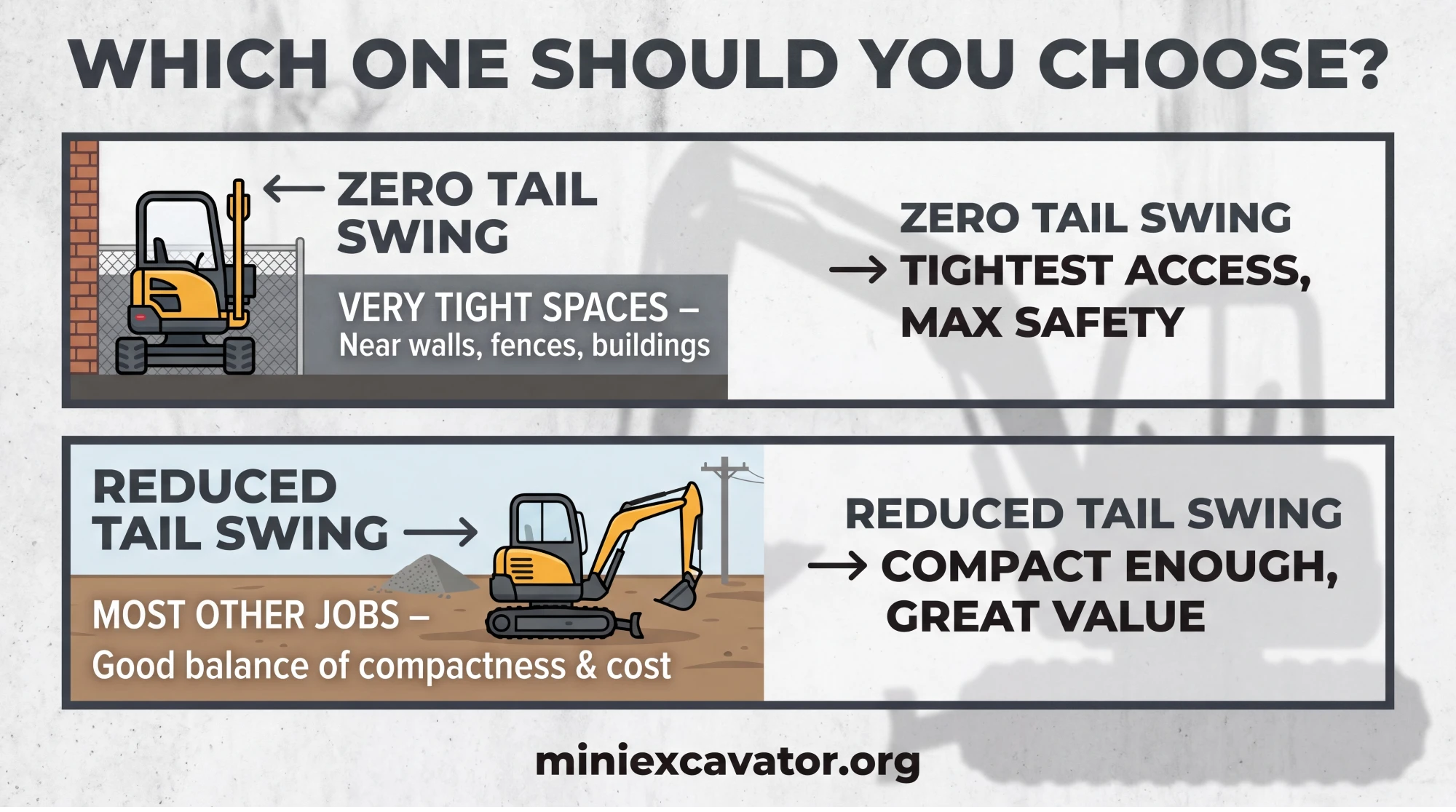
A zero tail swing mini excavator is usually the better option when:
- you work in tight residential spaces
- you often dig near walls or structures
- you need maximum maneuverability
- jobsite safety around rear swing is a major concern
- you regularly work in urban or crowded environments
- avoiding property damage is especially important
If your machine will spend a lot of time in areas where every inch matters, zero tail swing is often the safer and more efficient investment.
When Reduced Tail Swing Is the Better Choice
A reduced tail swing mini excavator may be the better choice when:
- your jobsites have a little more room
- you want a strong balance of compactness and cost
- extreme tight-space operation is not your main priority
- you want a versatile all-around machine
- your projects are mostly open residential, rural, or commercial sites
If you are not constantly working in highly restricted conditions, reduced tail swing may give you everything you need.
Is Zero Tail Swing Always Better?
Not always.
Zero tail swing is better for the tightest and most sensitive work environments, but that does not automatically make it the best choice for every buyer.
If your projects usually have enough rear clearance, a reduced tail swing machine may perform just fine and could be the more practical choice. The right decision depends on where the machine will actually be used most often.
The key is to match the design to the job, not just assume the more compact option is always necessary.
 What Buyers Should Consider Before Choosing
Before deciding between zero tail swing and reduced tail swing, ask these questions:
1. How tight are your usual jobsites?
If you frequently work near houses, fences, sidewalks, and narrow access points, zero tail swing may be worth the extra focus and cost.
2. How close do you work to obstacles?
Think about real digging conditions, not ideal ones. If your jobs often involve working right beside structures, tail clearance becomes much more important.
3. How experienced are your operators?
A zero tail swing design can help reduce rear-swing mistakes, especially in busy or restricted work areas. A reduced tail swing machine requires more awareness of rear movement.
4. How important is maximum safety in compact areas?
Both machines can be used safely, but zero tail swing reduces one major collision risk by design.
5. What does your budget allow?
If both designs can handle your projects, budget may become the deciding factor.
Best Practices for Operating Either Type
No matter which design you choose, safe and efficient operation still depends on the operator.
Good best practices include:
- perform a full walk-around before use
- know the machine’s swing area
- keep bystanders away from the work zone
- operate on stable ground
- avoid rushing in tight spaces
- use a spotter when visibility is limited
- understand the machine’s lift and reach limits
- stay alert to the boom, bucket, and rear movement
A zero tail swing machine reduces risk, but it does not remove the need for training and awareness. A reduced tail swing machine works well, but it requires careful attention to rear clearance.
Final Thoughts
When comparing zero tail swing vs reduced tail swing mini excavators, the right choice depends on your real work environment. Zero tail swing gives you the tightest working footprint and is often the best solution for confined, crowded, or sensitive jobsites. Reduced tail swing still offers strong compact performance and may be a better fit for buyers who have a bit more room and want a balanced all-around machine.
Neither design is automatically right for everyone.
If your work regularly puts the excavator close to walls, buildings, traffic, or finished landscaping, zero tail swing can offer major benefits in safety and maneuverability. If your jobsites are compact but not extremely tight, reduced tail swing may be more than enough.
The smartest choice is the one that matches your daily job reality, not just the machine spec sheet.
Frequently Asked Questions
1. What is zero tail swing on a mini excavator?
Zero tail swing means the rear of the excavator stays within the width of the tracks when the upper structure rotates, so it does not swing out past the machine’s footprint.
2. What is reduced tail swing?
Reduced tail swing means the rear of the excavator extends only a small amount beyond the width of the tracks during rotation. It is more compact than traditional excavators, but not as tight as zero tail swing.
3. Is zero tail swing better than reduced tail swing?
It depends on the jobsite. Zero tail swing is better for very tight spaces and sensitive areas, while reduced tail swing may be enough for more open compact jobs where a little extra rear clearance is available.
4. Why does tail swing matter on a mini excavator?
Tail swing matters because it affects how safely and efficiently the machine can rotate near walls, fences, structures, workers, vehicles, or other obstacles.
5. Are zero tail swing excavators safer?
They can be safer in tight spaces because they reduce the chance of the rear of the machine striking nearby objects or people. However, safe operation still depends on training and awareness.
6. Are reduced tail swing excavators still good for tight jobs?
Yes. Reduced tail swing excavators are still compact and work well in many restricted jobsites, but they need slightly more rear clearance than zero tail swing models.
7. Which type is better for residential work?
For very tight residential access or work close to buildings and landscaping, zero tail swing is often the better choice. For more open residential sites, reduced tail swing may work very well too.