


Why Compact Skid Steers Are Easy to Transport and Store
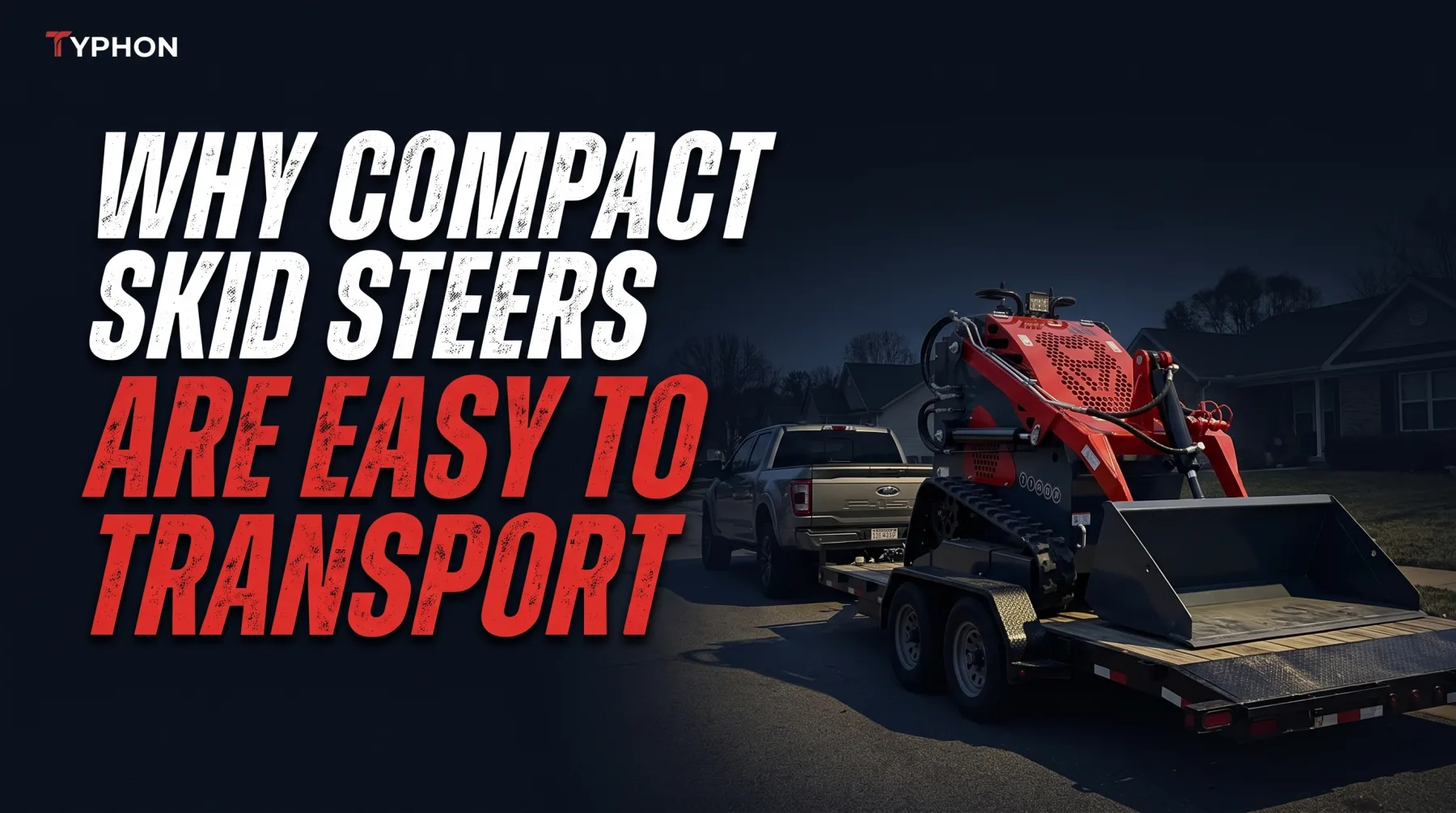
A one-truck landscaping crew books three small jobs across town on the same day, and the owner needs a machine that moves as easily as the crew does. His neighbor runs a full-size loader that demands a dedicated hauler, a wide trailer, and a permit before it ever leaves the yard. That setup swallows an hour and a chunk of money before the first shovel of dirt is moved. So the owner buys a compact skid steer instead and loads it behind his own pickup in minutes. By the time the neighbor’s rig is hooked up and cleared the gate, his crew has already finished the first site and is halfway through the second. That gap in daily output is the whole reason so many small operations choose a compact machine over a larger one.
Transport and storage decide how much a small crew actually accomplishes in a week. A machine that ties up a heavy hauler and monopolizes a corner of the yard costs you time, money, and flexibility before it turns a single bucket of soil. A compact skid steer flips that equation completely: it trailers behind a truck you already own, loads without special equipment, and tucks into tight storage without a second thought. This post walks through the size and weight advantages that make trailering simple, how loading and hauling work without outside help, the small footprint it needs on site or in the yard, the transport rules and trailer sizing to plan around, and the real return all of that delivers to a crew moving between jobs every day. Here’s exactly why a compact machine is so much easier to move and store.
Compact Size and Weight Make Trailering Simple
Weight is where the whole advantage starts. A compact skid steer typically weighs a fraction of what a full-size wheel loader does, which means a standard pickup truck and a common utility or equipment trailer can handle the haul without straining the tow rating. That lower weight keeps you clear of the thresholds that trigger the need for a bigger truck, commercial plates, or extra paperwork before you can legally pull out of the yard.
Physical dimensions matter just as much as what the scale reads. Because a compact skid steer sits narrow and low, it fits on a modest trailer and passes the height and width limits that turn larger machines into logistical headaches on the road. Pairing a light, compact loader with gear you already own transforms every job change from a planning event into a quick hitch-and-go. Instead of calling a transport company, booking a window, and waiting, you simply back the trailer up, drive the machine on, and leave.
Consider what that looks like across a busy week. A crew running five jobs might move the machine five times; with a full-size loader, each move is a production. With a compact skid steer, each one takes minutes. Checking the machine’s operating weight against your truck’s tow rating and your trailer’s GVWR before every haul keeps every trip safe and legal, and that habit also keeps you from discovering a weight problem on the side of the road.
Loading and Hauling Without a Heavy Hauler
Getting the machine onto the trailer is where large loaders eat time and money. A compact skid steer sidesteps all of that. Drive it up a set of standard ramps, position it centered over the axles, and strap it down at the four tie-down points, all in a few minutes with a single operator. No crane, no dedicated equipment hauler, no waiting on a third-party company to fit you into their schedule.
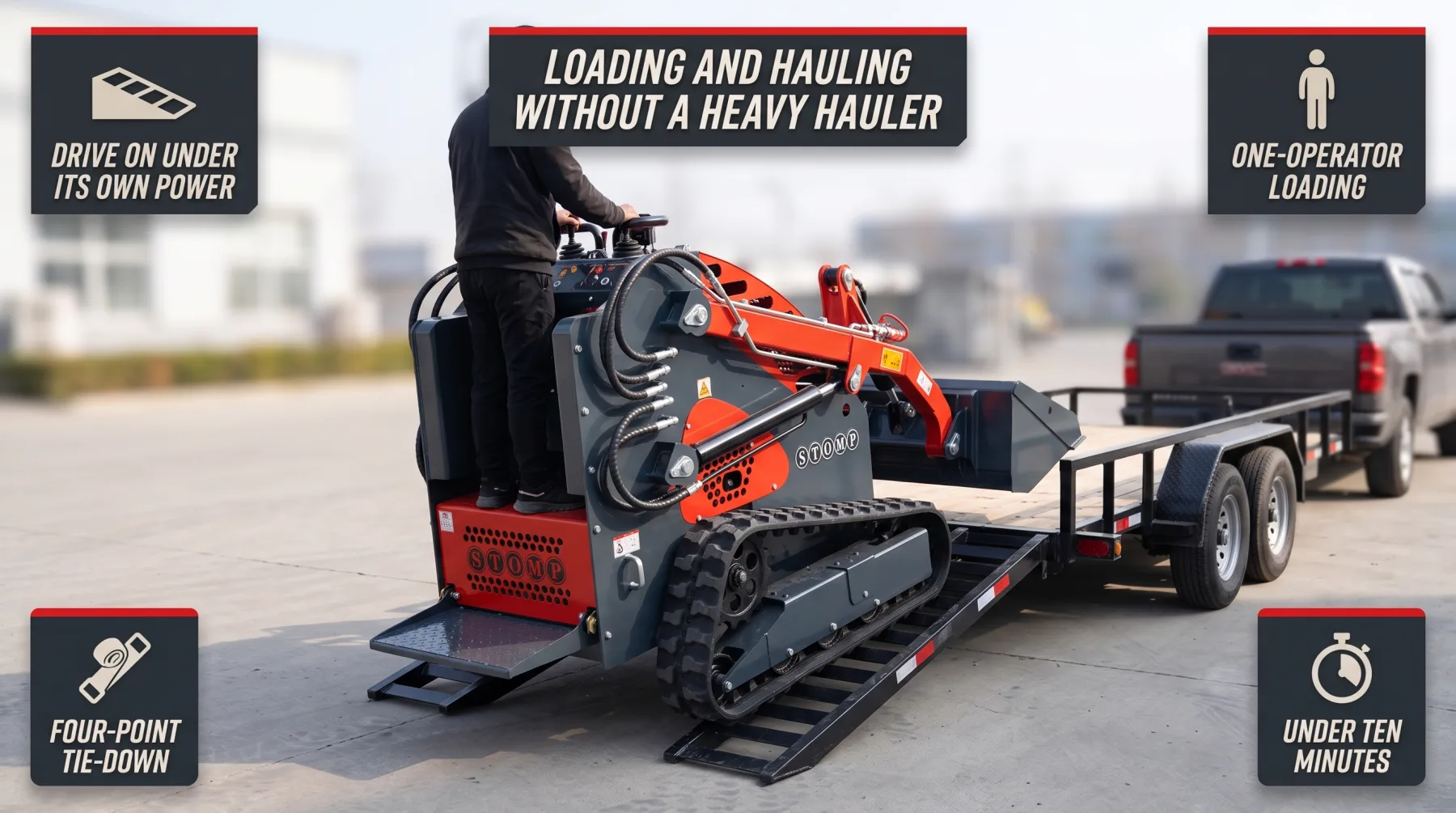
Self-loading is the underrated advantage of a compact machine. Since it drives on and off under its own power, one person handles the entire move without coordinating extra hands or leasing a second truck. That independence keeps a small crew nimble, letting you fit two or even three sites into a day without a single move eating a full hour. For a business billing by the job, that reclaimed time goes straight to revenue.
Safety matters on every load, regardless of how fast the process is. Follow the same careful sequence every time to make sure nothing shifts or rolls while you’re on the road.
Quick loading checklist:
- Park the trailer on firm, level ground and chock the wheels before you drive the machine on.
- Set ramps square and confirmed for the machine’s weight before you approach them.
- Drive on slowly, keeping the loader centered over the trailer axles.
- Lower the bucket or attachment flat to the deck before you step off.
- Strap all four corners, apply chain binders if your trailer requires them, and recheck everything before you pull out.
That sequence takes under ten minutes when it’s part of your routine, and it keeps the machine exactly where you put it from driveway to job site.
A Small Footprint Fits Tight Storage
Storage is the cost most small crews don’t think about until the yard is full and something has to go. A compact skid steer rarely creates that problem. It tucks into spaces a full-size machine can’t come close to fitting: the corner of a two-car garage, a single bay in a shop, a modest fenced yard alongside a trailer and two trucks. Its short length and narrow width leave room for the rest of the fleet, materials, and tools rather than dominating the whole property.
Tight storage pays practical dividends on the job site as well. Parking the machine off to the side at the end of the day is simple when it doesn’t sprawl across half the work area, and it’s easier to secure in a smaller, less exposed spot overnight. Indoor storage is an option that full-size machines don’t have, since a compact skid steer actually fits through a standard overhead door. Getting the machine under a roof protects it from weather and theft, both of which cost money and downtime when they catch up with equipment left outside.
Yard efficiency adds up over time, too. Less space tied up in equipment means more room to store materials, stack supplies for the next job, or take on a second piece of equipment without renting more property. For a growing operation, that flexibility has real dollar value.
Transport Regulations and Trailer Sizing
Rules govern every haul, so knowing them before you’re on the road prevents fines, delays, and problems at weigh stations. Most compact skid steers, paired with the right trailer, stay comfortably under the weight and width limits that trigger special permits, oversize-load flags, or commercial driver requirements. That doesn’t mean you assume it, though. Always confirm your total loaded weight, truck plus trailer plus machine plus any attachments, against your driver’s license class and your state’s posted regulations before you leave the yard.
Trailer sizing is its own careful calculation and deserves attention before you buy the trailer, not after. Match the trailer’s gross vehicle weight rating (GVWR) to the machine’s operating weight with attachments and leave a comfortable margin. Running near the upper limit of a trailer’s rating creates risk if you add a heavier attachment or load any extra gear on the deck. Check the deck length to confirm the loader sits over the axles with room to strap it down properly, and verify that your hitch class and tow vehicle handle the combined load at highway speed.
Getting this right once, before you haul the first time, saves you from the kind of roadside surprises that eat an afternoon and occasionally cost a fine. For operators who work across multiple states, checking each state’s specific permit thresholds keeps you ahead of any variation in the rules.
Job Site Maneuverability Once You Arrive
Easy transport doesn’t stop at the gate. Once a compact skid steer arrives on site, its small size continues to pay off in ways a larger machine can’t match. Tight residential lots, narrow side yards, and fenced job sites that would stop a full-size loader at the entrance are straightforward territory for a compact machine. Threading between structures, working close to fences and garden beds, and turning in confined areas all happen without the constant repositioning a bigger machine demands.
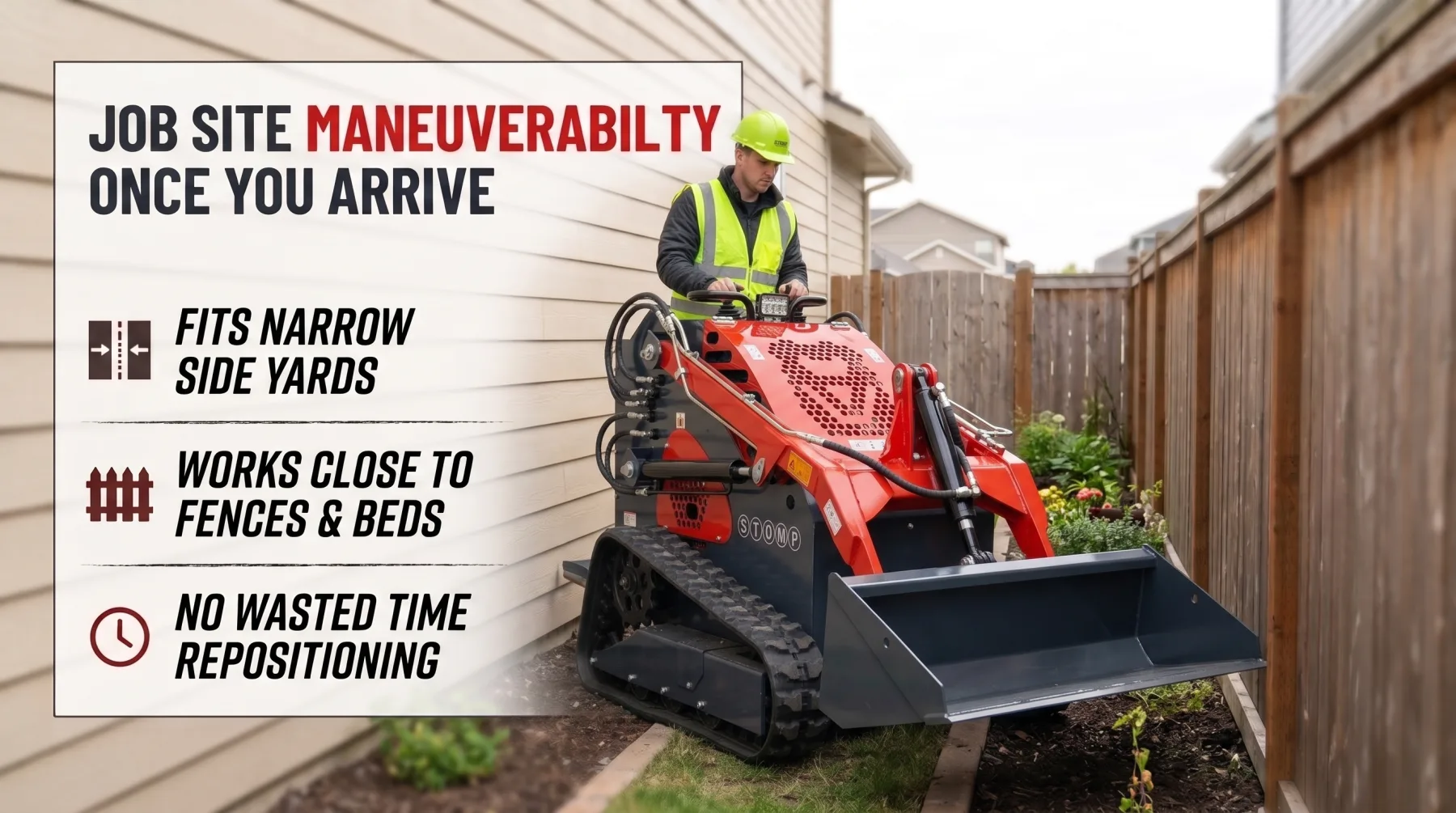
That maneuverability connects directly to the transport advantage. A machine that fits everywhere it needs to go, from the trailer to the back corner of a lot, stays productive from the moment you unload it to the moment you reload it. There’s no wasted time looking for a way in, no hand-tamping work in spots the machine can’t reach, and no damage to finished surfaces from a machine that’s too wide for the space.
Value and ROI for Small Crews on the Move
Cost is always the first question, and easy transport puts real money back in the budget in ways that compound quickly. Skipping a dedicated hauler saves the daily rental or the per-trip rate on every single job move. Hauling with your own truck instead of a contracted service keeps margin in your pocket. Moving the machine yourself instead of coordinating a second driver trims labor, too. Every one of those savings repeats on every move, and a crew running multiple sites per week accumulates them fast.
Mobility also keeps the machine earning instead of sitting. When a loader relocates in minutes rather than half a day, a crew fits more billable work into each day and can realistically serve a wider geographic area without transport eating the profit. A machine that sits on one site waiting for a hauler isn’t making money; a machine that rolls with the crew is.
Whether buying beats renting comes down to how often you move and how steadily you work. Running the numbers against your real schedule, how many sites per week, how many moves per month, usually makes the case clear. For small operations that live on the road between jobs, a machine this easy to move and store often pays back its purchase price faster than a larger, harder-to-haul alternative ever could. Protecting that investment means following a steady maintenance routine and keeping operators trained on safe loading, hauling, and operation practices every time the machine moves.
Conclusion
Compact skid steers earn their place with small crews because they move and store with almost none of the hassle a full-size machine brings. Light weight and small dimensions let you trailer behind a truck you already own, self-loading gets one operator on the road in minutes, and a tight footprint fits storage that a bigger loader would never clear. Staying within common transport limits keeps you free of permits, extra licensing, and roadside delays, while every smooth, fast move trims cost and keeps the machine earning rather than sitting. Match the loader’s weight to your truck and trailer ratings, plan your trailer size before you buy, confirm local transport rules for every haul, and follow a safe, consistent loading routine every time. When you’re ready to put a dependable compact skid steer to work, reach out to a trusted equipment specialist who can pair a reliable machine with the results your projects depend on.
Frequently Asked Questions
Can I haul a compact skid steer with a regular pickup truck?
Often, yes. A compact skid steer’s lighter weight lets a standard pickup and a common utility trailer handle the haul, but always confirm the machine’s operating weight against your truck’s tow rating and your trailer’s GVWR before you pull out of the yard.
Do I need a special permit to transport a compact skid steer?
Usually not, since most compact machines on a properly rated trailer stay well under the weight and width limits that trigger permits or commercial licensing requirements. Confirm your total loaded weight and check your state’s specific regulations before every haul to be sure.
How much storage space does a compact skid steer need?
Very little compared to a full-size loader. Its short length and narrow width let it fit in a garage corner, a single shop bay, or a modest fenced yard, and it clears a standard overhead door for secure indoor storage that protects the machine from weather and theft.