


Best Mini Excavator Attachments for Digging, Demolition, and Land Clearing
A mini excavator is already one of the most useful machines on a jobsite, but its real value shows when you start using the right attachments. On its own, a mini excavator is excellent for digging and basic earthmoving. With the right tools, however, that same machine can become a demolition unit, a land-clearing machine, a hole-drilling tool, a grading assstant, and even a material-handling solution.
That is why attachments matter so much.
For contractors, landscapers, utility crews, farmers, and serious property owners, mini excavator attachments are often the difference between owning one useful machine and owning a machine that can handle many different jobs. Instead of depending on multiple pieces of equipment, operators can switch tools and keep working with the same base machine.
In this guide, we will break down the best mini excavator attachments for digging, demolition, and land clearing, explain what each one does, and help you understand how to choose the right attachments for your type of work.
Why Mini Excavator Attachments Matter
A mini excavator attachment changes what the machine can do. That sounds simple, but in real work it has a major impact on efficiency, job flexibility, and total equipment value.
The right attachment can help you:
- complete jobs faster
- reduce manual labor
- avoid renting additional equipment
- handle a wider range of tasks
- improve precision
- increase the return on your machine investment
For example, a contractor may use one mini excavator with a trenching bucket in the morning, switch to a hydraulic breaker for demolition later, and then use a grapple for cleanup before the day ends. That kind of versatility saves time and helps the machine earn its value over and over again.
What Are Mini Excavator Attachments?
Mini excavator attachments are specialized tools that connect to the boom or arm of the machine to perform different kinds of work. They are powered either by the machine’s standard linkage or by the hydraulic system, depending on the attachment type.
Some attachments are simple, like buckets in different shapes and widths. Others are more advanced, like hydraulic breakers, augers, grapples, mulchers, and compactors.
Many modern mini excavators use quick coupler systems, which make it easier to switch between attachments without wasting time on the jobsite.
Best Mini Excavator Attachments for Digging
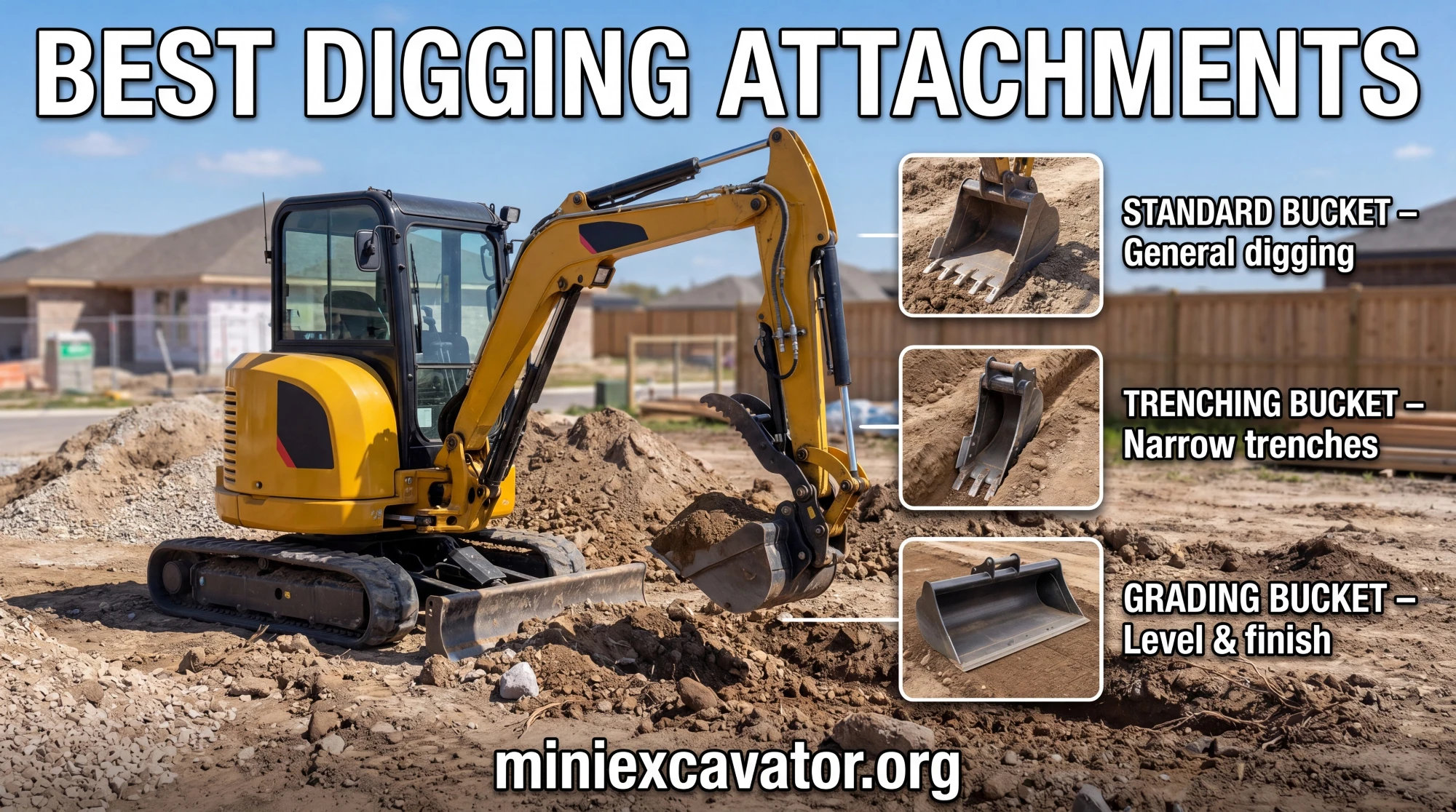
1. Standard Digging Bucket
The standard digging bucket is the most common mini excavator attachment and the one most people picture first. It is the basic tool for excavation, trenching, loading soil, and general digging work.
This bucket is ideal for:
- general earthmoving
- trench digging
- site preparation
- footing work
- basic landscape excavation
Even though it is the most common attachment, it is also one of the most important. A good bucket with the right width and tooth condition makes daily excavation work much easier and more productive.
2. Trenching Bucket
A trenching bucket is narrower than a standard bucket and is designed for digging cleaner, tighter trenches. It is especially useful for utility installation, irrigation lines, drainage systems, and pipe work.
This attachment is best when you need:
- narrow trenches
- cleaner trench walls
- less over-excavation
- more efficient utility digging
Because it removes only the material needed, it can reduce backfill work and make the trenching process more accurate.
3. Grading or Cleanup Bucket
A grading bucket is wider and flatter than a standard digging bucket. It is used for smoothing, leveling, shaping, and finishing work.
This bucket works well for:
- final surface shaping
- grading soil
- cleaning ditches
- backfilling
- preparing hardscape or landscape surfaces
It is one of the most useful finishing attachments because it helps turn rough digging work into a cleaner final result.
4. Ripper
A ripper is a single-tooth attachment designed to break up compacted ground, frozen soil, roots, and softer rock before excavation begins.
This attachment is especially useful when the standard bucket struggles to penetrate the surface. It helps loosen tough material so the bucket can work more effectively afterward.
Use a ripper for:
- hard soil
- compacted ground
- root-heavy areas
- frozen surfaces
- rocky conditions
In many cases, using a ripper first can speed up the full digging process.
Best Mini Excavator Attachments for Demolition
5. Hydraulic Breaker
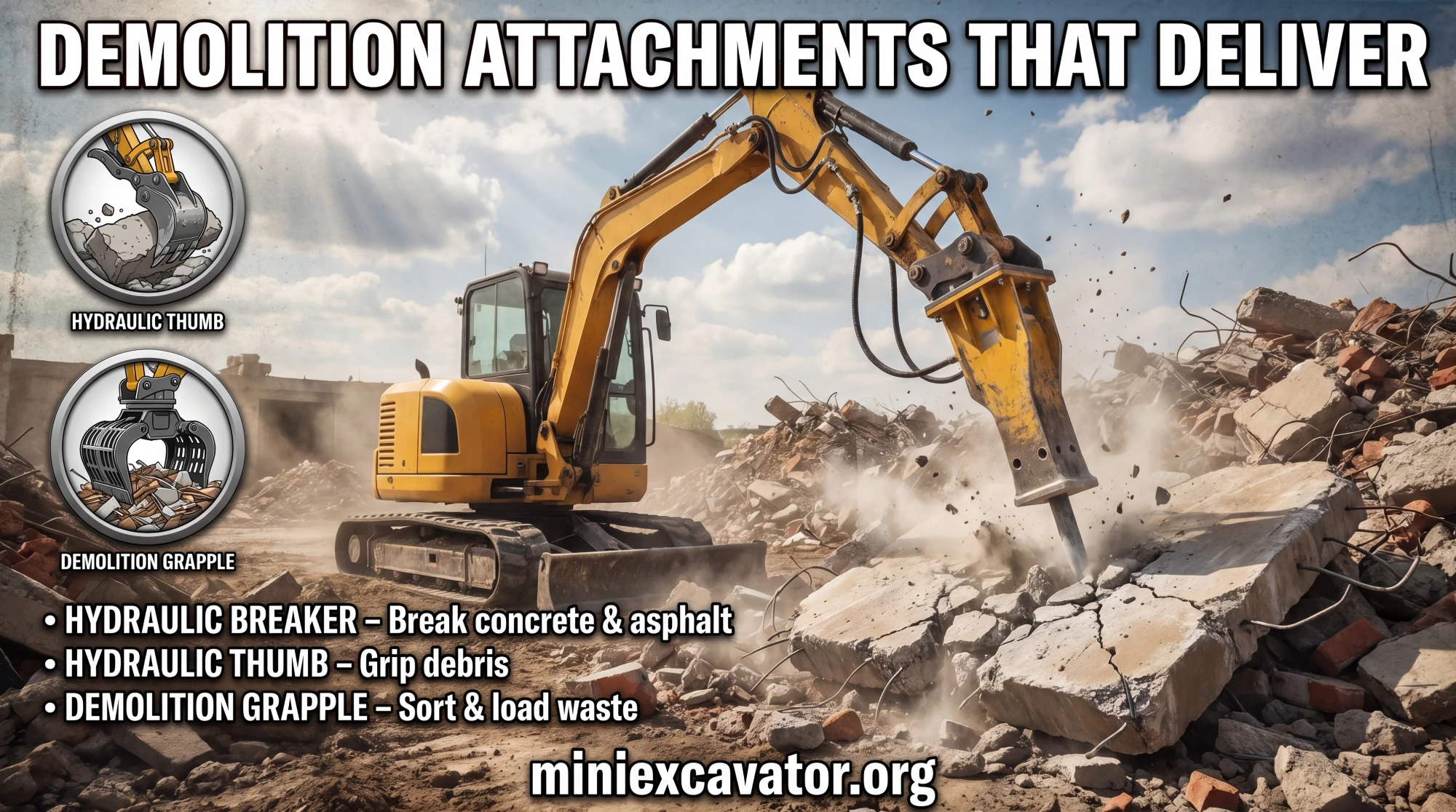
A hydraulic breaker, also called a hammer, is one of the most powerful mini excavator attachments for demolition. It uses rapid impact force to break concrete, asphalt, rock, and other hard material.
This is one of the top choices for:
- breaking sidewalks
- removing old concrete pads
- asphalt demolition
- light rock breaking
- trenching through hard surfaces
For demolition work, this attachment often turns a mini excavator into a compact but highly effective demolition tool. It reduces manual jackhammer labor and allows faster, safer material removal.
6. Hydraulic Thumb
A hydraulic thumb is often added alongside a bucket to help the excavator grip and hold irregular materials. It acts like a second gripping point, turning the machine into a more capable handling tool.
This is extremely helpful for demolition because broken materials are rarely neat or easy to move.
A hydraulic thumb is useful for:
- concrete chunks
- logs and branches
- rocks
- demolition debris
- pipes and irregular objects
For many operators, a thumb is one of the most practical upgrades because it adds handling ability to many different types of work, not just demolition.
7. Demolition Grapple
A demolition grapple is designed for grabbing, lifting, sorting, and moving debris. It is especially useful when cleanup is just as important as demolition itself.
This attachment helps with:
- sorting scrap materials
- removing broken concrete
- handling rebar and debris
- loading waste into dumpsters
- site cleanup after demolition
For operators doing repeated demolition or material sorting, a grapple can be a major productivity tool.
Best Mini Excavator Attachments for Land Clearing
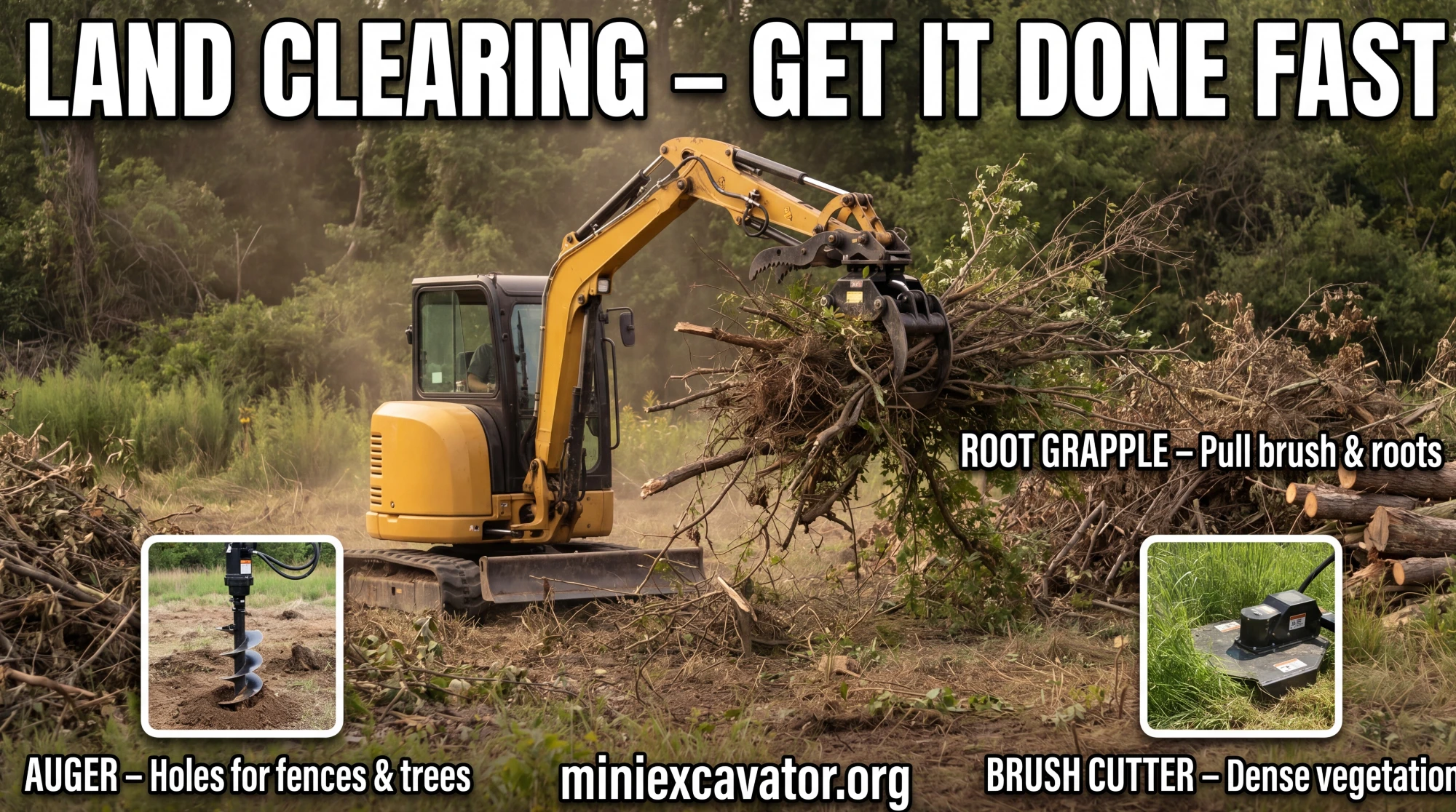
8. Root Grapple
A root grapple is ideal for pulling, lifting, and moving brush, roots, branches, and natural debris. This makes it one of the best tools for land clearing, site cleanup, and property maintenance.
It works well for:
- brush removal
- root and branch cleanup
- handling loose vegetation
- clearing storm debris
- preparing overgrown sites
This attachment helps reduce manual cleanup time and makes it easier to sort organic material.
9. Brush Cutter or Mulcher
A brush cutter or mulcher attachment turns the mini excavator into a more aggressive clearing machine. It can cut and process dense vegetation, brush, and smaller trees.
This is one of the most useful land-clearing attachments for:
- overgrown lots
- trail cutting
- fence line clearing
- vegetation control
- general brush management
For buyers who regularly work on undeveloped or overgrown land, this type of attachment can add a lot of value.
10. Auger
An auger is a drilling attachment used to create holes in the ground. While many people associate it mainly with fencing, it is also useful in land clearing and site prep work.
Common auger uses include:
- fence posts
- tree planting
- sign installation
- deck footings
- foundation piers
An auger saves enormous time compared to manual digging and creates cleaner, more consistent holes.
 Other Useful Mini Excavator Attachments
11. Plate Compactor
A plate compactor attachment helps compact soil, gravel, and backfill, especially in trenches and around foundations.
It is useful for:
- trench compaction
- base preparation
- backfill work
- reducing settlement risk
This is a smart attachment for utility and construction crews that need a cleaner finish after excavation.
12. Pallet Forks
Pallet forks allow the mini excavator to handle palletized material in tighter areas where larger loading equipment may not fit.
This can be useful for:
- moving materials around a site
- handling pallets of supplies
- lifting stone, blocks, or construction items
It is not the first attachment most people think of, but it can add practical value in compact jobsites.
How to Choose the Right Mini Excavator Attachment
Choosing the right attachment starts with understanding the work you do most often.
Ask yourself:
- Do I mostly dig trenches or general soil?
- Do I regularly break concrete or asphalt?
- Do I work in brush, roots, or overgrown areas?
- Do I need lifting and handling ability?
- Will the attachment be used often enough to buy, or is it better to rent?
You should also make sure the attachment matches the machine itself. That means checking:
- machine size and weight class
- hydraulic flow and pressure
- coupler compatibility
- attachment weight
- operating requirements
Using the wrong attachment on the wrong machine can reduce performance and create safety risks.
Best Practices for Using Mini Excavator Attachments
Attachments increase versatility, but they also require proper handling and maintenance.
Inspect attachments before use
Check hoses, fittings, pins, cutting edges, teeth, and structural components before every use. Small issues can turn into expensive problems quickly.
Use the right attachment for the job
Do not force one tool to do another tool’s job. A grading bucket is not a breaker, and a digging bucket is not the best choice for brush clearing.
Stay within machine limits
Heavy or hydraulic attachments change how the mini excavator performs. Always stay within the machine’s rated capability and understand how attachment weight affects stability.
Follow hydraulic requirements
Hydraulic attachments must match the excavator’s flow and pressure. Mismatched equipment can damage both the machine and the tool.
Maintain attachments regularly
Sharpen cutting parts, grease moving areas, replace worn teeth, and keep everything clean and secure. A well-maintained attachment performs better and lasts longer.
Should You Buy or Rent Attachments?
That depends on how often you use them.
If the attachment is used frequently, buying often makes more sense. If it is needed only for occasional or specialty work, renting may be more practical.
For example:
- a digging bucket is usually essential to own
- a grading bucket may also be worth owning
- a hydraulic breaker may be better to rent if used rarely
- an auger may be worth buying if fencing or drilling is common
- a brush cutter may be worth buying for repeated land-clearing work
The smartest choice usually comes down to frequency, cost, and storage.
Final Thoughts
Mini excavator attachments are what turn a compact excavator into a true multi-purpose machine. With the right setup, one machine can dig trenches, break concrete, clear brush, handle debris, drill holes, grade soil, and much more. That versatility is exactly why attachments are such an important part of getting the most value from a mini excavator.
For digging, the most useful attachments are usually the standard bucket, trenching bucket, grading bucket, and ripper. For demolition, the hydraulic breaker, thumb, and grapple are among the best choices. For land clearing, root grapples, brush cutters, mulchers, and augers offer major advantages.
The best attachment is the one that matches your real work. When you choose carefully and use the right tools for the right tasks, a mini excavator becomes much more than a digging machine. It becomes one of the most flexible and valuable assets on your jobsite.
Frequently Asked Questions
1. What are mini excavator attachments?
Mini excavator attachments are tools that connect to the machine’s arm or coupler to expand its capabilities beyond standard digging. They allow the machine to perform many different tasks.
2. What is the best mini excavator attachment for digging?
The best digging attachments usually include the standard digging bucket, trenching bucket, grading bucket, and ripper, depending on the soil and the type of excavation work.
3. What attachment is best for demolition?
A hydraulic breaker is one of the best attachments for demolition because it is designed to break concrete, asphalt, and hard materials. A thumb or grapple is also useful for cleanup.
4. What attachment is best for land clearing?
For land clearing, root grapples, brush cutters, mulchers, and augers are some of the most useful attachments depending on whether the job involves vegetation, roots, brush, or hole drilling.
5. Can one mini excavator use multiple attachments?
Yes. That is one of the biggest advantages of a mini excavator. With the right coupler and hydraulic support, one machine can use many different attachments.
6. How do I know if an attachment fits my mini excavator?
You need to check machine size, attachment weight, hydraulic flow and pressure requirements, and coupler compatibility before using an attachment.
7. Is it better to buy or rent mini excavator attachments?
It depends on how often you use them. Frequently used attachments are often worth buying, while specialized attachments used only occasionally may be better rented.