


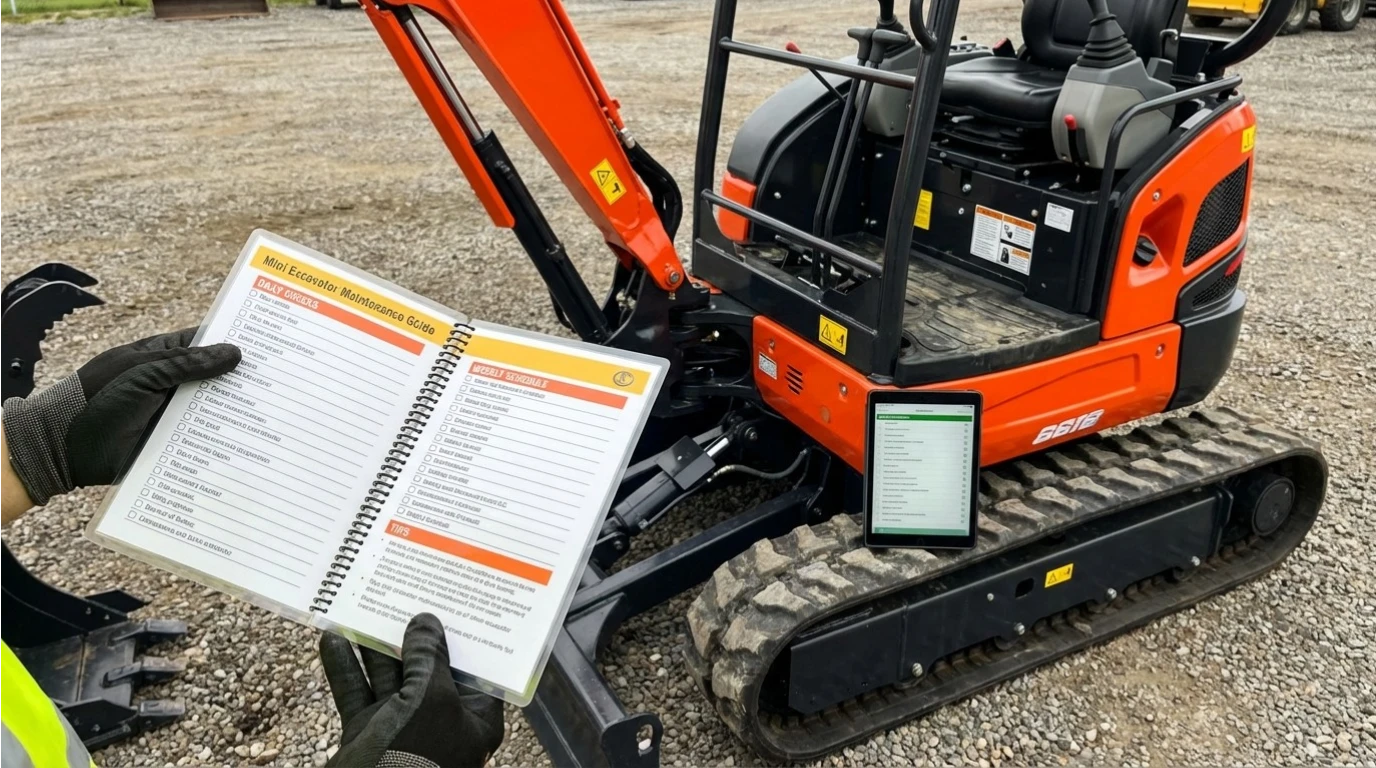
 Mini Excavator Maintenance Guide: Schedules & Tips
A mini excavator is a substantial investment in your business. When you use this equipment, you naturally expect it to run flawlessly, delivering the power and precision needed to get the job done on time. While it is true that even the best construction equipment on the market requires regular maintenance to ensure optimal performance, failure to maintain it will inevitably result in costly repairs, wasted time, and reduced profits.
To properly service heavy equipment, it is essential to adopt a proactive rather than reactive maintenance strategy. With an understanding of your equipment’s mechanical requirements, you can prevent minor problems from becoming major catastrophes. This is an objective, informative guide to help you get the most out of your equipment.
We will examine the vital importance of preventive maintenance and develop a detailed mini-excavator maintenance schedule. You will learn how to maintain the basic components of the mini excavator, troubleshoot common problems before they escalate, and preserve the long-term value of the machines. Let’s create a reliable service routine to keep the machines on the job site and out of the repair shop!
The Importance of Preventive Maintenance
Good machinery will have robust engineering to withstand harsh conditions. However, dust, debris, lifting, and vibration can all have a detrimental impact on moving parts. Preventive maintenance is your first line of defense in preventing unexpected equipment failures.
Maximizing Uptime and ROI
Downtime is the enemy of profitability. If your machine breaks down in the middle of the project, you will incur idle labor costs, lose key deadlines, and damage your reputation in the eyes of the client. Developing a strict maintenance plan for your mini excavator ensures it is always ready to go to work. Catching a loose track or a worn-out hydraulic hose during a maintenance check can save you thousands of dollars in lost revenue due to a machine failure. Maintenance is directly correlated to your ROI.
Ensuring Long-Term Durability
Regular servicing also extends the lifespan of your compact excavator. New fluid levels reduce friction in your engine, and new filters ensure that fresh air and a properly mixed fuel reach your combustion chamber. Lubrication also reduces wear and tear, which often destroys costly pins and bushings when two pieces of metal rub together. For a broader overview of how machine maintenance plays a part in your overall strategy, check out our Complete Guide to Mini Excavators: Types, Uses, Pricing & Buying Tips (2026). Adhering to a strict maintenance schedule ensures you get the most out of your heavy machinery.
Recommended Maintenance Schedules
A dependable mini excavator maintenance schedule takes the guesswork out of equipment maintenance. Vendors offer specific maintenance intervals based on machine running hours. These guidelines will ensure your machine runs at peak efficiency and that your warranty remains valid.
The Daily Pre-Operation Walkaround
The most important maintenance activity takes place before turning the ignition key. Operators must visually inspect the machine daily. This involves walking around the machine and looking for obvious damage, such as oil puddles, hose damage, and loose parts. It also includes checking oil, hydraulic fluid, and coolant levels, inspecting tracks for rocks and wear, and cleaning out any heavy mud under the tracks. This exercise takes only 10 minutes and covers most daily operational failures.
50-Hour and 100-Hour Service Benchmarks
As the hours continue to rack up on your machine, more attention is required. At the 50-hour mark, check the water separator and remove any moisture that has accumulated in the fuel system. This is also the appropriate time to check the tension of the fan belt and the corrosion of the battery terminals. After you reach the 100-hour mark, you can expect to check the fluids more extensively. This is the appropriate time to change the engine oil and the primary oil filter so the internal components are protected from abrasives.
Annual and 500-Hour Deep Maintenance
The 500-hour service interval is an important milestone in the maintenance of heavy equipment services. In this stage, you will need to change the hydraulic oil filters and the fuel filters. Additionally, you will need to change the travel motor gear oil in the undercarriage of the heavy equipment machine. In the process, you will need to check the radiator for blockages and the engine coolant mixture to ensure it does not freeze or overheat. Some contractors prefer to perform maintenance annually, even if the machine has not reached the 500-hour mark, in preparation for the upcoming busy season.(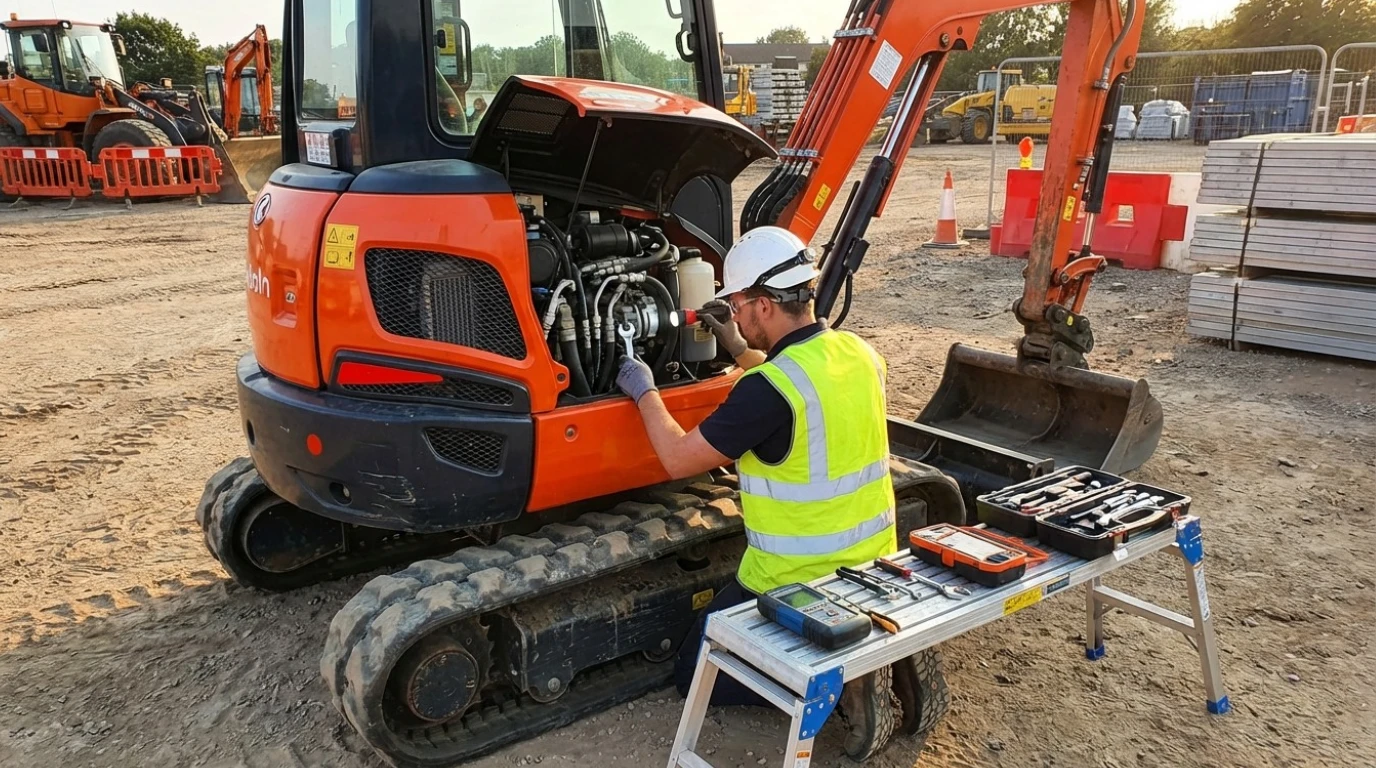
Core Component Care
Some areas of your excavator have more stress than others. By focusing on your excavator’s core systems, you can avoid the most common equipment failures and ensure your machine runs smoothly and responds well.
Managing Hydraulic Fluid and Filters
The hydraulic system is the “lifeblood” for your compact excavator. It is the power that drives the huge breakout force required for digging and lifting. The hydraulic fluid must be absolutely free of dirt, water, and any other debris. Even a speck of dirt can scratch the inside of the hydraulic cylinders and ruin expensive pumps. Always wipe the hydraulic fill cap clean before removing it. Check your hydraulic levels every day, and never ignore a dashboard warning light for low hydraulic pressure.
Undercarriage and Track Tensioning
The undercarriage supports the entire weight of the machine and travels on brutal terrain. Track tension is critical to the machine’s longevity. Tracks that are too tight can cause excessive stress on the drive motors and sprockets, leading to premature bearing failures. Tracks that are too loose can derail when turning on uneven ground. Please refer to the operator’s manual to determine the required track sag measurement for your model, and adjust the grease cylinders accordingly.
Greasing Pins and Bushings
The excavator’s articulating arm uses steel pins and bushings to move smoothly back and forth. The pivot points support the entire weight of the bucket and the object you are lifting. Without proper lubrication, friction will soon start grinding down the steel, creating a loose, unstable digging arm. Fresh, high-quality grease must be pumped into all the zerk fittings on the boom, stick, and bucket every day. If you are training a new team member on these parts, you can direct them to the “How to Operate a Mini Excavator: Step-by-Step Beginner Guide.“
Troubleshooting Common Problems
Despite good maintenance, you will still experience some mechanical hiccups. Knowing how to troubleshoot your mini excavator’s problems can help small issues not develop into major repairs. Here are some common issues you can address right away with your mini excavator.
Addressing Hydraulic Leaks
The most common problem contractors face is hydraulic leaks. If you notice a steady drip or pressure loss, stop the machine immediately. Check all hoses, O-rings, and cylinders for leaks. Hoses often rub against the metal boom, causing small holes and leaks. Never use your bare hands to check for pressure leaks, as they can puncture your skin. Worn hoses should be replaced immediately rather than repaired.
Resolving Engine Starting Issues
A machine that won’t start means your job site comes to a complete halt. If your machine cranks over but won’t turn over, check the fuel delivery system first. Check your fuel filter for clogging and your water separator for clogging. If you’re in a cold climate, diesel fuel can gel and clog your fuel line. If your machine does not crank over, check your battery voltage and your terminals for corrosion buildup. Make sure your safety lockout lever is fully engaged, as most machines have a safety switch that won’t allow the machine to start if the lever is down.
Correcting Loss of Digging Power
If your excavator is sluggish or has difficulty lifting regular loads, you are dealing with a loss of hydraulic power. First, check the hydraulic fluid reservoir to ensure the level is adequate. Then check the hydraulic oil filter, as a clogged filter can impede oil flow, resulting in a loss of power. Finally, if everything is clean, then you are dealing with a faulty hydraulic pump or a faulty pressure relief valve. It is recommended that you seek a qualified technician at this point to help you determine the system pressures.
Protecting the Resale Value of Your Asset
Quality construction equipment retains its value exceptionally well, provided one can prove they took proper care of it. When it comes time to upgrade your fleet, the condition of your used machinery plays a large part in determining its trade-in value.
Keeping Accurate Service Records
Documentation is proof of quality. You should keep a logbook for all your machines. Write down the date, machine hours, and type of maintenance carried out during every maintenance period. You should also keep receipts for all new filters, oil, and other parts you replace. When a buyer or a dealer sees your logbook, they will understand the quality of your machine and be willing to give a premium price.
Cleaning your excavator regularly helps in maintaining its resale value. You should wash your excavator regularly to prevent mud and dirt from sticking to its surface and causing rust. A clean excavator gives a sense of trust in its quality. For more information on how to choose the best mini excavator, check out How to Choose the Best Mini Excavator: Pricing, Brands & Buying Tips.
Conclusion
Adherence to a strict mini excavator maintenance schedule ensures that your equipment delivers consistent, powerful results project after project. Through daily inspection, service at 500-hour intervals, and regular lubrication of your equipment’s pivot points, you’re ensuring that your investment remains mechanically sound. You’re drastically reducing the chance that you’ll face a mini-excavator problem that arises suddenly and catastrophically on the job site.
Troubleshooting minor issues and maintaining a detailed service history help ensure your equipment retains its resale value. Quality equipment deserves quality maintenance. You’re giving your operators the power to take ownership of the daily maintenance routine and providing them with the tools to get the job done right.
We focus on your future success far beyond the initial purchase. Your machines are the foundation of your operation, and we provide support to ensure you are never alone when you need guidance. Start these service schedules today, and ensure your heavy equipment continues to run strong for years to come.